

October 2, 2026
When Is the Right Time for Plastic Surgery
Beyond the Calendar: How to Know You’re Truly Ready for Plastic Surgery
Jul 5, 2026
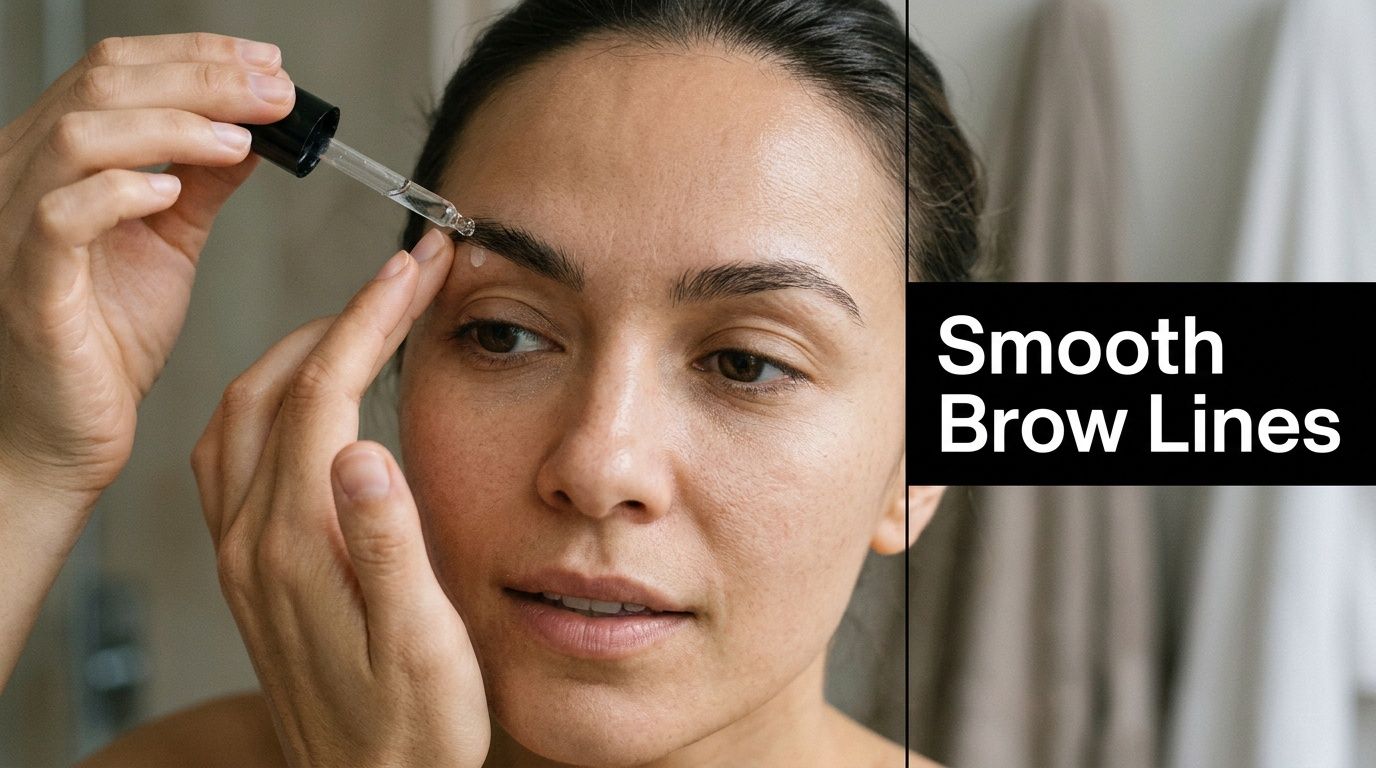
You catch it in the mirror first. Maybe it's in bright bathroom light, maybe on a video call, maybe in a photo where your face looks more tense than you feel. The vertical lines between your eyebrows, often called “11s,” start to linger even when you're not frowning.
That area is called the glabella, and the lines there are some of the most common facial wrinkles I discuss with patients. They can make you look tired, stern, or preoccupied even when you're relaxed. The good news is that you usually have more than one option.
If you're trying to figure out how to get rid of wrinkles between eyebrows, it helps to think in terms of a treatment spectrum. At one end are prevention and skincare. In the middle are office-based treatments that relax muscle movement or improve skin texture. At the far end are longer-lasting procedural and surgical options for deeper, more established lines.
For readers who want a broader look at nearby concerns, this guide to vertical forehead lines is also useful because brow movement and forehead movement often overlap.
Glabellar lines don't appear all at once. They usually begin as expression lines. You frown, squint, concentrate, raise your brows, and the skin folds in the same place over and over. Early on, the line disappears when your face relaxes. Later, it stays.
That distinction matters because treatment works differently depending on what kind of line you have. A line caused mostly by muscle movement responds differently than a crease that has already become etched into the skin.
Patients often ask a simple question with a complicated answer: can these lines go away? Sometimes they soften dramatically. Sometimes they need a combination approach. Sometimes the right goal isn't “erase it completely,” but “make me look less tense and more rested.”
What I tell patients: The best plan depends on whether your frown line shows only when you move, stays visible at rest, or comes with brow heaviness and forehead overuse.
A practical way to think about treatment is this:
A frown line usually starts as a motion problem and becomes a skin problem later. Early on, the crease appears when the corrugator and procerus muscles pull the brows inward and down. With time, repeated folding, sun exposure, and slower collagen repair leave a line behind even when the face is at rest.
That shift matters because prevention works best before the line becomes etched.
The glabellar area is active all day. Concentrating, reacting to bright light, checking a phone, driving, and working at a screen can all trigger the same inward brow movement. In clinic, I also see a related pattern that patients rarely notice on their own. Some people overuse the forehead to keep the upper eyelids or brows lifted, so the forehead and glabella are both creasing throughout the day.

If you want a simple test, look in a mirror while reading something small on your phone. Many patients find that their brows pinch together or their forehead lifts before they feel it.
Once collagen and elastin decline, the skin does not spring back as easily after each expression. The American Academy of Dermatology notes that ultraviolet exposure speeds visible skin aging, which is why daily sun protection matters so much for prevention and maintenance in its guidance on how to prevent premature skin aging.
This is also why a person can stop frowning and still see the line. At that stage, reducing muscle movement helps, but skin quality needs attention too.
Patients often ask whether they should start with skincare or with habit changes. The honest answer is both, because each addresses a different part of the problem.
This is the part many articles leave out, and it makes a real difference in the right patient. If your default expression during work or concentration is a slight frown, you are training the muscles every day. You can retrain them too.
Start by identifying your triggers. Computer work, sunlight, reading, and driving are common ones. Then interrupt the pattern several times a day. Relax the area between the brows, let the forehead soften, and reset your jaw and tongue position. Small corrections repeated often are more useful than one perfect effort.
For early dynamic lines, patients who stay consistent with this often notice less habitual tension within a few weeks. It will not erase a deep static crease, and it will not replace office treatment if the line is established. It does improve prevention, and it helps other treatments last better because you are no longer reinforcing the same fold all day.
A patient will often tell me, “I can see the line even when I am not angry. What can I do at home before I commit to injections?” That is the right question. Home care sits in the middle of the treatment spectrum. It can improve early frown lines, keep skin healthier, and support longer-lasting results after in-office treatment. It has limits once a groove is etched in at rest.

The goal at home is straightforward. Improve skin quality, reduce irritation, keep UV damage from worsening the crease, and stop overworking the muscles while your skin has a chance to recover. If you are already considering injections later, it also helps to understand how Botox and dermal fillers differ for wrinkle treatment, because skincare improves the canvas but does not replace muscle-relaxing treatment.
Retinoids do the heaviest lifting in a home routine. In practice, they help most with fine texture, mild static lines, and overall skin turnover. Improvement is gradual. Patients who use a prescription retinoid or a well-formulated retinol consistently usually start to notice smoother texture within a few months, with more visible wrinkle softening later. The trade-off is irritation. Start too aggressively and people quit.
Hyaluronic acid is useful for comfort and temporary plumping. It can make the area look less dry and less creased, especially if the skin barrier is impaired. It does not weaken the corrugator or procerus muscles, so its role is supportive rather than corrective.
Peptides and antioxidants are reasonable additions if the basics are already in place. I would not build a routine around them alone. They work better as maintenance tools than as primary treatment for established glabellar lines.
Morning should protect the skin. Evening should focus on repair.
Morning
Evening
Consistency beats complexity.
If budget is the obstacle, a list of 10 anti-aging skincare dupes can help you compare lower-cost options without overbuilding your routine.
Exercise restraint when considering at-home devices. While widely available, poor technique can create irritation, post-inflammatory pigment change, or infection, especially in skin that is already inflamed from active products. The line between “helpful stimulation” and “too much trauma” is thinner than many people realize.
For that reason, I do not consider home microneedling a first-line option for the area between the brows. If someone is determined to try it, they need to be conservative, use meticulous hygiene, avoid aggressive depth, and stop retinoids around treatment as directed by the device manufacturer or their clinician. Patients with sensitive skin, rosacea, eczema, a history of keloids, or darker skin prone to discoloration should be particularly careful.
Here's a useful visual overview of technique and expectations:
Small measures can make the main routine work better.
Practical rule: If a product leaves you red, flaky, or reluctant to use it again, the routine needs adjusting. The best home plan is one you can follow for months, because that is the timeline skin usually requires.
A common office scenario goes like this. A patient says, “I stopped frowning so much, I'm using good skincare, and the line is still there.” That usually means we have moved from prevention into treatment. The next step is choosing the least invasive option that matches the actual problem. Muscle overactivity, a crease etched into the skin, loss of support under the line, and brow position do not respond to the same tool.
For lines that deepen with expression, Botox is usually the most effective first professional treatment. It relaxes the corrugator and procerus muscles that pull the brows inward and down. In practice, this is the treatment that changes the habit pattern as well as the wrinkle. When the muscle cannot contract as strongly, patients often stop reinforcing the same frown movement hundreds of times a day.
Results are not instant. Many patients start to notice a change within several days, with the effect settling in over about 2 weeks. A review in this discussion of Botox for deep frown lines describes average duration in the range of several months, which fits what many clinicians see in practice.
Botox tends to work best for:
The trade-off is straightforward. Botox weakens motion. It does not directly fill a groove or resurface damaged skin. If a crease is still visible after the muscle relaxes, the line may improve, but it may not disappear.
A true static crease can sometimes benefit from filler, but this is the area where judgment matters most. The glabella is anatomically unforgiving because blood supply patterns vary and the margin for error is small. For that reason, many experienced injectors are selective here, use small amounts, or avoid filler in the area entirely depending on the anatomy.
Used well, filler can soften a persistent indentation after muscle pull has been reduced. Used poorly, it can create puffiness, heaviness, or a result that looks unnatural. If you are weighing injectables, this comparison of Botox vs. dermal fillers explains where each option fits.
In my view, filler is rarely the first answer for the “11s.” It is a secondary tool for carefully chosen patients.
When the wrinkle is visible even with a relaxed brow, skin quality becomes a larger part of the treatment plan. That is where resurfacing earns its place. Chemical peels, office microneedling, and laser treatments do not stop the brow muscles from pulling, but they can improve the skin that has been folding in the same place for years.
Microneedling in the office is the gentlest option in this category. Improvement is gradual and usually requires a series. Patients often choose it when they want modest downtime and a steady texture-focused approach.
Chemical peels can help with fine wrinkling and surface irregularity, but their effect on a deep glabellar crease is limited unless the problem is quite superficial.
Laser resurfacing is stronger. It can improve etched lines more meaningfully because it removes damaged surface layers and stimulates remodeling during healing. The trade-off is more recovery, more redness, and a higher need for careful skin selection, especially in patients with pigment risk.
| Treatment | Best For | When You See Change | Downtime |
|---|---|---|---|
| Botox | Dynamic frown lines caused by muscle movement | Often starts within days, settles by about 2 weeks | Little to no recovery time |
| Dermal fillers | Selected static creases needing structural support | Usually visible right away, then refined as swelling settles | Usually limited, but swelling or bruising can occur |
| Laser skin resurfacing | Etched lines and texture change | Gradual improvement during healing and collagen remodeling | More downtime than injectables |
| Microneedling | Mild to moderate texture concerns | Gradual change over a series of treatments | Usually short |
| Chemical peels | Surface texture and fine wrinkling | Depends on peel depth | Mild to moderate |
Botox gives the clearest improvement when movement is driving the line. It also supports behavioral muscle retraining, which many people overlook. If you physically interrupt the frown pattern for a few months, some patients become much more aware of how often they pull the brows together at work, in bright light, or while reading.
Resurfacing helps when the line has become stamped into the skin.
Filler has a narrower role here than many patients expect. It can help the right crease, in the right anatomy, with the right injector. It is not a casual treatment in this region.
At Cape Cod Plastic Surgery, the practical approach is to match the wrinkle pattern to the least invasive treatment that can realistically improve it. That reduces overtreatment and usually produces a result that still looks like your face, just less tense and less tired.
The most common mistake is using one treatment for every kind of frown line. A moving wrinkle, an etched wrinkle, and a low-brow problem are three different diagnoses.
You may notice the line between your brows first. Over time, the bigger issue can become the position and behavior of the entire upper face. If the brows sit low, the glabella stays tight, and the forehead keeps lifting to compensate, treating the crease alone often starts to feel like maintenance without a full fix.

In practice, surgery enters the conversation when the problem is structural, not just muscular or skin-deep. Botox can relax the frown pattern. Resurfacing can soften etched lines. But neither repositions a descended brow.
That distinction matters. A patient may get good temporary improvement from office treatments and still feel that the upper face looks heavy, tired, or tense at rest. In that setting, repeating nonsurgical treatment can help the wrinkle while leaving the main driver in place.
A brow lift usually makes the most sense when the goals are broader than softening one crease. It can restore brow position, reduce crowding in the upper eyelid area, and lessen the strained look that comes from chronic over-recruitment of the forehead.
A surgical brow lift is worth discussing if you have:
Age alone does not decide this. Anatomy, brow position, skin quality, and your tolerance for ongoing maintenance matter more.
If you want to understand the lower-incision approach many patients ask about, this overview of an endoscopic brow lift explains how it works.
The goal is a rested, natural upper face. Good brow lift surgery does not create a surprised expression. It rebalances tissues that have dropped or begun to overpower the eye area.
It also has limits. A brow lift improves brow position and can reduce the conditions that keep the glabella looking tense, but it may not erase an etched line by itself. Some patients still benefit from later skin resurfacing or occasional neuromodulator treatment, depending on how stamped-in the crease is.
That trade-off is important to understand before surgery. The advantage is durability and a more complete structural correction. The cost is real recovery time, higher upfront expense, and the need to accept a surgical procedure rather than a lunchtime treatment.
The best surgical candidates usually are not focused on one wrinkle in isolation. They are bothered by the expression their upper face gives them. Tired. Heavy. Irritated, even when they feel completely relaxed.
When that is the complaint, a brow lift can be the point on the treatment spectrum that finally matches the diagnosis.
The most useful way to decide what to do is to place yourself somewhere on the treatment spectrum.
If your lines are early and mostly visible with expression, start with prevention, daily SPF, a retinoid, and better awareness of your brow habits. If the line is becoming obvious at rest, office treatment usually makes more sense. If the area looks heavy or structurally aged, surgery may be the more complete solution.
Don't ask only, “What gets rid of this line?” Ask:
Those answers usually point toward the right category of treatment.
Sometimes it can soften significantly, especially if muscle movement is reduced and skin quality improves. But there's an important evidence gap here. A common patient question is how long a deep crease takes to fade after stopping muscle movement, and whether it can disappear without fillers. As reflected in this Reddit discussion of deep crease fading after muscle relaxation, no credible source provides a clinical timeline for how long deep wrinkles persist after muscle paralysis or behavioral change.
So the honest answer is this: some lines soften a lot, some soften modestly, and some still need resurfacing, filler, or surgery.
Usually, Botox is the better first treatment when the line is caused by repeated muscle movement. Filler is more selective and is generally considered when there is a persistent groove at rest.
Sometimes they're supportive. They're rarely the entire answer for a deep crease. If you're considering any at-home device, be careful not to let enthusiasm replace good judgment. Technique and consistency matter more than gadget marketing.
That's a reasonable goal, and it's the one most patients have. The aim isn't to erase personality. It's to reduce the lines that are making your face look more tense than you feel.
A consultation with a board-certified plastic surgeon or experienced injector helps sort out what's driving the line. Once you know whether the problem is muscle, skin, brow position, or all three, the treatment plan becomes much clearer.
If you'd like a personalized plan for wrinkles between the eyebrows, Cape Cod Plastic Surgery offers consultation and treatment options that range from injectables to surgical brow rejuvenation, based on your anatomy, goals, and how established the lines have become.
October 2, 2026
Beyond the Calendar: How to Know You’re Truly Ready for Plastic Surgery

October 2, 2026
Exploring Your Breast Augmentation Options: Implants, Shapes, and What to Expect
October 1, 2026
Reshaping Your Silhouette: A Guide to Body Contouring

Cape Cod Plastic Surgery offers expert cosmetic and reconstructive procedures in a safe, accredited setting. Led by Dr. Marc Fater, we combine advanced techniques with personalized care to help you look and feel your best.
Monday: 9:00 AM – 5:00 PM
Tuesday: 9:00 AM – 5:00 PM
Wednesday: 9:00 AM – 5:00 PM
Thursday: 9:00 AM – 5:00 PM
Friday: 9:00 AM – 5:00 PM