

October 7, 2026
What to Expect During Your Breast Surgery Recovery
A Practical Guide to Healing After Breast Surgery
Aug 27, 2026

You're standing in front of the mirror on a quiet morning, adjusting a shoulder strap that's been digging into your skin for years. The thought of breast reduction brings relief, but setting a surgery date can also make every unknown feel louder. You may be wondering what to stop, which tests you need, who will help you afterward, and whether your home is ready for the limits of early recovery.
The safest way to approach how to prepare for breast reduction surgery isn't as a frantic weekend checklist. It's a staged process that begins weeks before the operation, with each phase serving a purpose. Medication review lowers bleeding risk, nicotine cessation supports blood flow, imaging helps establish breast health, and home planning protects your mobility while you heal.
The calendar may look quiet four to eight weeks before surgery, but small decisions matter. Use the timeline below as a project plan, write down questions as they arise, and bring them to your surgical team. Preparation won't remove every uncertainty, but it can make the experience more organized, more comfortable, and medically responsible.
Many patients arrive at consultation carrying two competing feelings. They're tired of neck, shoulder, or back discomfort and want clothing to fit differently, yet they're also concerned about scars, anesthesia, breast shape, and the practical demands of recovery. That combination is normal. Committing to surgery doesn't mean you're expected to feel fearless.
I encourage patients to treat the first appointment as a working conversation rather than a final exam. Bring your symptoms, your priorities, and the questions you've been avoiding. If insurance coverage is part of your decision, review the documentation and eligibility issues discussed in this guide to breast reduction requirements for insurance, but remember that clinical suitability and coverage approval are separate decisions.
A useful mindset: You're not trying to “prepare perfectly.” You're creating the conditions that let your surgical team identify risks early and help you recover with fewer avoidable obstacles.
The weeks before surgery are also the right time to be candid. Tell the surgeon about nicotine use, prescriptions, over-the-counter medication, vitamins, herbal products, allergies, previous operations, and any personal or family history that could affect anesthesia or healing. Omitting a supplement because it seems natural, or minimizing smoking because you've reduced your use, can leave the team without information it needs.
Your home and support plan deserve the same attention as your medical history. Someone may need to drive you home, help with meals, keep medication instructions organized, and handle lifting or reaching that you can't safely manage. Childcare, pet care, work responsibilities, and transportation should be addressed before the date feels imminent.
Preparation works best when you assign each task to a point on the calendar. Start with medical groundwork, then handle medication and nutrition decisions, then build a low-reach recovery environment. By the final days, you should be confirming details rather than discovering them.
Six to eight weeks before surgery, use the consultation to turn a general plan into specific decisions. Gather your medical records, list prior operations and health conditions, and ask the surgeon to explain the proposed procedure in language you understand. Early clarity gives the team time to address healing, anesthesia, and scheduling concerns before the operative date is close.
Ask which reduction technique and pedicle approach the surgeon expects to use, how tissue removal will be estimated, where scars may sit, and how the nipple and areola will be repositioned. The surgeon may discuss an anticipated tissue amount, but that estimate can change during surgery because your anatomy and safety take priority over a predetermined number.
Before-and-after photographs help most when the patients have a similar frame, breast shape, skin quality, and starting volume. Examine more than the final size. Review incision patterns, breast proportions, nipple position, and whether the examples resemble the change you want.
Aim for a reasonably stable weight rather than a particular scale number. Significant weight changes after surgery can alter breast size and shape, so your surgeon may want to see that your weight has been consistent. If body weight, diabetes, or another condition affects surgical risk, discuss it directly instead of pursuing an arbitrary target without medical guidance.
Patients aged 40 and older should have bilateral screening mammograms within the 12 months before surgery, according to expert guidance summarized in the reduction mammoplasty risk analysis published in PubMed. Your age, personal and family history, and previous imaging may change the recommendation. A preoperative mammogram can provide current screening and a reference point for later comparison, rather than serving only as paperwork.
Ask what happens if imaging is incomplete or abnormal. The team may request additional evaluation before confirming the operative date, and tissue removed during reduction will generally be sent for pathology according to the practice's protocol. Leave enough scheduling flexibility for that possibility.
Preoperative testing depends on your health history and the facility. The team may request blood work, an ECG, a physical examination, or anesthesia clearance. Some patient instructions recommend laboratory work 1 to 6 weeks before surgery and may discuss iron supplementation beginning about 1 month before surgery, as described in the American Society of Plastic Surgeons preparation guidance. Follow your own team's instructions instead of copying another patient's test list.
Smoking and other nicotine exposure can narrow blood vessels and reduce oxygen delivery to healing tissue. In breast reduction, skin flaps and nipple tissue rely on dependable circulation, so nicotine use can affect wound healing and other surgical risks. The reduction mammoplasty review published in PubMed associated smoking with increased complication risk, with an odds ratio of 1.56 for smokers compared with nonsmokers.
Begin cessation planning early. Review this smoking cessation guidance for surgery and recovery and tell the team about cigarettes, vaping, nicotine gum, patches, and secondhand exposure. Some published instructions require no smoking for 4 weeks before or after the operation, while your surgeon may set a different interval or require nicotine testing.
Schedule the operation only after required clearances and cessation requirements are understood. That timing prevents a late nicotine disclosure or incomplete medical evaluation from disrupting the surgical plan.
The medication list you bring to pre-op should include prescriptions, pain relievers, vitamins, teas, powders, and herbal products. The purpose isn't to make you stop everything. It's to identify products that could affect bleeding, blood pressure, anesthesia, or wound healing.
Aspirin and certain anti-inflammatory medicines, including ibuprofen, can increase bleeding risk. Many institutional instructions also ask patients to pause vitamin E, herbal supplements, and similar products, often using a 2-week discontinuation window, as reflected in the American Society of Plastic Surgeons preparation guidance. Fish oil, ginkgo, turmeric, and other supplements may also require review, but don't stop them automatically if a clinician prescribed them for a medical reason.
Blood pressure and thyroid medication often require individualized instructions. Some medicines are taken with a small sip of water on the morning of surgery, while others may be withheld. Your prescribing physician and anesthesia team should make that decision together.
Hormonal medications, including oral contraceptives, also deserve a direct conversation because the team may weigh clotting considerations against the reason you take them. Never make a medication change based on a generic internet list. Send the complete list to the surgical office early enough for the team to respond.
Nutrition supports the work your body must do after surgery, but extreme diets don't improve preparation. Build meals around protein sources you tolerate, include iron-rich foods, and maintain regular hydration unless another clinician has restricted fluids. If you've had anemia, heavy menstrual bleeding, a restrictive diet, or previous low iron, ask whether testing or supplementation is appropriate rather than starting iron without advice.
A simple meal-planning resource on how to reduce inflammation with diet can help you organize balanced foods, but it shouldn't replace the instructions from your surgeon or a registered dietitian. In the final week, some teams suggest moderating sodium to help limit fluid retention. That's a comfort and swelling strategy, not a substitute for medical clearance.
Alcohol also needs a clear cutoff based on your surgeon's instructions. It can interact with medications, affect hydration, and complicate clotting or healing. Ask when to stop and when it's safe to resume, especially if prescription pain medicine will be used.
The final three days should feel like a run-through, not a scavenger hunt. Confirm the facility address, arrival time, transportation, and the name and phone number of the adult who'll take you home. Arrange for that person to stay with you the first night, and make sure they know where your medication list and discharge instructions will be kept.
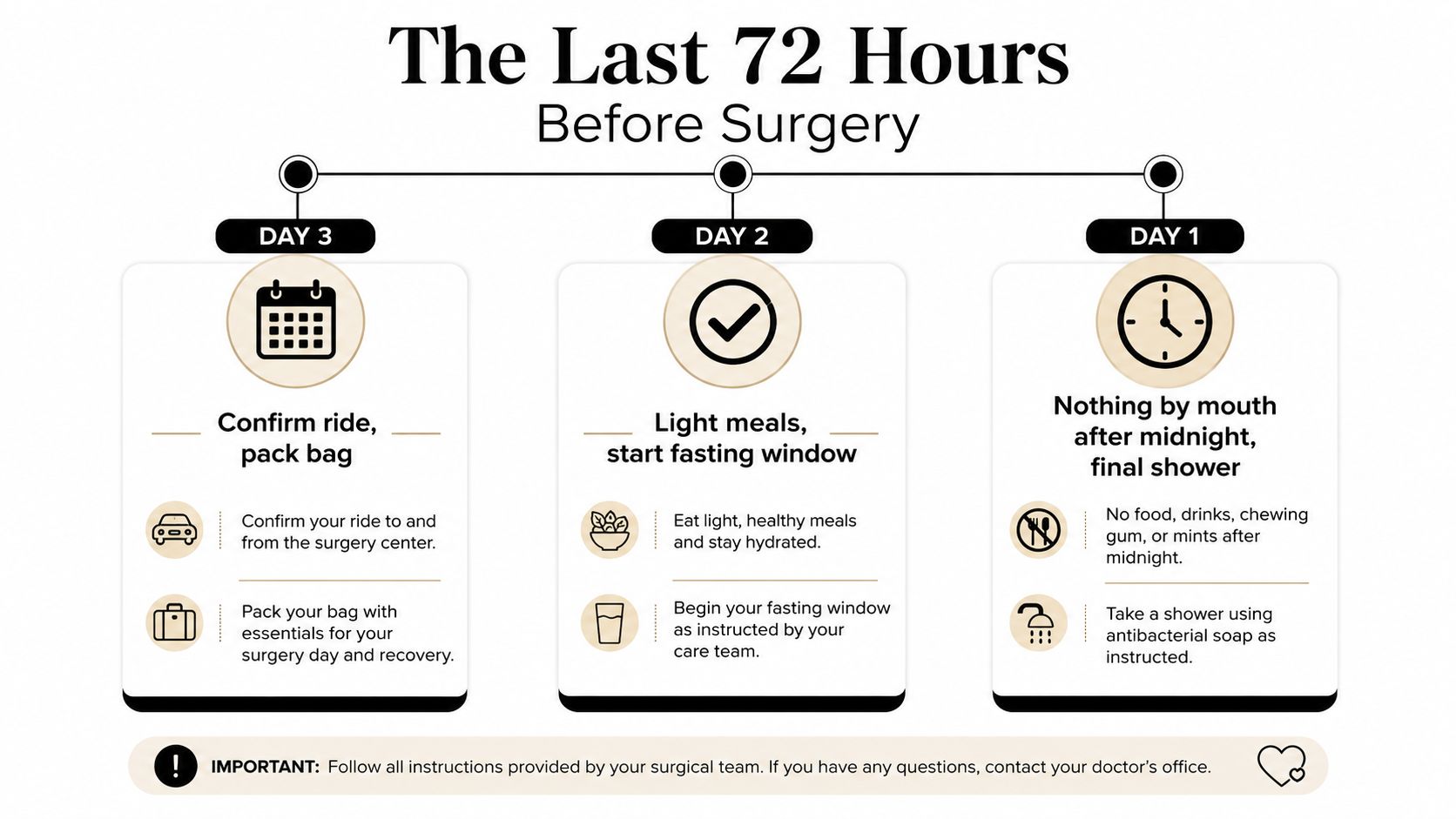
Your anesthesiologist will specify when to stop eating and drinking. Many patients receive instructions to have nothing by mouth after midnight, but you must confirm your own fasting window because permitted clear liquids and medication instructions can differ.
Use the antibacterial or chlorhexidine wash your surgeon recommends, exactly as directed. Don't shave the operative area unless your team tells you to, and avoid applying products that could irritate the skin.
On surgery morning, leave lotions, deodorant, perfume, makeup, and jewelry at home. Nail polish may need to be removed so the team can assess circulation and use monitoring equipment reliably. Choose loose, front-opening clothing and slip-on shoes that won't require overhead reaching or difficult bending.
Pack your identification, insurance card if requested, and an updated medication list. You may also bring glasses rather than contact lenses, but follow the facility's instructions for personal items. Check-in usually involves confirming paperwork, reviewing the plan, changing clothes, and meeting members of the anesthesia and surgical teams.
Pre-op nerves don't mean you've made the wrong decision. Tell the nurse or anesthesiologist if anxiety is interfering with sleep or concentration. Clear information and a final review often make the morning feel more manageable.
A comfortable recovery space is useful, but the most important design principle is low reach and low lift. After breast reduction, raising your arms, pulling doors, reaching into high cabinets, and lifting children can strain healing tissue and make ordinary tasks unexpectedly difficult.

A recliner, wedge pillow, or carefully arranged firm pillows can keep your upper body raised if lying flat feels uncomfortable. Place a bedside caddy or rolling cart within reach and stock it with water, approved snacks, medications, tissues, reading material, and a phone charger.
Put frequently used items at waist or counter height. Keep a small rubbish bin nearby, clear the walking path, and make sure the route to the bathroom is well lit. The setup should let you stand, sit, and reach essentials without twisting or stretching.
Dry shampoo and gentle body wipes can help on days when a full shower isn't practical. If your surgeon permits showering, a handheld showerhead can reduce overhead arm movement. Keep toiletries on a reachable shelf and choose clothing that opens in front rather than pulling over your head.
In the kitchen, prepare meals that can be reheated without lifting heavy cookware. Place food, plates, and a filled pitcher of water on the counter. A long-handled grabber may help retrieve light items, but it shouldn't become a reason to stretch, pull, or lift something heavy.
What works better than a “recovery nest”: Ask another adult to handle the tasks that require force, height, or speed. Convenience supplies help, but reliable assistance protects you from doing too much because an item is technically nearby.
Plan childcare and pet care with the same realism. Someone else should handle toddler lifting, dog walking, grocery carrying, laundry baskets, and vigorous household chores while your surgeon restricts those activities. If you're comparing supportive garments, discuss the postoperative bra your team recommends first. A resource such as the Nuage Wears minimizer bra may help you understand fit and compression concepts, but a regular minimizer bra isn't automatically appropriate for fresh incisions.
Preparation has different levels of clinical importance. Nicotine cessation, medication review, indicated imaging, and treatment of anemia or other health concerns can influence bleeding, anesthesia, wound healing, and the timing of surgery. A stocked freezer, bedside charger, or recliner can make recovery easier and reduce household strain, but these conveniences do not replace medical preparation.
The outcomes data explain why your team asks detailed questions about smoking exposure, medical conditions, and wound care. In a 2,142-case analysis, reported complications included discernible scars at 14.5%, nonsurgical wounds at 13.5%, fat necrosis at 8.2%, and infection at 7.3%. Wound events requiring negative-pressure therapy or reoperation were less common, at 1.4%. These figures come from the outcomes analysis indexed by PubMed. They describe that study population, not a personal forecast.
A systematic review found that postoperative complications were the most frequently reported outcome in breast-reduction research, appearing in 82.2% of reviewed studies. That figure refers to the proportion of studies reporting complications, not the proportion of patients who experienced one. The review also associated obesity, diabetes, and smoking exposure with higher complication risk. Your preparation should therefore focus on the factors that apply to you, rather than treating every listed risk as inevitable.
| Preparation step | Impact category | Estimated risk reduction | Notes |
|---|---|---|---|
| Nicotine cessation | High clinical impact | Not reliably quantifiable for an individual | Supports blood flow and wound healing. Follow the surgeon's required nicotine-free interval. |
| Medication and supplement review | High clinical impact | Not reliably quantifiable for an individual | Helps identify products that may increase bleeding or affect anesthesia. Never stop prescribed medication without instructions. |
| Weight and health review | High clinical impact | Not reliably quantifiable for an individual | BMI of 30 kg/m² or higher was associated with complications in the cited meta-analysis. |
| Indicated breast imaging | High planning impact | Not reliably quantifiable for an individual | Establishes current breast health and may affect timing or further evaluation. |
| Lab and anemia optimization | High clinical impact | Not reliably quantifiable for an individual | Helps the team identify issues that could affect recovery. |
| Low-reach home setup | Comfort and safety support | Not a measured clinical reduction | Reduces unnecessary lifting, reaching, and stress after discharge. |
| Prepared meals and bedside supplies | Comfort support | Not a measured clinical reduction | Makes it easier to rest and follow instructions. |
No preparation plan guarantees a complication-free result. The practical aim is to reduce risks you can control, identify problems early, and give your surgical team accurate information before the operation.
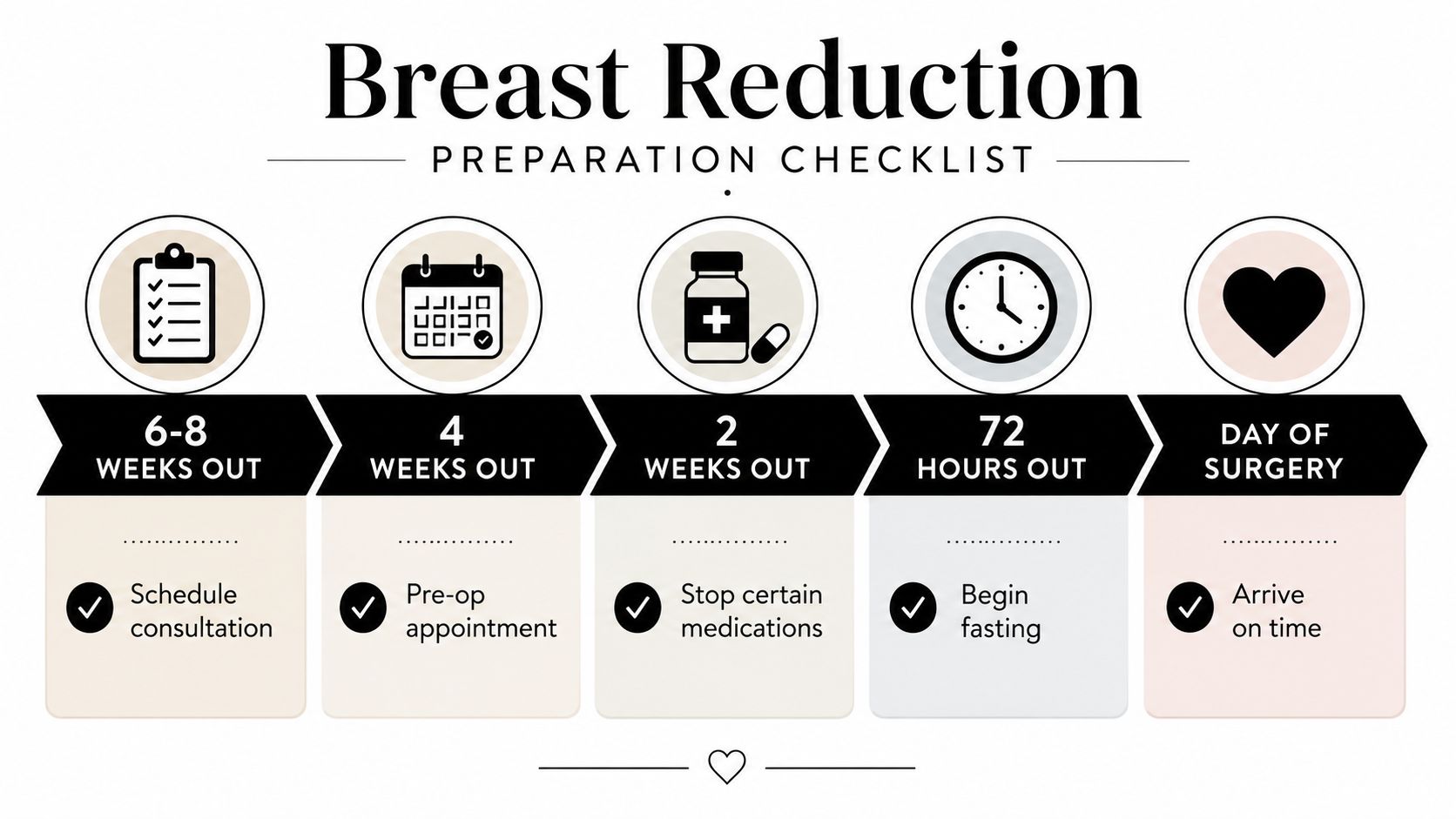
Keep this checklist beside your calendar and update it after every pre-op conversation. The dates are planning points, not permission to change medication, nicotine, alcohol, fasting, or activity rules without your own team's approval.
If you're adapting a room for limited reaching and lifting, broader hysterectomy home setup advice can offer practical ideas, although your breast surgery restrictions take priority. Keep your questions written down and use the practice's plastic surgery preparation guidance to prompt a final review with your coordinator.
Trust the timeline, not last-minute internet searches. The most valuable thing you can bring to your pre-op appointment is an accurate medication list, a clear support plan, and every question that's still bothering you.
Cape Cod Plastic Surgery offers consultation, breast surgery planning, medical preparation guidance, and coordinated support through the recovery process. If you're considering breast reduction on Cape Cod, visit Cape Cod Plastic Surgery to learn about the practice and request a consultation.
October 7, 2026
A Practical Guide to Healing After Breast Surgery

October 6, 2026
Your Safety Guide: What to Look for When Choosing a Plastic Surgeon

October 5, 2026
Why Our On-Site Accredited Facility Matters for Your Safety

Cape Cod Plastic Surgery offers expert cosmetic and reconstructive procedures in a safe, accredited setting. Led by Dr. Marc Fater, we combine advanced techniques with personalized care to help you look and feel your best.
Monday: 9:00 AM – 5:00 PM
Tuesday: 9:00 AM – 5:00 PM
Wednesday: 9:00 AM – 5:00 PM
Thursday: 9:00 AM – 5:00 PM
Friday: 9:00 AM – 5:00 PM