

October 6, 2026
How to Verify Your Surgeon Before Your Cosmetic Procedure
Your Safety Guide: What to Look for When Choosing a Plastic Surgeon
Feb 23, 2026
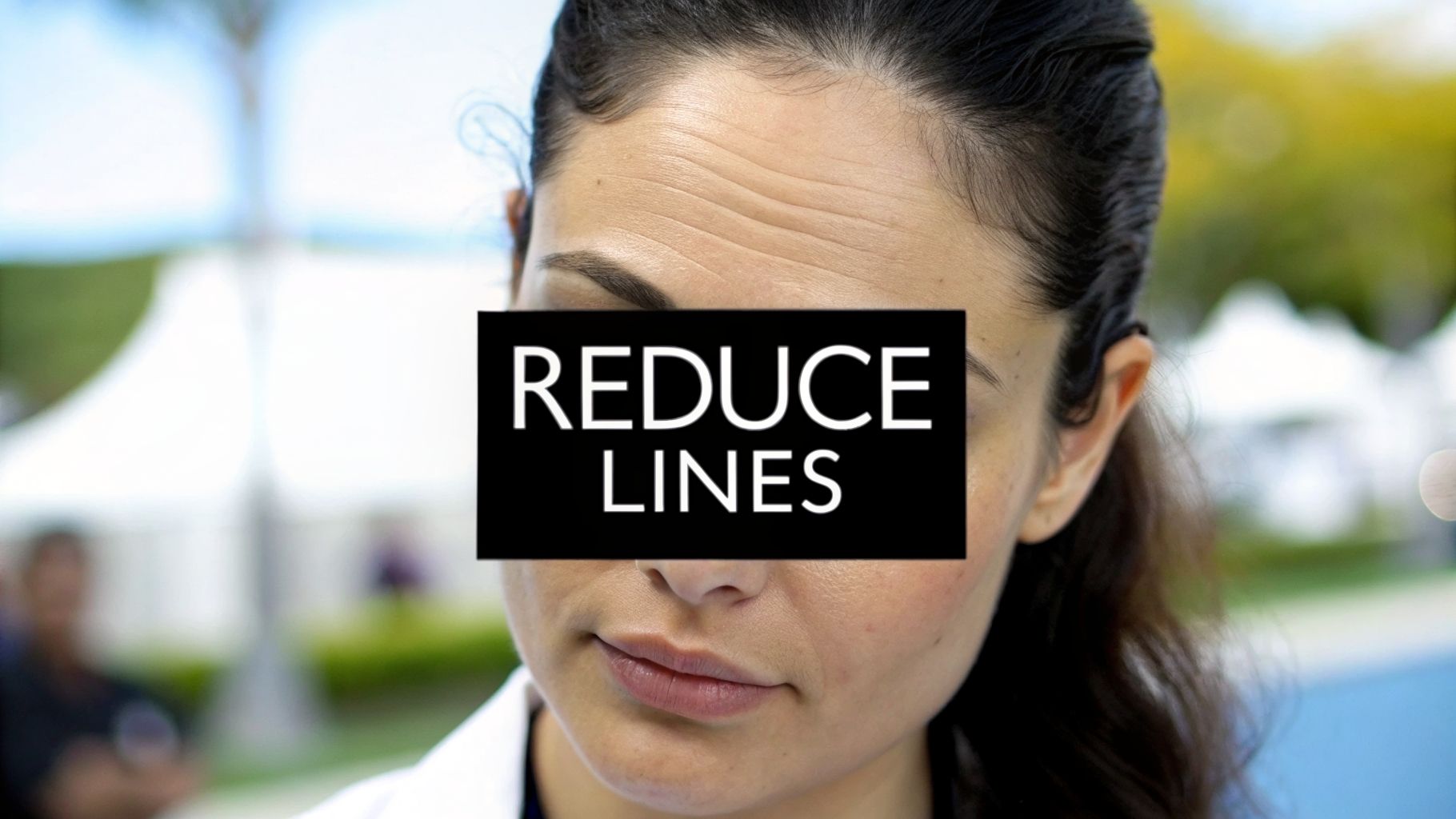
The most effective game plan for reducing frown lines is a triple-threat approach: relax the muscles causing the creases with neuromodulators like Botox, protect your skin with daily sunscreen, and use targeted skincare with powerhouse ingredients like retinoids and peptides. This strategy tackles the problem from every angle, addressing both the root cause (muscle movement) and the visible effect (etched-in lines) for genuinely smoother, lasting results.

Those vertical creases between your eyebrows, often called the "11s," are more than just a sign you’ve had another birthday. They’re a direct result of how you express yourself and live your life. They form because two specific muscles—the corrugator and the procerus—repeatedly contract every time you focus, squint, or get frustrated.
When you're younger, your skin is loaded with collagen and elastin, so it snaps right back into place. But as we get older, our bodies produce less of these essential proteins. That loss of elasticity means your skin can't bounce back from those repeated expressions anymore. Eventually, what started as a temporary crease becomes a permanent fixture.
Think of your facial muscles like any other muscle in your body—they have memory. After years of making the same faces, the muscles between your brows get trained to stay partially tensed up. This constant low-grade contraction is what turns a line you only see when you frown (a dynamic wrinkle) into one that’s there all the time (a static wrinkle).
On top of that, environmental factors can really speed up the process. Sun exposure is the number one enemy here, as UV rays actively break down your skin's support structure. But other lifestyle habits play a big role, too:
Understanding how these facial contractions work is key, and some skincare even contains ingredients like Argireline that relax facial muscles to help.
Your genetics absolutely play a part in how and when you'll see these lines. Some people just have stronger facial muscles or skin that’s more prone to creasing. Still, wanting to smooth them out is something we see across all age groups now.
While the average age for a first-time Botox patient is 43 years old, preventative treatments are becoming incredibly common. In fact, 24% of all procedures are now performed on patients between 19 and 34. People aged 40 to 54 still make up the largest group, accounting for nearly half of all Botox treatments in 2022.
Key Takeaway: Frown lines are a complex mix of muscle memory, collagen loss, and your daily habits. Identifying your personal triggers—whether it's constant screen time or always forgetting your sunglasses—is the first real step toward finding a solution that works for you.
Once you understand what’s causing the lines, you can choose the right path to smoother skin. For a more detailed look into how these specific creases form, you can read our guide on understanding vertical lines on the forehead.

Before you even think about in-office procedures, it's worth knowing that a smart, consistent at-home routine can make a real difference. We're not talking about miracle cures, but rather a solid foundation of daily habits that protect your skin and nourish it from the inside out. This approach can genuinely soften the lines you have and help fend off new ones.
The absolute most important thing you can do is commit to daily sun protection. UV radiation is the number one enemy of smooth skin, as it relentlessly breaks down the collagen and elastin that give your skin its bounce.
Making a broad-spectrum sunscreen with at least SPF 30 a non-negotiable part of your morning is your best line of defense. It’s a simple habit that shields your skin from sun-induced squinting that carves those "11s" deeper between your brows.
Staying well-hydrated is another cornerstone of any effective anti-frown line plan. When your skin is dehydrated, it loses its plumpness, making every fine line look much more prominent. Aim to drink plenty of water throughout the day to keep your skin cells happy and full.
Beyond just water, a few small lifestyle changes can have a surprisingly big impact. Think about how often you squint—it's often a totally unconscious habit that directly causes frown lines.
These little adjustments help break the muscle memory that etches lines into your skin. For a deeper dive, our guide on how to reduce wrinkles naturally has even more lifestyle-based tips.
Expert Tip: I often tell my patients to put a small mirror on their desk. It acts as a gentle nudge to check in, relax their facial tension, and stop frowning while they work.
Adding a quality anti-wrinkle cream to your daily regimen can also give your skin an extra boost. Just remember, consistency is everything when it comes to seeing results from products and habits.
What you put on your plate has a direct effect on your skin's health and its ability to repair itself. A diet packed with antioxidants is your secret weapon against oxidative stress—the damage from pollution and UV rays that degrades collagen.
Try to eat the rainbow. Loading up on colorful fruits and vegetables provides the vitamins and antioxidants that your skin craves to stay strong and resilient.
Foods That Support Skin Health
Finally, don't underestimate the power of managing stress. High levels of the stress hormone cortisol can speed up the aging process. Simple practices like meditation, yoga, or even a few deep breaths can help relax those tense facial muscles and reduce the subconscious frowning that leads to deep-set lines.
Walking down the skincare aisle can feel like a pop quiz you didn't study for. With so many products promising to vanish frown lines overnight, it’s tough to know what's real and what's just clever marketing. The secret is to ignore the flashy claims and focus on the over-the-counter (OTC) ingredients backed by real science.
Investing in a few key actives can make a noticeable difference in your skin's texture and help soften those stubborn "11s" between your brows. While they won't relax the muscles underneath like a professional treatment can, these ingredients are crucial for rebuilding your skin’s structure. They form the foundation of any solid anti-frown line strategy.
If there's one ingredient dermatologists and estheticians universally recommend for wrinkles, it's retinoids. This family of Vitamin A derivatives is a powerhouse because it works on multiple levels. First, it speeds up your skin's natural cell turnover process, helping you shed dull, damaged surface cells and reveal the smoother, fresher skin underneath.
But the real magic happens deeper down. Retinoids actually get into the dermis and kickstart new collagen production. Collagen is the protein that gives your skin its firmness and bounce. By building more of it, you’re essentially plumping the skin from within, which makes those etched-in frown lines look softer over time.
You'll see a few different names on product labels when shopping:
My Advice: The "low and slow" rule is your best friend here. Start by applying a pea-sized amount just 2-3 nights a week and let your skin get used to it. Always follow up with a good moisturizer to prevent dryness, and only use it at night—retinoids make your skin more sensitive to the sun.
Think of peptides as little text messages for your skin cells. These short chains of amino acids are the fundamental building blocks of essential proteins like collagen and elastin. When you apply certain peptides topically, they send signals that tell your skin it's time to get to work and produce more collagen.
This signaling action is what helps improve your skin’s firmness and elasticity, making it more resilient against the repetitive movements that cause frown lines. The best part? Unlike retinoids, which can sometimes be irritating, peptides are usually very well-tolerated, making them a fantastic addition to just about any skincare routine. Look for products that mention signal peptides or even neuropeptides on the ingredient list.
Every single day, your skin is fighting a battle against environmental aggressors like UV rays, pollution, and even blue light from your screens. These things create tiny, unstable molecules called free radicals that wreak havoc on your skin, breaking down collagen and speeding up the aging process. This constant damage makes it much harder for your skin to bounce back from facial expressions.
Antioxidants are your skin's personal bodyguards. They work by finding and neutralizing these damaging free radicals before they can cause harm.
By simply adding an antioxidant serum to your morning routine (right before your sunscreen), you’re giving your skin a protective shield for the entire day. This defensive step is critical because it supports all the hard work your retinoids and peptides are doing, helping you achieve better, longer-lasting results.
With so many powerful ingredients available, it can be tricky to know which one does what. This table breaks down the most effective OTC options to help you build a routine that targets frown lines from every angle.
Choosing the right ingredients is about creating a team that works together. Using an antioxidant like Vitamin C in the morning and a retinoid at night gives you both protection and repair, a comprehensive strategy for smoother, healthier-looking skin.
So, you’ve been diligent with your sunscreen and skincare, but those stubborn “11s” are still sticking around. This is where professional treatments come in. When at-home care isn't quite cutting it, these non-surgical options can deliver the significant, visible change you're looking for without the need for incisions.
The most direct way to tackle frown lines is to address the source: the muscles that cause them. That’s the job of neuromodulators like Botox.
By injecting tiny, precise amounts into the muscles between your brows (the corrugator and procerus), we can temporarily block the nerve signals that tell them to contract. The muscle relaxes, and the overlying skin smooths out. It’s incredibly effective for those "dynamic" lines that appear when you're concentrating or, well, frowning.
The whole process is surprisingly quick and straightforward:
Botox has become the go-to solution for frown lines globally for a reason. In 2022 alone, there were 9.22 million procedures worldwide—a 26.1% jump from the previous year. The U.S. led the way, with 3.95 million of those treatments, making up 42.8% of the global total. These figures really show how trusted this approach is for achieving a smoother, more refreshed look.
If you're curious about the different types of neuromodulators available, our guide on Daxxify vs Botox at Cape Cod Plastic Surgery offers a great comparison.
What about the lines that are visible even when your face is perfectly still? Those are called "static" lines, and they form as we lose volume and collagen over time. This is where dermal fillers shine.
We use hyaluronic acid-based fillers, like Juvederm or Restylane, to quite literally fill in the crease from underneath. By carefully placing the filler, we can lift the indented skin, instantly plumping it up to be level with the surrounding area. The results are immediate and typically last anywhere from 6–12 months.
For many of our patients, the ultimate solution is a combination of Botox and fillers. Botox stops the muscle from creasing the skin further, while the filler smooths out the existing line.
Beyond relaxing muscles and adding volume, we can also work on the surface of the skin itself. Treatments like chemical peels and laser resurfacing are fantastic for improving overall texture and kick-starting your skin's natural collagen production.
A light to medium chemical peel uses solutions like glycolic or TCA acid to exfoliate the top, damaged layers of skin. This process encourages new, smoother skin to come to the surface. Lasers, such as fractional CO2, work a bit deeper, creating micro-injuries in the dermis that trigger a powerful collagen-rebuilding response from within. The result is firmer, more resilient skin over time.
To get the most out of any professional treatment, a solid at-home skincare routine is non-negotiable. This chart helps you match the right ingredients to your specific goals, whether it's renewing, firming, or protecting your skin.

Think of it this way: your professional treatments are the heavy lifters, while your daily skincare routine is the essential maintenance that protects your investment and enhances your results.
So, how do you know if it's time for an in-office procedure? Generally, if you have moderate to severe lines or you're simply looking for faster, more dramatic results than creams can provide, you're likely a great candidate.
Take Sarah, a 52-year-old patient. She had been using retinoids for months, but her static frown line wasn't budging. She came to us for a combination of filler and Botox. Within just two days, she saw a 50% improvement in the depth of the line.
"I saw my lines soften immediately after fillers, and Botox added the final smoothing touch—no downtime, no regrets." — Sarah, Cape Cod patient
Patience is a virtue, but it helps to know what to expect and when. Each treatment has its own timeline for revealing its full effect.
Understanding this schedule helps us at Cape Cod Plastic Surgery plan your appointments and follow-ups to ensure we're assessing your results at the perfect time.
Not every treatment is right for every person. The best plan is always tailored to your unique skin, the type of lines you have, and your overall health.
If your frown lines are most prominent when you move your face, neuromodulators are likely your best bet. If the lines are etched in and visible at rest, fillers or resurfacing treatments may be more effective. During a consultation, we’ll discuss everything from your skin’s health to your tolerance for downtime.
"Honest dialogue ensures safe, satisfying treatment outcomes every time."
Walking into a consultation for the first time can feel a little intimidating, and it’s natural to have questions. Here at Cape Cod Plastic Surgery, Dr. Fater believes the best results come from a partnership. He’ll walk you through every step, making sure you feel comfortable and completely informed.
Knowing what to expect can ease any nerves and help you get the most out of our time together.
To create a treatment plan that’s truly yours, Dr. Fater will start by getting to know you. We’ll discuss your medical history, any cosmetic treatments you’ve had in the past, and most importantly, what you hope to achieve. We'll also chat about lifestyle factors that can impact your skin.
A little prep work goes a long way. To make sure we cover all the bases, it’s helpful to:
This way, nothing gets missed, and we can focus on what matters most—your goals.
During your visit, Dr. Fater will take a close look at your facial anatomy and skin quality. He’ll ask you to make a few expressions (like frowning, smiling, or raising your eyebrows) to see how your muscles move. This simple, hands-on evaluation is key to understanding where dynamic wrinkles form and where static lines have settled in.
It’s this detailed assessment that allows us to pinpoint exactly where a treatment like Botox or a filler will give you the most natural-looking improvement. We’ll also take some "before" photos to track your progress.
"Precision in the initial assessment is what leads to those beautifully natural-looking results and, ultimately, boosts a patient’s confidence."
This is where we really collaborate. Based on his assessment and your goals, Dr. Fater will discuss the best options for you. It might be a neuromodulator like Botox, a dermal filler, or perhaps a combination of the two.
He’ll explain the pros and cons of each, what to expect during and after the procedure, and any potential side effects. This is a true dialogue, ensuring the final plan aligns perfectly with your vision. You can expect to cover:
Our goal is for you to feel empowered and confident in the choices you make.
You should never leave a consultation with unanswered questions. Having a few prepared can help you feel more in control of the process.
Here are some great starting points:
This table breaks down why these questions are so important for your planning:
Once we’ve settled on a plan you’re excited about, our office will help you schedule your procedure. We’ll also give you some simple pre-appointment instructions, like which medications or supplements to pause and any minor skincare adjustments to make. This preparation helps ensure your treatment is as safe and effective as possible.
We’ll also book a follow-up visit to check on your progress, assess your results, and make any tiny adjustments if needed. Our support doesn’t end when you walk out the door.
Everyone’s skin is different. Factors like your age, skin type, and even your genetics will influence your final outcome, and Dr. Fater will be upfront about what you can realistically expect.
"Great results are a journey, not a destination reached in a single appointment. Understanding the process from the start is empowering."
This means having a clear picture of when you’ll see changes and how you can support your results with good at-home care. The goal is always a subtle, natural enhancement—never an "overdone" look.
Think of someone like Maria, a 38-year-old teacher who wanted to soften her frown lines but was worried about looking "frozen." During her consultation, Dr. Fater carefully evaluated her muscle activity and skin. They decided on a conservative dose of Botox for the dynamic wrinkles, plus a very light filler for a deeper line that had already set in.
This personalized approach allowed Maria to keep her natural expressions while achieving the refreshed look she wanted. She felt completely comfortable throughout the process because she knew exactly what to expect.
When you leave your consultation, you’ll have a clear, written summary of our discussion, your personalized recommendations, and a transparent cost estimate. It’s all about starting your journey at Cape Cod Plastic Surgery with confidence.
Thinking about professional treatment is a big step, and it’s only natural to have a lot of questions. At Cape Cod Plastic Surgery, we want you to feel completely comfortable and confident in your decisions. So, let’s walk through some of the most common things people ask us about smoothing out those pesky frown lines.
This is usually the first question on everyone's mind. While Botox works wonders, it's not a permanent fix. You can typically expect the smoothing effects to last about three to four months.
If you're new to Botox, you might find your results are closer to that three-month mark. The good news? Many of our long-term patients find that with regular, scheduled appointments, their results start to last longer—sometimes up to six months. It’s because the muscles eventually learn to stay relaxed, so they don’t need to be treated as often. Your own metabolism and muscle activity will play a part, and we'll help you figure out the perfect maintenance plan to keep you looking refreshed.
One of the best things about injectable treatments like Botox is that you can get right back to your day. Most people walk out of our office and head straight back to their normal routine.
We do have a few simple rules to follow to make sure you get the best possible outcome. For the first day, you'll want to avoid:
You might notice a little redness or a tiny bit of swelling right at the injection site, and occasionally a small bruise can pop up. These are usually very mild, disappear within a day or so, and are easy to cover with makeup if you feel the need.
Our Approach: We are meticulous about using ultra-fine needles and a gentle touch. This really helps minimize any potential for bruising and makes for a comfortable experience and a quick, easy recovery.
How quickly you see a change really depends on the treatment you’ve chosen. With a neuromodulator like Botox, it’s a gradual but relatively fast process. Most people start to see their frown lines soften within 24 to 48 hours.
The full, muscle-relaxing effect, however, takes a bit longer to settle in—usually around 7 to 14 days. That’s when you'll see the final, smooth result. On the other hand, if we use a dermal filler to plump up deeper, set-in lines, you'll see a change right away. For treatments like chemical peels or lasers, the results emerge over time as your skin heals and builds new collagen, often requiring a few sessions for the best outcome.
That’s an excellent question, and it gets right to the heart of managing expectations. While "erased" might be a bit strong, the goal is to soften the lines so much that they become practically invisible when your face is relaxed.
For those lines that appear when you move your face (dynamic lines), Botox is fantastic at creating a smooth, unlined surface. For the deeper, static lines that are always there, we often find a combination of Botox and a dermal filler gives the most dramatic improvement. The whole point of modern treatments is to give you a smoother, more rested look that's completely natural—not to freeze your expressions. We're aiming for rejuvenation, not a "frozen face."
Ready to see what a personalized plan could do for your frown lines? The expert team at Cape Cod Plastic Surgery is here to help you explore your options. You can schedule your consultation with Dr. Fater today to get started.
October 6, 2026
Your Safety Guide: What to Look for When Choosing a Plastic Surgeon

October 5, 2026
Why Our On-Site Accredited Facility Matters for Your Safety

October 2, 2026
Beyond the Calendar: How to Know You’re Truly Ready for Plastic Surgery

Cape Cod Plastic Surgery offers expert cosmetic and reconstructive procedures in a safe, accredited setting. Led by Dr. Marc Fater, we combine advanced techniques with personalized care to help you look and feel your best.
Monday: 9:00 AM – 5:00 PM
Tuesday: 9:00 AM – 5:00 PM
Wednesday: 9:00 AM – 5:00 PM
Thursday: 9:00 AM – 5:00 PM
Friday: 9:00 AM – 5:00 PM