
September 9, 2026
How to Care for Surgical Incisions Properly
Expert Guide to Proper Surgical Incision Care
Mar 31, 2026
Over time, life's biggest milestones—like pregnancy, weight changes, and simply the natural aging process—can take a toll on the body. For many, this becomes most noticeable in the breasts, which can lose their youthful shape and position, a condition known as breast ptosis.
If you feel your breasts have begun to sag or "droop," a breast lift, or mastopexy, is a surgical procedure designed specifically to address this. It's not about changing your size; it's about restoring shape and lift.
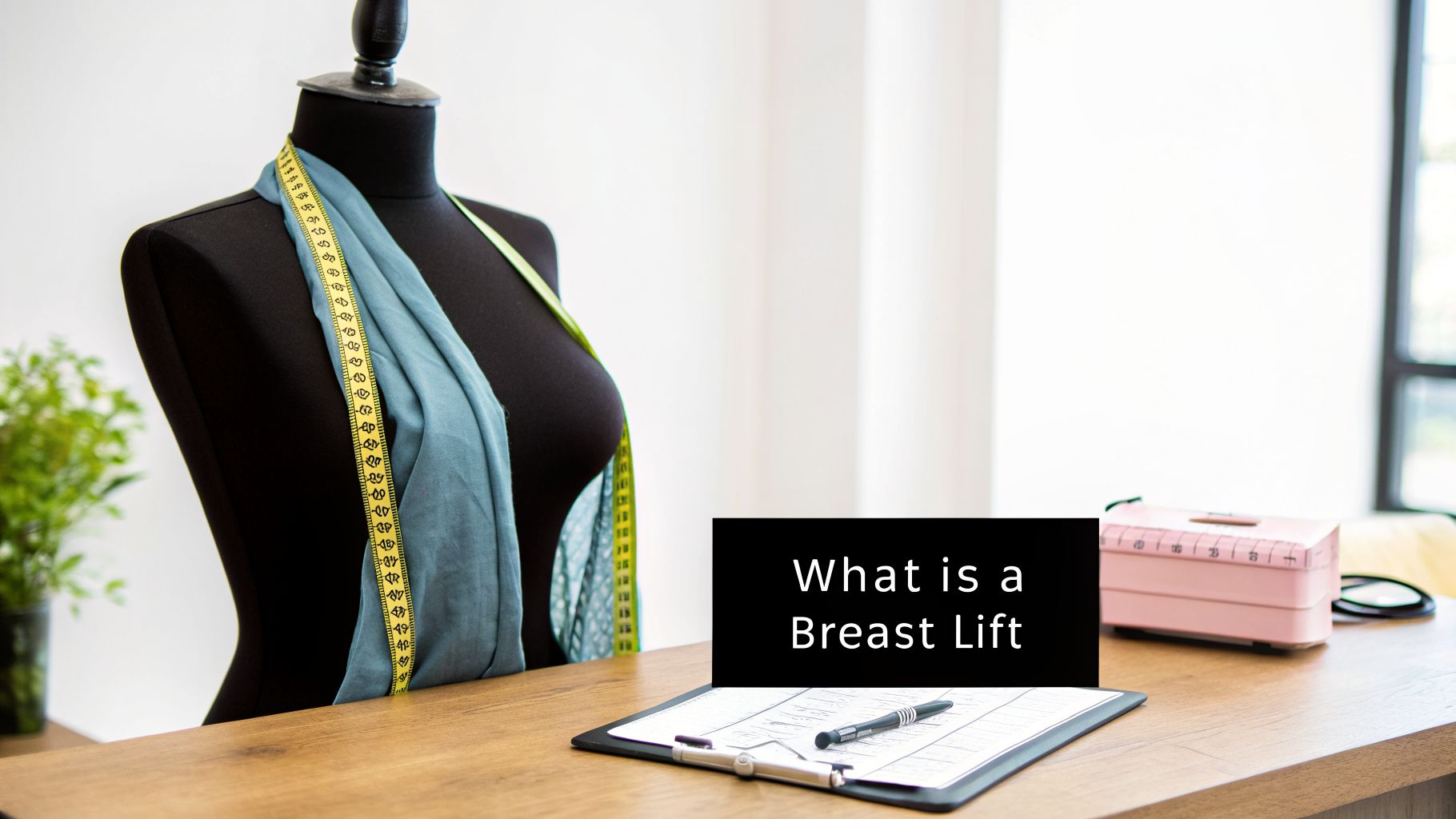
Think of it this way: a breast lift is like having a master tailor create an internal support system for your breasts. Just as fabric can stretch and lose its form, the skin and supportive tissues in the breast can lose their elasticity.
During a mastopexy, a surgeon removes the excess, stretched-out skin. Then, they reshape the internal tissue to create a firmer, more lifted breast mound. The final step is raising the nipple and areola to a more youthful, forward-facing position.
So, what’s behind these changes? It's rarely just one thing. Usually, a combination of factors contributes to the loss of skin elasticity and firmness.
The most common culprits include:
It's crucial to distinguish a lift from an augmentation. A breast lift is all about position and shape, not volume. If adding fullness is your primary goal, a breast augmentation might be the answer—or it can be performed alongside a lift for a comprehensive rejuvenation.
A mastopexy is fundamentally about reshaping and repositioning. By elevating the nipple and areola complex and removing redundant skin, the surgery reestablishes a youthful, perkier breast contour that sits higher on the chest wall.
To give you a snapshot of this procedure's key details, here is a quick overview.
| Aspect | Description |
|---|---|
| Procedure Name | Mastopexy |
| Primary Goal | To lift, firm, and reshape sagging breasts (ptosis). |
| How It Works | Excess skin is removed, internal breast tissue is tightened, and the nipple/areola are repositioned higher. |
| Anesthesia | Typically general anesthesia. |
| Surgery Time | Usually 2-4 hours. |
| Recovery | Most patients return to desk work in 1-2 weeks; full activity resumed in 4-6 weeks. |
| Key Outcome | Restores a more youthful, perkier breast contour. Does not significantly change breast size. |
This summary provides a high-level look at what a breast lift involves, from the goal to the recovery process.
The demand for this kind of natural-looking enhancement remains consistently high. In 2026, there were 903,266 breast lift procedures performed globally. And while that number saw a slight dip worldwide, the United States actually experienced a 7% increase, with 153,600 lifts performed. You can dive deeper into these figures by reviewing the latest Global Plastic Surgery Statistics.
Here at Cape Cod Plastic Surgery, Dr. Marc Fater draws on 30 years of surgical experience to deliver precisely these kinds of refined, natural results for his patients. Understanding what a lift is—and what it isn't—is the first step in deciding if it's the right path for you.
Making the decision to have a breast lift is personal, and it starts with a simple question: are you happy with the position and shape of your breasts? If the answer is no, a lift might be the solution you’ve been looking for. This guide will help you understand what makes someone a good candidate and what to expect.
The best candidates for a mastopexy, the medical term for a breast lift, are women who are in good health, don't smoke, and have a stable weight. Most importantly, they have a clear idea of what they want to achieve and realistic expectations about the results.
The reasons for wanting a breast lift are incredibly varied. For some, it’s a gradual change they've noticed over years; for others, it feels like it happened overnight.
Usually, the motivation comes down to a few major life events that change the look and feel of the breasts:
If you look in the mirror and find yourself wishing your breasts sat higher on your chest or had a perkier, more youthful shape, you’re thinking about the exact issues a breast lift is designed to correct. Many women describe their breasts as feeling "empty" at the top or notice that their nipples have begun to point downward.
There's a classic, though certainly not medical, way to get a rough idea of breast sagging: the "pencil test."
It’s simple: just place a standard pencil under your breast, right in the fold. If the pencil stays put, held in place by overhanging breast tissue, it's a sign that you likely have some degree of ptosis. This isn’t a diagnosis, but it’s a quick little check that many women have used over the years.
Of course, sagging varies from person to person. Surgeons even classify ptosis into different grades—from mild, where the nipple is at the fold, to severe, where it points down well below the fold. Understanding exactly where you fall on this spectrum is key to planning the right surgical approach.
One of the most common points of confusion is whether a lift is enough on its own, or if an implant is needed too. It’s crucial to understand what is a breast lift and what it can and cannot do.
A breast lift addresses sagging. It’s about raising the breast tissue and nipple to a higher, more youthful position by removing excess skin. A breast augmentation, on the other hand, addresses volume loss by adding fullness with an implant.
Think of it this way: if your main concern is that your breasts are hanging low, but you’re happy with their size, a lift is probably the right procedure for you. But if you feel that your breasts are both saggy and have lost volume, a combination procedure—an augmentation-mastopexy—might be necessary to restore both position and fullness for the best outcome.
You don’t have to figure this out alone. The only way to know for sure what procedure is best for your body and your goals is to have a professional evaluation. A one-on-one consultation with a board-certified plastic surgeon like Dr. Marc Fater is where the real planning begins. He will listen to your concerns, assess your anatomy, and develop a surgical plan designed to give you the beautiful, natural result you deserve.
Once you and Dr. Fater have agreed a breast lift is the right move for you, the conversation turns to how we’ll get the job done. This isn’t a one-size-fits-all procedure. The surgical technique we choose comes down to your body, the amount of sagging you have, and what you’re hoping to see in the mirror.
Think of it like a bespoke suit. The incision pattern is our pattern for tailoring, carefully selected to give you the best possible lift while keeping scars as discreet as possible. It’s a delicate balance; more powerful lifting techniques often mean more extensive incisions. My job is to walk you through the options and help you find the approach that feels right for your body and your goals.
For women who only need a little bit of a lift, the crescent lift is our go-to. It’s the least invasive technique we have. The incision is just a small, crescent-shaped line made along the upper half of the areola’s edge.
This approach is perfect for a very subtle adjustment, just enough to raise the nipple slightly. Because the incision is so small and placed right where the skin color changes, the scar is incredibly well-hidden and tends to be the least noticeable of all the breast lift scars.
When we need a bit more lifting power for mild to moderate sagging, we often look to the periareolar lift, sometimes called the “donut” lift. This involves two circles: one right around the edge of the areola and a second, larger one around it.
We then remove that "donut" of skin between the two circles. When we stitch the skin back together, it not only lifts the breast but also has the added benefit of reducing the size of an enlarged areola, which is a common concern for many women. The scar is a single circle that blends into the border of the areola.
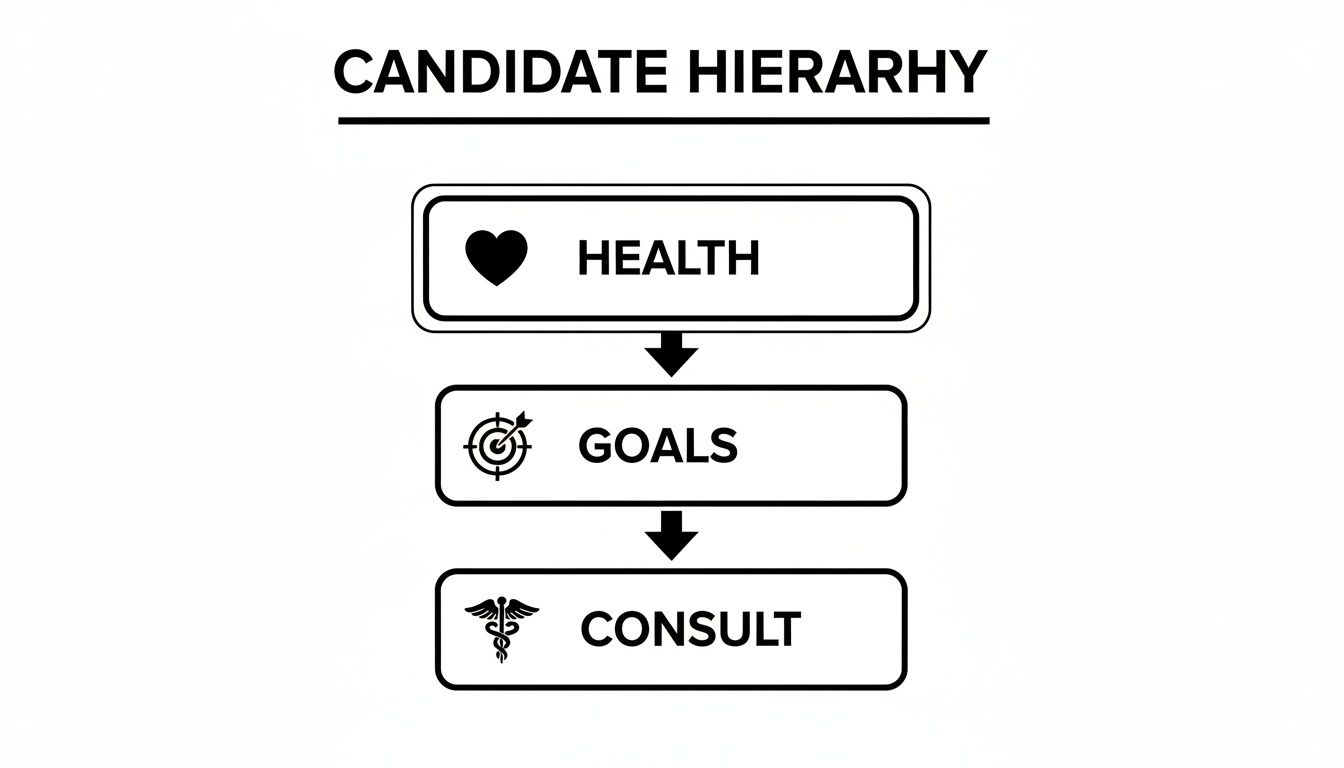
This simple chart really gets to the heart of our process. It all starts with your overall health and clear goals, which we then discuss in-depth during your consultation. Understanding these different techniques is a huge part of making sure you're confident in the plan we build together.
For women with more moderate sagging who need significant reshaping, the vertical lift is an excellent and popular choice. The incision pattern gives it its nickname, the “lollipop” lift. It includes a circle around the areola, plus a vertical line running straight down to the crease under the breast.
This technique gives me much better access to the underlying breast tissue, allowing me to reshape it internally to create a perkier, more youthful contour. While the scar is more extensive than a donut lift, the results can be truly outstanding for breasts that have lost their shape. Many women also find that a breast lift without implants can achieve their ideal shape when we use a powerful technique like this one.
When we’re dealing with significant sagging—often after major weight loss or multiple pregnancies—the inverted-T or “anchor” lift is the gold standard. It provides the most dramatic correction possible.
Here, the incision pattern is made of three parts: the circle around the areola, the vertical line down the breast, and a third incision hidden in the natural crease underneath the breast. This "anchor" gives me complete access to remove a significant amount of excess skin, lift the breast substantially, and completely redesign its shape. It does leave the most extensive scarring, but it also delivers the most powerful and rejuvenating results.
To help you see how these options stack up, here is a quick comparison of the different incision techniques.
| Technique | Best For | Incision Pattern | Scar Location |
|---|---|---|---|
| Crescent Lift | Minimal sagging | A crescent above the areola. | Along the upper edge of the areola. |
| Periareolar (Donut) Lift | Mild to moderate sagging | A circle around the areola. | Around the border of the areola. |
| Vertical (Lollipop) Lift | Moderate sagging | A circle around the areola with a vertical line below. | Around the areola and vertically to the breast crease. |
| Inverted-T (Anchor) Lift | Severe sagging | A "lollipop" plus a horizontal line in the breast crease. | Around areola, vertical line, and in the breast crease. |
Deciding on the right technique is a conversation, not a command. During your consultation, I’ll evaluate your unique anatomy and listen to what you want to achieve. From there, we’ll choose the incision pattern that will get you the best results, ensuring you feel comfortable and clear on the plan every step of the way.
A breast lift can accomplish incredible things on its own, but often it’s just one piece of a larger puzzle. Think of it like renovating a room in your house—a fresh coat of paint looks great, but for a truly finished feel, you might also want to update the furniture and lighting. In the same way, we can pair procedures to tackle several goals in one surgery, creating a result that looks and feels completely cohesive.
It’s all about achieving a natural sense of balance. Many women find that once they correct sagging, it can draw attention to other areas they’d also like to improve. By thoughtfully combining surgeries, Dr. Fater can deliver a more complete and satisfying result.
By far, the most requested combination is a breast lift with an augmentation. This is the perfect solution for women who feel their breasts are not just drooping but have also lost volume, leaving them feeling "empty" or deflated. While a lift beautifully repositions the breast, an implant restores that youthful fullness.
This popular duo is an excellent fit for women experiencing:
When Dr. Fater performs a lift and augmentation together, he’s addressing both shape and size in a single procedure. He can move the breast tissue and nipple to a higher, more youthful position while using an implant to bring back that lovely, rounded contour.
This two-in-one approach is key to avoiding a "pancaked" or flattened look, which can sometimes happen if a lift is done on breasts that have very little natural volume. If this sounds like you, getting familiar with the details of breast augmentation surgery will give you a much clearer idea of how implants work to restore fullness.
While the lift-and-augmentation pair is a classic, a breast lift can also be a cornerstone of a more extensive body contouring plan. This is especially true for women looking to reclaim their pre-baby bodies.
This brings us to the famous "Mommy Makeover." It’s not one specific operation but rather a personalized set of procedures chosen to restore a woman’s figure after pregnancy and childbirth. A typical Mommy Makeover often involves:
The biggest advantage here is efficiency. You go under anesthesia just once and have one consolidated recovery period, which is far easier to manage than bouncing back from several separate surgeries. Aesthetically, the benefit is huge—by addressing the breasts and abdomen simultaneously, Dr. Fater can create a beautifully proportioned and balanced silhouette. It’s a holistic approach that helps many women feel completely at home in their bodies again.

Deciding on surgery is one thing; knowing what to expect afterward is another. Your breast lift journey doesn't end when you leave the operating room. In fact, a beautiful, lasting outcome really hinges on a smooth recovery, having realistic expectations, and understanding the potential risks involved.
Let’s walk through what the weeks and months after your procedure will look like. Having a clear roadmap helps you feel prepared and lets you focus on what matters most: healing well.
I tell all my patients that recovering from a breast lift is a marathon, not a sprint. It's a gradual process where patience and following instructions are your best tools for success.
Week 1: The Rest and Heal Phase
Your main job during the first week is to rest. You’ll notice swelling, bruising, and soreness, which is completely normal. We’ll send you home with pain medication to manage any discomfort, and most patients find they can switch to over-the-counter options after just 2-3 days.
You'll be fitted with a supportive surgical bra that you’ll wear around the clock. This isn't just for comfort—it’s crucial for minimizing swelling and protecting the healing tissues. We encourage light walking around your home to keep your circulation moving, but absolutely no lifting or strenuous activity.
Weeks 2-3: Gradually Returning to Normal
By this stage, you’ll start feeling much more like yourself as the initial swelling and soreness subside. Most patients who work desk jobs feel ready to return to work about 1-2 weeks after their surgery.
Even though you’re feeling better, your body is still in active healing mode. You’ll need to continue wearing your surgical bra and be very careful to avoid heavy lifting (nothing over 10 pounds) or any vigorous exercise. A gentle walk is still the best activity. For a more detailed look at this phase, our guide on recovering from plastic surgery is a great resource.
Weeks 4-6: Reintroducing Activity
This is a big milestone in your recovery. Around the one-month mark, you’ll likely get the green light to stop wearing your compression garment 24/7. More importantly, you can start easing back into your exercise routine.
We’ll give you specific guidelines, but this usually means you can resume lower-body workouts and light cardio. You’ll still need to avoid high-impact activities or any exercises that put a strain on your chest muscles for a little while longer.
You'll see a change in your breast position and shape right after surgery, but this is just the beginning. The final, refined result takes some time to reveal itself as your body settles.
Your final breast shape and position will continue to refine over several months as residual swelling completely subsides and the tissues settle into place. The complete, final results are typically apparent around the six-month mark.
Scars are an unavoidable part of any surgery, but they don't have to be a major concern. Dr. Fater's meticulous technique focuses on placing incisions as discreetly as possible, tucking them into the natural breast contours. Over the first year, you’ll watch them fade from pink to a light, far less noticeable line.
Think of a breast lift as turning back the clock on gravity and aging—but it doesn't stop the clock entirely. Your breasts will naturally continue to change over your lifetime. The good news is that by maintaining a stable weight and healthy lifestyle, you can enjoy your perkier, more youthful breast shape for many, many years.
Every surgery has risks, and it’s my responsibility to make sure you go into this with your eyes wide open. A breast lift is a very safe and common procedure, particularly when performed by a board-certified plastic surgeon in an accredited facility like ours at Cape Cod Plastic Surgery.
While uncommon, it's important to be aware of the potential risks:
The single most important step you can take for your safety is choosing the right surgeon. Dr. Marc Fater’s years of experience and unwavering commitment to patient safety are your best defense against complications. During your consultation, he will discuss all of this with you directly and transparently, ensuring you have all the information you need to make a confident decision about your care.
Deciding on a breast lift is a huge step. Finding the right surgeon to trust with that decision is just as critical. It’s about more than just the procedure itself—it's about finding a team that understands your vision, has the skill to bring it to life, and makes you feel safe and heard every step of the way.
That’s the environment we’ve built at Cape Cod Plastic Surgery.
With over 30 years in practice, our board-certified plastic surgeon, Dr. Marc Fater, has dedicated his career to the art and science of breast surgery. That kind of experience isn’t just a number. It represents thousands of hours in the operating room and a profound understanding of how to create results that are not just beautiful, but truly natural and tailored to each person's body.
There’s no such thing as a “standard” breast lift here. We believe the best outcomes start with a real conversation.
During your consultation, Dr. Fater will sit down with you to listen. He’ll want to know what you’re hoping to achieve, what you’re concerned about, and what your ideal result looks like. From there, he’ll carefully assess everything from your skin’s elasticity to your unique anatomy to design a surgical plan that’s built from the ground up, just for you. This is a true partnership.
Our goal is simple: to help you feel like the best version of yourself. A successful breast lift shouldn't look "done." It should look like you—refreshed, confident, and perfectly proportional. It's about restoring a silhouette that feels authentic.
We map out every detail to ensure your new contour is in complete harmony with the rest of your body.
Your well-being is the foundation of everything we do. We perform all our breast lift procedures in our private, on-site surgical suite right here in Hyannis.
This isn’t just for convenience; it’s for your safety and peace of mind. Our facility is fully accredited by the American Association for Accreditation of Ambulatory Surgery Facilities (AAAASF), which is the highest mark of excellence for patient safety in outpatient surgery.
Here’s what that means for your experience:
When you choose Cape Cod Plastic Surgery, you’re choosing a practice where expertise, artistry, and patient safety come together. We invite you to schedule a consultation with Dr. Fater to discuss your goals and see if we’re the right fit to help you achieve the beautiful, lifted profile you deserve.
It's completely normal to have a list of questions running through your mind when you're considering a breast lift. In fact, it's a great sign that you're taking this decision seriously. Let's go over some of the most common topics that come up during our consultations.
Think of a breast lift as resetting the clock, not stopping it. Your results are designed to be very long-lasting, giving you a perkier, more youthful breast contour for many years to come.
That said, life goes on after surgery. Future pregnancies, significant changes in your weight, and the simple, ongoing effects of gravity and aging will continue to have an influence. The best way to protect your beautiful results is by maintaining a stable weight and living a healthy lifestyle—it truly makes a difference.
This is a big concern for many women, and understandably so. It's very common to experience some temporary numbness or even over-sensitivity in your nipples and breasts right after surgery.
Think of it like the nerves waking back up after being disturbed during the procedure. For the vast majority of patients, normal sensation gradually returns over the course of several weeks or months. Permanent sensation loss is quite rare, but the risk does depend on the specific surgical technique used, which is something we will discuss in detail.
While many women are concerned about sensation, most find that any changes are temporary. Sensation usually returns gradually, and the vast majority of patients are very satisfied with their long-term feeling and final aesthetic outcome.
If you’re thinking about having more children in the future, this is one of the first and most important things we need to discuss. Your ability to breastfeed after a mastopexy depends entirely on the surgical approach we take.
While it can't be guaranteed 100%, many women can and do successfully breastfeed after their surgery. By knowing your family-planning goals ahead of time, Dr. Fater can choose a technique specifically designed to preserve the milk ducts and your ability to nurse. Honesty here is key to getting the right plan for you.
Feeling more informed? The next step is a personal conversation. Here at Cape Cod Plastic Surgery, Dr. Fater and our entire team are committed to giving you the clear, expert guidance you need. We're ready to listen to your goals and help you feel confident in your decision.
Schedule your one-on-one consultation with us today. You can get started by visiting our website at https://ccplasticsurgery.com.
September 9, 2026
Expert Guide to Proper Surgical Incision Care
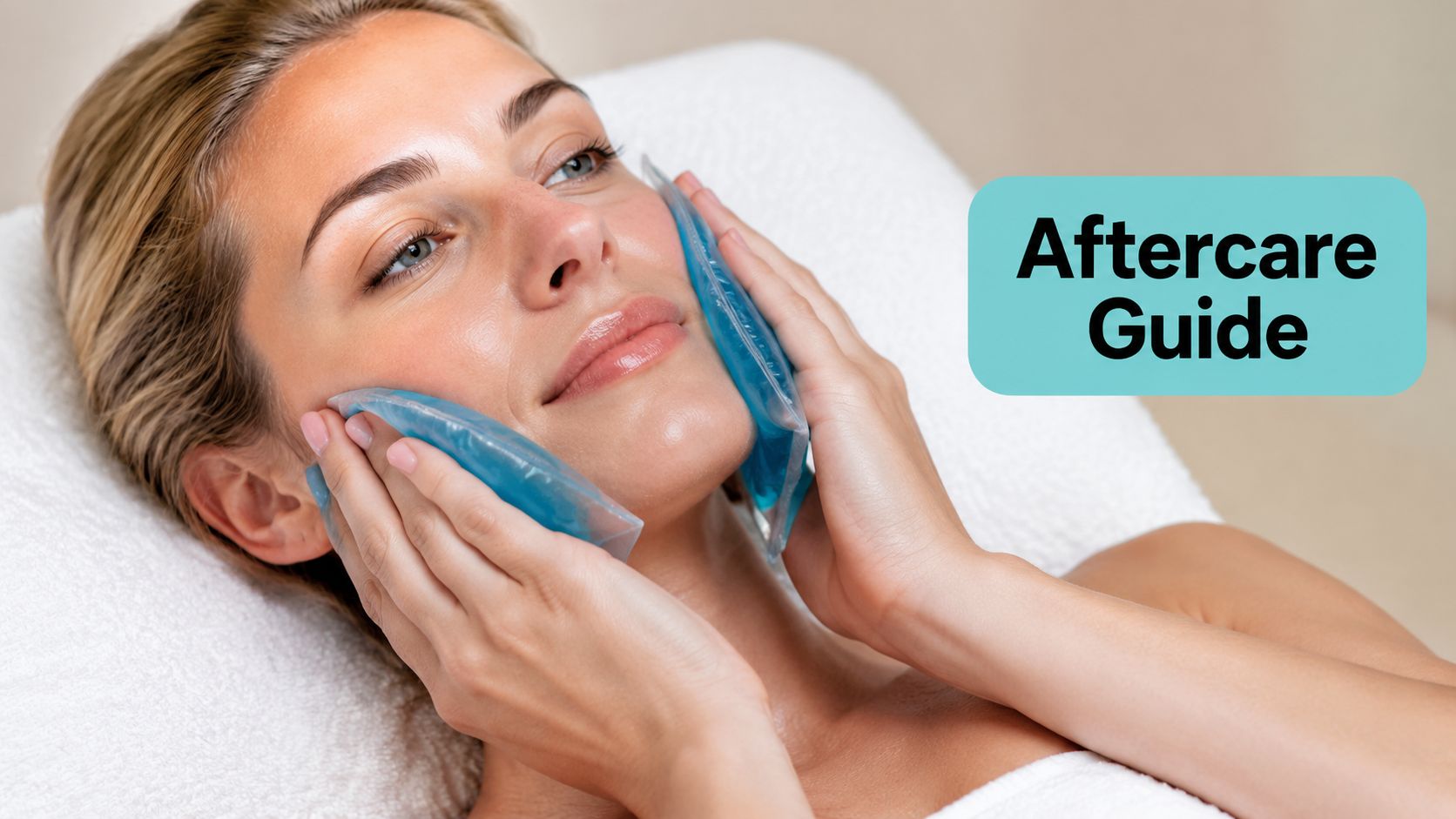
Master dermal fillers aftercare with do's and don'ts, swelling tips, activity limits and warning signs to protect your results and heal smoothly.

September 8, 2026
Ensuring Safety: Why Your Surgeon's Credentials Matter Most

Cape Cod Plastic Surgery offers expert cosmetic and reconstructive procedures in a safe, accredited setting. Led by Dr. Marc Fater, we combine advanced techniques with personalized care to help you look and feel your best.
Monday: 9:00 AM – 5:00 PM
Tuesday: 9:00 AM – 5:00 PM
Wednesday: 9:00 AM – 5:00 PM
Thursday: 9:00 AM – 5:00 PM
Friday: 9:00 AM – 5:00 PM