

September 9, 2026
How to Care for Surgical Incisions Properly
Expert Guide to Proper Surgical Incision Care
Mar 17, 2026
One of the most common questions I hear is, "When should I start getting Botox?" The simple answer is that there's no magic number. The "right" time is less about your birthday and more about what you see in the mirror and what your long-term goals are for your skin.
Generally, we see people start considering Botox for preventative reasons in their late 20s or early 30s. Others wait until their 40s or 50s when they want to correct lines that have already settled in. It’s a completely personal decision.
Think about your facial expressions for a moment. Every smile, frown, or surprised look causes your facial muscles to contract. Over years and years, these repeated movements can start to etch lines into your skin, much like folding a piece of paper over and over will eventually leave a permanent crease.
Deciding when to start Botox really comes down to which of these three goals you're aiming for.
We can think about the journey with Botox in three distinct phases. Figuring out which one you fall into helps us build the right treatment plan and timeline for you.
This chart helps visualize how your goals with Botox might shift as time goes on.
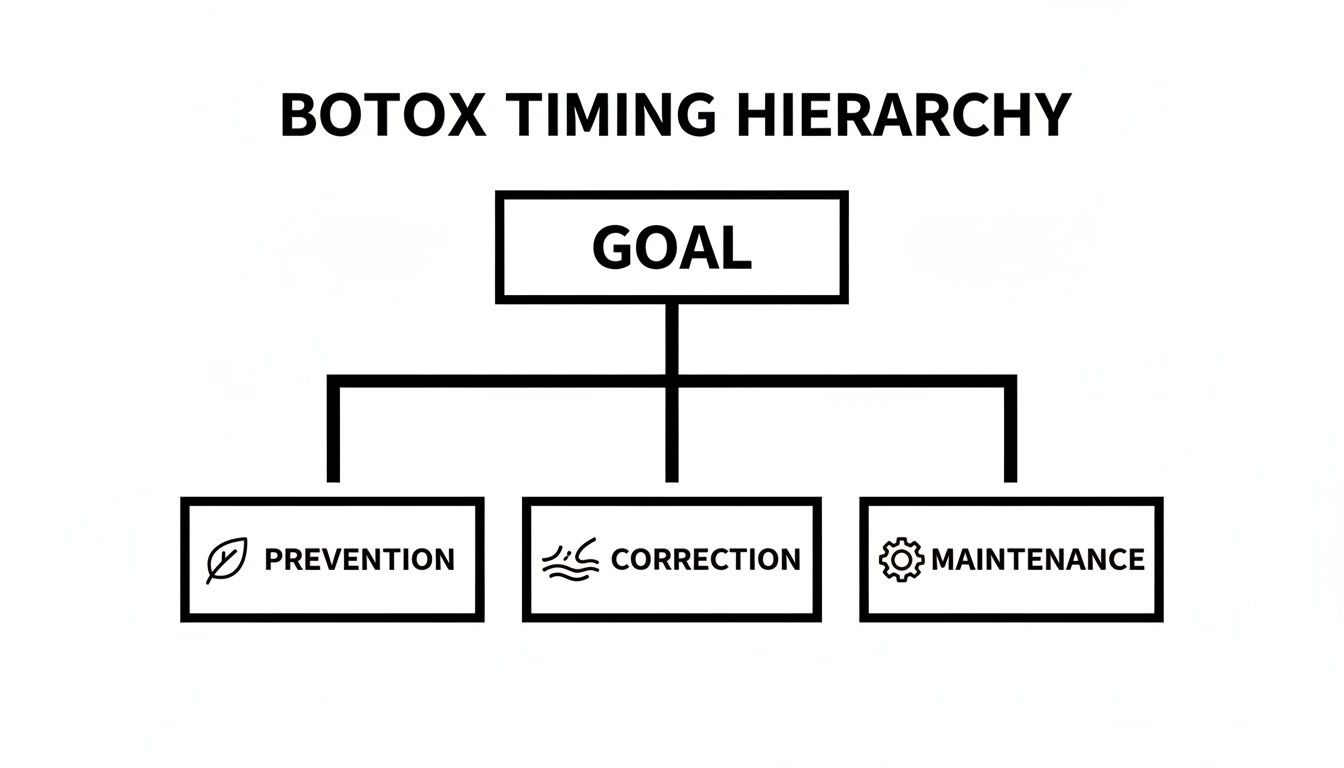
The real takeaway here is that timing is strategic. Whether you're looking to get ahead of future lines, soften the ones you have now, or simply maintain your look, there's a smart way to approach it at every stage.
To give you a clearer picture, this table breaks down the typical goals and considerations for Botox by age.
| Age Group | Primary Goal | Common Treatment Areas | Key Consideration |
|---|---|---|---|
| 20s | Prevention | Forehead lines, frown lines ("11s") | Start with low doses ("Baby Botox") to prevent lines from forming while maintaining natural expression. |
| 30s | Active Prevention & Early Correction | Frown lines, forehead, crow's feet | Address the first signs of static lines that appear at rest. Treatment becomes more regular. |
| 40s | Correction | Crow's feet, frown lines, forehead | Soften established wrinkles and prevent them from deepening. May combine with fillers for volume loss. |
| 50s+ | Correction & Maintenance | Full face (forehead, brows, eyes, mouth) | Manage deeper-set wrinkles and maintain overall skin smoothness, often as part of a comprehensive anti-aging plan. |
While this table provides a general guide, remember that your skin is unique. Your genetics, sun exposure, and skincare habits all play a role in how your skin ages.
The best time for Botox isn’t a number—it’s a conversation. It’s when you look in the mirror and decide you’re ready to invest in your skin's future, whether that means preventing the first fine lines or softening established ones.
Here at Cape Cod Plastic Surgery, we start by listening. By understanding your unique facial anatomy and what you hope to achieve, we can develop a plan that is truly personalized for you. This guide is meant to give you the "why" behind treatment timing, so you can feel confident and informed as you decide what's right for your aesthetic vision.
When most people think about Botox, they picture erasing wrinkles that are already there. But one of the smartest ways to use it is actually as a preventative tool, especially during your late 20s and early 30s. This is truly the golden window for getting ahead of the aging process.
Here’s an analogy I often use with my patients: Imagine a piece of paper. If you fold it once, it flattens out easily. But if you keep folding it in the exact same spot over and over, you create a permanent crease that just won’t go away. Your skin works much the same way with repeated facial expressions.
"Preventative Botox" is all about relaxing those expressive facial muscles before they can etch permanent lines into your skin. It’s not about freezing your face or stopping you from showing emotion. It's about gently softening those muscle movements just enough to stop the creases from ever setting in.
It's important to understand the difference between a wrinkle that shows up when you move your face (a dynamic wrinkle) and one that's always there, even when you're relaxed (a static wrinkle). Dynamic wrinkles are temporary, but static wrinkles are the permanent souvenirs left behind after years of repeated expressions.
Preventative Botox works on the dynamic wrinkles. By using smaller, carefully placed amounts of product, we can tell specific muscles—like the ones that cause you to frown or raise your eyebrows—to take it easy. This simple, proactive step can dramatically delay, or even prevent, those dynamic lines from becoming permanent static wrinkles.
This isn't just about putting off the signs of aging; it’s a much smarter long-term strategy. By keeping these muscles in a more relaxed state over time, you may find you actually need less product to get the same great results as you get older. Think of it as an investment in your future self.
A big myth is that starting Botox early will make you look "frozen." In reality, the opposite is true. Preventative treatments use tiny doses to soften muscle activity, not paralyze it. This preserves your natural expressions while stopping deep lines from forming.
This shift toward prevention is a huge trend, and for good reason. People have a much better understanding of how wrinkles form and are eager to keep their skin looking smooth for as long as possible. While the 40-54 age group is still a core demographic, the under-40 crowd is catching up fast. Globally, over 6.2 million treatments were performed in 2021, a staggering increase from fewer than 800,000 in 2000. Much of that growth comes from younger people embracing this preventative mindset. You can see more details in reports covering global botulinum toxin market trends.
Choosing preventative treatments in your late 20s or 30s offers some major advantages that really set you up for success down the road. It’s a subtle approach that makes a powerful difference in how you age.
Here are the main benefits:
Ultimately, preventative Botox is about being proactive. It's a strategic choice to manage how your skin ages, ensuring you can maintain a smooth, natural look for years to come.
As we navigate our 40s and early 50s, many of us start to notice a change in the mirror. Those fine lines that once only appeared when we laughed or frowned have decided to stick around, becoming permanent features. This is the moment when our focus often shifts from preventing wrinkles to correcting them.
If you're looking to address existing wrinkles, this age range is really the “sweet spot” for starting Botox. It’s a time when we can achieve significant, satisfying results while making sure you still look completely like yourself.
The science behind this is pretty straightforward. By our 40s, the body's production of collagen and elastin—the proteins responsible for our skin's plumpness and elasticity—slows down dramatically. I like to compare it to a memory foam mattress that gradually loses its ability to spring back into its original shape.
In our younger years, most wrinkles are dynamic. They show up with muscle movement—like smiling—and vanish as soon as our face is at rest. But as we lose that collagen and elastic "spring," those lines don't fully disappear anymore. They become static wrinkles, etched into our skin even when our expression is neutral.
This is where corrective Botox truly makes a difference. By gently relaxing the specific muscles that create these static lines, we allow the skin on top to smooth out. It’s a fantastic way to soften wrinkles that have already set in and, just as importantly, keep them from getting any deeper. The goal is never to erase your history, but to refresh the canvas.
This corrective approach works wonders on some of the most common areas of concern:
A lot of people believe that if they didn't start Botox in their 20s, they’ve missed their chance. That couldn't be further from the truth. The 40s and 50s are an incredibly effective time to start, letting you achieve remarkable results that look refreshed, not frozen.
This isn’t just our opinion—the data shows that this is the prime time for treatment. The 40-54 age group is consistently the single largest demographic for Botox procedures. In 2020 alone, a staggering 2,503,229 people in this age bracket got treated, far more than any other group.
It makes perfect sense. This peak in interest happens right when those expression lines decide to settle in for good. Globally, Botox remains the most popular non-surgical cosmetic treatment, with over 9.2 million procedures performed in 2022. You can dig deeper into the numbers by exploring these Botox statistics and trends.
When you visit us at Cape Cod Plastic Surgery in your 40s or 50s, we build a treatment plan around your unique features. There's no such thing as a one-size-fits-all approach here. We’ll sit down together, look at your facial structure, analyze your muscle movements, and assess the depth of your lines.
While every plan is different, our goals are consistent:
This is a powerful and proactive way to turn back the clock on wrinkles that have started to overstay their welcome, helping you feel refreshed and confident at any age.
Let’s clear up a common misconception: there’s no upper age limit for Botox. It’s absolutely possible to start treatments in your mid-50s, 60s, or even later and achieve beautiful, natural-looking results. It’s never too late to feel your best. At this stage in life, our approach simply shifts from correction to a sophisticated strategy of softening and maintenance.
Think of it like caring for a mature garden. You aren't trying to change its fundamental character. Instead, you're lovingly pruning and nurturing it to bring out its inherent vitality. The goal isn't to erase every line, but to create a refreshed, elegant look that truly reflects the vibrant person you are inside.
Treating mature skin requires a different playbook than we use for younger patients. After decades of smiles, frowns, and laughter, combined with a natural decline in collagen and elastin, wrinkles have often become more deeply etched into the skin. The skin itself may also have less volume and elasticity than it once did.
Because of this, Botox is often just one part of a more comprehensive rejuvenation plan. While it's fantastic for relaxing the dynamic muscles that cause wrinkles, it can't restore lost volume on its own. That's where other treatments, like dermal fillers, come into the picture.
Using these treatments together creates a wonderfully balanced and harmonious result. Botox handles the "action" lines, while fillers rebuild the underlying foundation that has diminished over time. It's the key to achieving a look that is both naturally youthful and authentic.
For many people, particularly post-menopause, hormonal shifts can speed up the visible signs of aging. A drop in estrogen often leads to drier skin, making existing wrinkles appear more prominent. This makes it an especially good time to introduce a treatment plan that directly addresses these changes.
The treatment data reflects this. The 55-69 age group is the second-highest user of Botox, with 1,010,138 treatments recorded in 2020 alone. Globally, Botox is a powerhouse in aesthetics, accounting for 27.3% of all cosmetic procedures and a staggering 66.4% of all injectable treatments in 2022. It's a testament to its widespread trust and effectiveness across all ages.
The objective in your 50s and beyond is not to chase an unrealistic version of youth. It is to soften the story your skin tells, reflecting your inner energy and confidence with grace. The result should be sophisticated, subtle, and uniquely you.
Here at Cape Cod Plastic Surgery, our experienced injectors truly understand the nuances of treating mature skin. We meticulously adjust our dosages and injection techniques to produce elegant results, ensuring we never over-treat. Our focus is always on creating a refreshed look that enhances your natural beauty. For a closer look at what to expect, check out our guide on how long Botox typically lasts.
To support your skin’s health and get the most from your treatments, a good at-home routine is essential. Consider learning about the best facial oils for aging skin to complement your in-office procedures. This holistic approach ensures your skin receives comprehensive care from every angle.
Beyond the general questions of age or skin condition, one of the most common things we discuss with patients is how to time Botox for a special event. Whether it's a wedding, a milestone reunion, or an important photoshoot on the calendar, getting the timing right is crucial for looking and feeling your absolute best.
Think of it this way: you wouldn't get a new haircut the morning of a major event. You'd get it a week or two before to let it settle in. Botox is no different. It’s a treatment that evolves, and a last-minute appointment simply won’t give you the polished, natural-looking results you’re hoping for.
The key to perfect timing is understanding that Botox takes a little while to work its magic. While you’ll likely start noticing a change within 3 to 7 days, the final, smooth result doesn’t fully appear until around the 14-day mark. You can get a more in-depth look at this process in our guide on how long before Botox kicks in.
Because of this, we always advise scheduling your Botox appointment 3 to 4 weeks before your special event. This isn't an arbitrary number; it’s the timeline we’ve seen deliver the best outcomes time and time again.
Scheduling your treatment 3-4 weeks out is the sweet spot. It allows the Botox to reach its full effect and gives you a crucial buffer period for any minor touch-ups, ensuring your results are absolutely perfect on the big day.
This schedule gives you two huge advantages. First, it ensures your results have fully settled and are at their peak. Just as importantly, it leaves a comfortable window for a follow-up. If one eyebrow needs a tiny lift to be perfectly symmetrical or a stubborn line needs a little extra attention, we have plenty of time to make those adjustments without any last-minute stress.
Let’s map this out with a simple countdown. If your big day is on a Saturday, here’s what your schedule should look like for flawless results:
Following this simple calendar takes all the guesswork out of the process. You won’t have to worry about lingering swelling or be anxiously waiting for your results to appear just days before you need to shine.
If you’re planning other cosmetic treatments, like facial surgery, before your event, sequencing is critical. For any procedure that causes significant swelling—a facelift or eyelid surgery, for example—you absolutely must wait until that swelling has gone down completely before receiving Botox. Injecting into tissue that is still healing can cause unpredictable, uneven results.
Always be sure to discuss your complete aesthetic plan with your provider. We can map out a safe and effective timeline that coordinates all your treatments, making sure each one complements the last. A little bit of planning ahead ensures your Botox is perfectly settled, leaving you to look and feel incredible for your special occasion.
Your Botox experience doesn't start with the treatment itself—it starts with a conversation. A great consultation isn't a sales pitch. Think of it as a strategy session where your goals and our expertise come together to map out the perfect plan for you.

First things first, we listen. We want to hear what you see when you look in the mirror and what you're hoping to change. This is your chance to tell us everything—whether you’re concerned about looking tired, want to get ahead of future wrinkles, or hope to soften lines that have already settled in.
This chat helps us make sure your vision matches what we can realistically achieve with Botox. From there, we’ll move on to a hands-on look at your facial anatomy.
This is the interactive part. We'll ask you to make a few faces—frown, smile, raise your eyebrows. It might feel a little silly, but observing how your unique facial muscles move is the only way to pinpoint the exact placement and dosage you’ll need for a natural-looking result.
After we see how your muscles work, we’ll dive into the details that form the foundation of your treatment plan:
This review is all about keeping you safe. That’s always our number one priority.
Once we have a full understanding of your goals and health profile, we can build your treatment plan. This is completely customized to you; there's no "one-size-fits-all" Botox here. We believe in being completely open, so you'll know exactly what to expect from start to finish.
We will walk you through:
The consultation is the most important step in your entire Botox journey. It’s where trust is built and a partnership is formed. You should leave feeling completely confident, informed, and excited about the path forward.
This is also your time to ask us anything. Seriously, no question is too small. Whether you’re asking when to get Botox for the first time or wondering how to make your results last, we're here to give you clear, honest answers. At Cape Cod Plastic Surgery, our goal is to empower you with knowledge so you can walk out with a personalized plan, ready for the next step.
Once you’ve decided you’re interested in Botox, the next big question is always about timing. When should you start? How often do you need to come back? Is there a wrong time to get it?
These are all excellent questions, and getting the timing right is crucial for achieving results you’ll love. Let's walk through some of the most common questions we hear every day at the practice.
For most of our patients, the sweet spot for a Botox treatment is every 3 to 4 months. Think of it like a quarterly tune-up for your skin.
Sticking to a regular schedule like this is smart because it keeps the targeted muscles consistently relaxed. This prevents those dynamic lines—the ones that appear when you frown or raise your brows—from fully returning and etching their way back into your skin. It’s all about maintaining that smooth, refreshed look.
Of course, this is more of a guideline than a hard-and-fast rule. Your personal treatment schedule will depend on your unique muscle activity, your body's metabolism, and what you're hoping to achieve. We’ll fine-tune the timing specifically for you. You can get a deeper look into how we determine this in our guide on how often you should plan for Botox appointments.
Here's an interesting long-term benefit we see in our practice: with consistent treatments over the years, your muscles can actually learn to stay more relaxed on their own. Many long-term patients find they eventually need fewer units or can go a bit longer between appointments to get the same great result.
You’ve probably seen the term "Baby Botox" online, but it’s not a different type of Botox. It’s actually an injection technique. Instead of a standard dose, we use tiny micro-doses to very gently soften expression lines without freezing muscle movement.
The whole point is to look refreshed and natural, not “done.”
This lighter approach is perfect for a few specific situations:
Absolutely. Patient safety is always our first priority, and there are definite times when you must postpone treatment. Botox is not an option if you are pregnant, planning to become pregnant, or are breastfeeding. It's also contraindicated for individuals with certain neurological conditions.
It's also vital that you tell us about every single medication and supplement you take. Some, like blood thinners or even high-dose fish oil, can increase your risk of bruising.
From a planning perspective, we strongly advise against getting Botox for the very first time right before a major life event, like your wedding. It’s much smarter to schedule a "trial run" about 4 to 6 months beforehand. This gives us plenty of time to see how your muscles respond, make any touch-ups, and perfect your look long before the big day arrives.
Ready to create a personalized treatment plan that aligns with your goals? At Cape Cod Plastic Surgery, Dr. Fater and his team are here to provide expert guidance and deliver results that help you look and feel your absolute best. Schedule your consultation today.
September 9, 2026
Expert Guide to Proper Surgical Incision Care
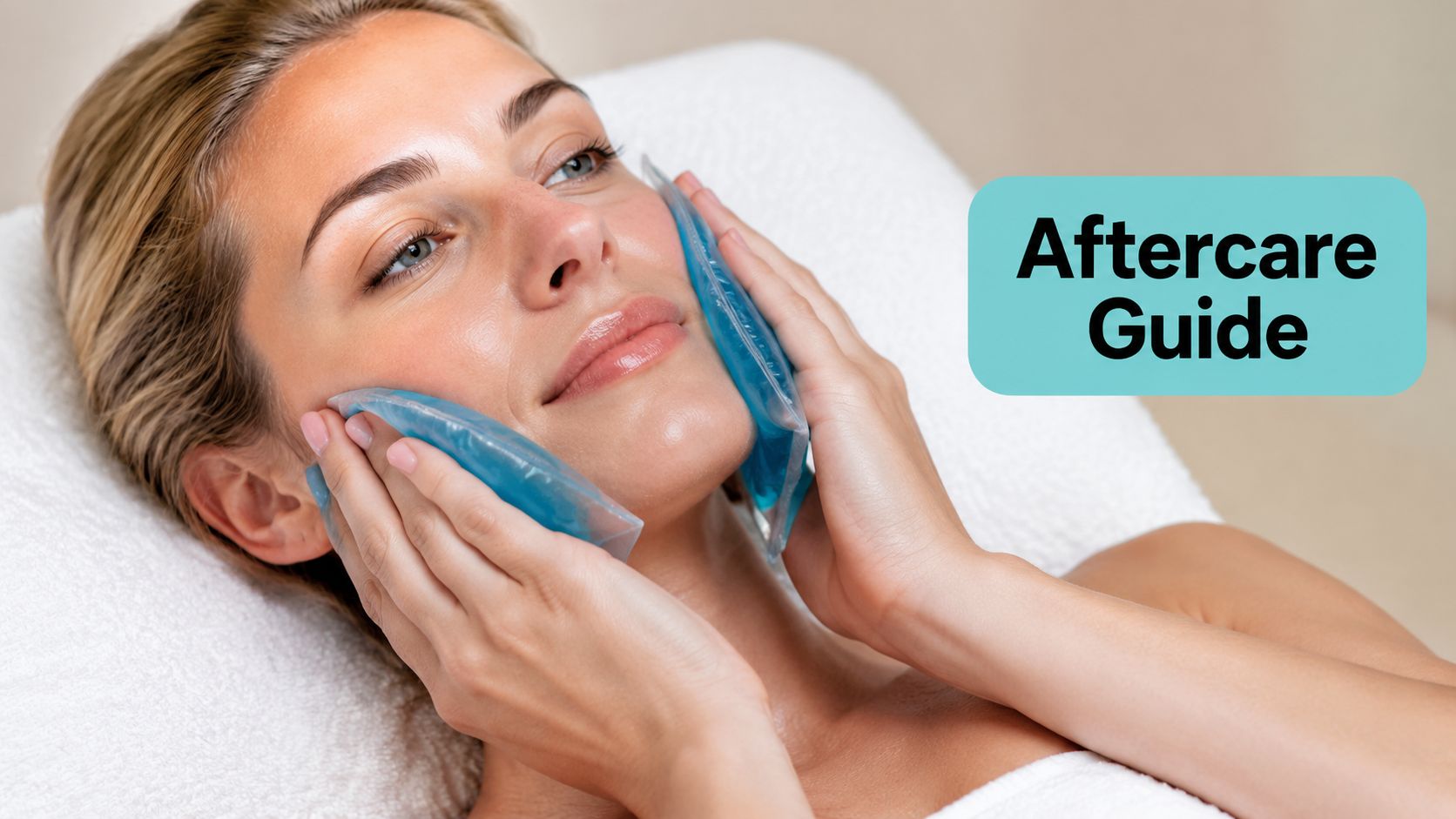
Master dermal fillers aftercare with do's and don'ts, swelling tips, activity limits and warning signs to protect your results and heal smoothly.

September 8, 2026
Ensuring Safety: Why Your Surgeon's Credentials Matter Most

Cape Cod Plastic Surgery offers expert cosmetic and reconstructive procedures in a safe, accredited setting. Led by Dr. Marc Fater, we combine advanced techniques with personalized care to help you look and feel your best.
Monday: 9:00 AM – 5:00 PM
Tuesday: 9:00 AM – 5:00 PM
Wednesday: 9:00 AM – 5:00 PM
Thursday: 9:00 AM – 5:00 PM
Friday: 9:00 AM – 5:00 PM