

October 7, 2026
What to Expect During Your Breast Surgery Recovery
A Practical Guide to Healing After Breast Surgery
Jun 11, 2026
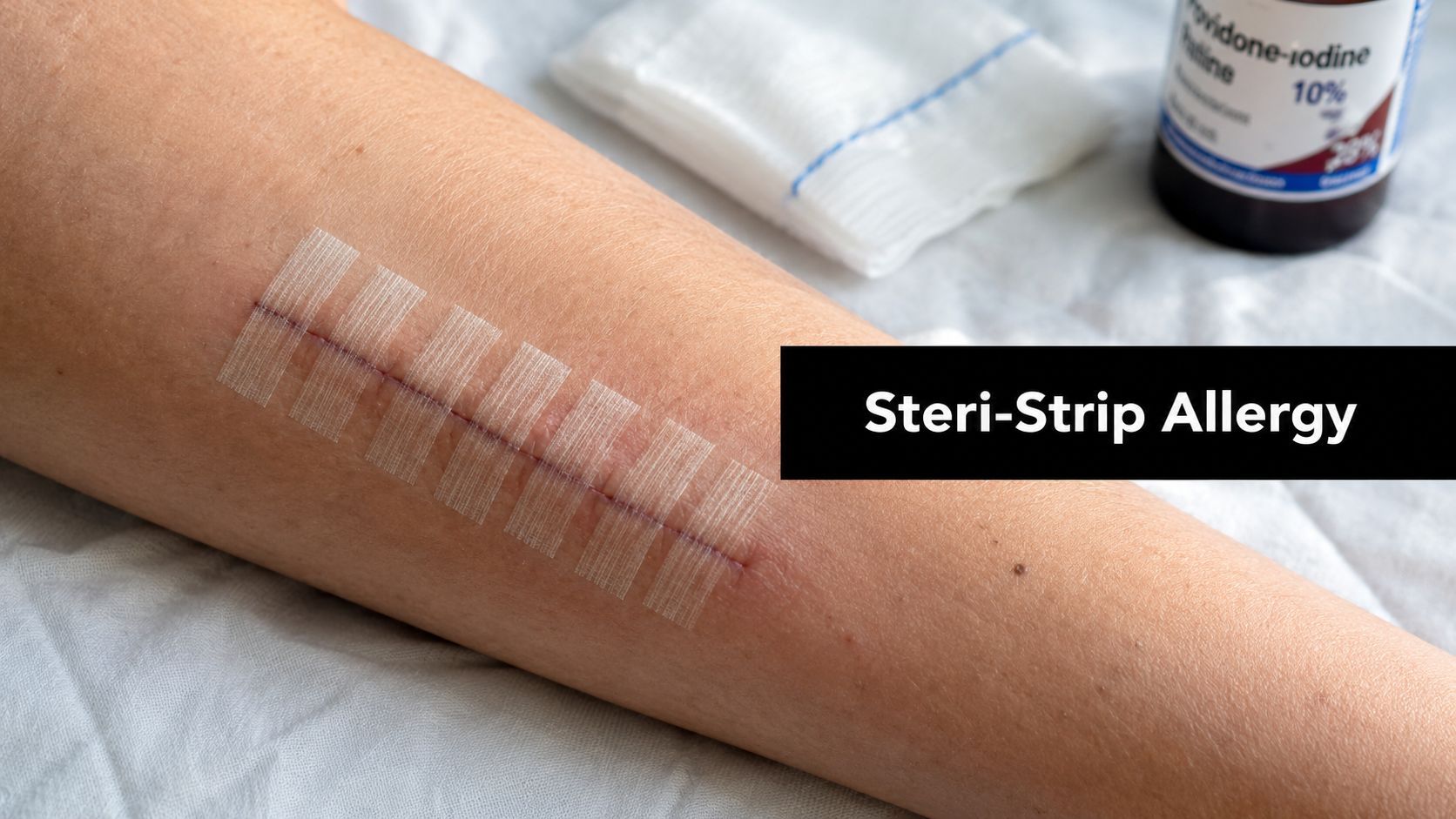
You're home after surgery, doing what most patients do. You glance at your incision in the mirror, expecting a little swelling or bruising, and instead you see a red outline where the Steri-Strips sit. Maybe it itches. Maybe the skin looks angry and raised. Maybe your first thought is, “Did I do something wrong?” or worse, “Is this going to ruin my scar?”
Take a breath. Skin reactions around Steri-Strips are unsettling, but they're also a problem your surgeon's team sees often enough to guide you through it. The key is to respond calmly and correctly so you protect both the incision and the cosmetic result.
If you're healing from cosmetic or reconstructive surgery, that balance matters. You want relief from the rash, but you also don't want to tug on an incision, trap moisture, or apply the wrong product too soon. Good scar care starts with good skin care, which is why many patients also benefit from learning how to minimize scarring after surgery as they recover.
Steri-Strips are small adhesive strips used to support healing skin. After plastic surgery, they can help hold the surface of an incision together, reduce tension, and add a layer of protection while the area settles down. In many patients, they do exactly that and then peel away with no drama.
But sometimes the skin under or around them reacts.
A common scenario goes like this. The incision itself may look fine, but the skin around it starts turning pink, then red. The shape of the redness often matches the tape. Patients usually say the area feels “itchy, hot, or prickly,” which is very different from the mild soreness they expected from surgery.
After cosmetic or reconstructive surgery, patients look closely at every detail. That's appropriate. The location is often visible, the scar matters, and even mild inflammation can feel like a threat to the final result.
Practical rule: If the incision seems supported but the surrounding skin is becoming increasingly itchy or rashy, think “skin reaction” and contact your surgeon's office before experimenting at home.
What makes this issue frustrating is that not every red patch means the same thing. Some reactions come from moisture, friction, or the adhesive pulling at delicate skin. Others are true allergies to the adhesive itself. Those two problems can look similar at first, but they don't behave the same way and shouldn't always be managed the same way.
That's where patients get stuck. They wonder whether they should leave the strips alone, remove them, put cream on them, or wait it out. The safest approach is to identify the pattern, avoid anything that could disturb the wound closure, and get specific guidance from the surgeon who knows how your incision was closed.
Not every allergic reaction to Steri-Strips is an allergy. That distinction matters.
Irritation is the skin getting overwhelmed by contact. Think friction, trapped moisture, rubbing, or repeated pulling on fragile post-op skin. Allergy is different. It's an immune response to the adhesive.
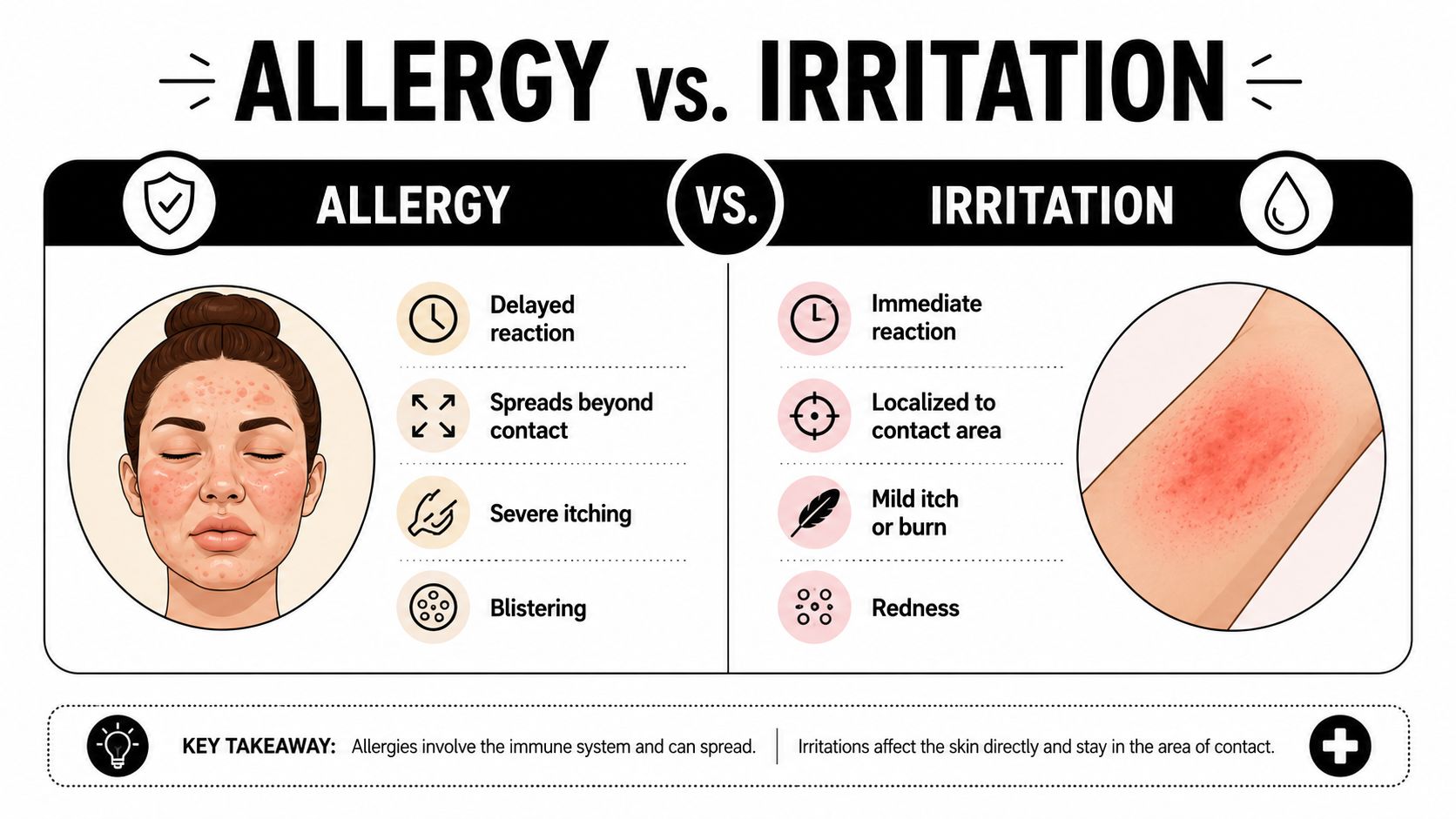
I explain it to patients like this:
That's why an allergy often feels more intense. The itch is stronger. The redness can spread beyond the exact edge of the strip. Tiny blisters may show up. The skin may look worse even though you haven't done anything new.
A true adhesive allergy is often delayed, not immediate. A review of medical adhesives notes that allergic reactions of this type are usually classified as allergic contact dermatitis. In people becoming sensitized for the first time, symptoms usually appear 7 to 10 days after exposure. In people who were already sensitized, symptoms can appear within 12 to 48 hours. A separate case review noted symptoms often begin more than 12 hours after contact and usually within 48 to 72 hours. The same review estimated that 1% to 1.4% of patients exposed to acrylic monomers develop some degree of allergic contact dermatitis. You can read that review in the medical adhesive dermatitis overview on PubMed Central.
That timing helps explain why patients are often confused. They expect an allergy to happen right away. With Steri-Strips, it may not.
| Feature | More like irritation | More like allergy |
|---|---|---|
| When it starts | Soon after contact or friction | Often delayed |
| Where it stays | Usually limited to the contact area | May extend beyond the strip |
| How it feels | Mild burning, stinging, or tenderness | Strong itching is common |
| How it looks | Flat redness | Red rash, swelling, bumps, or blisters |
If the reaction seems to “grow” rather than simply stay rubbed-looking, allergy moves higher on the list.
The most useful clue is often the pattern. A Steri-Strip allergy usually creates a reaction that mirrors the tape itself. You may see a rectangular or linear area of redness where the strip sits, with sharper borders than you'd expect from normal post-op pinkness.
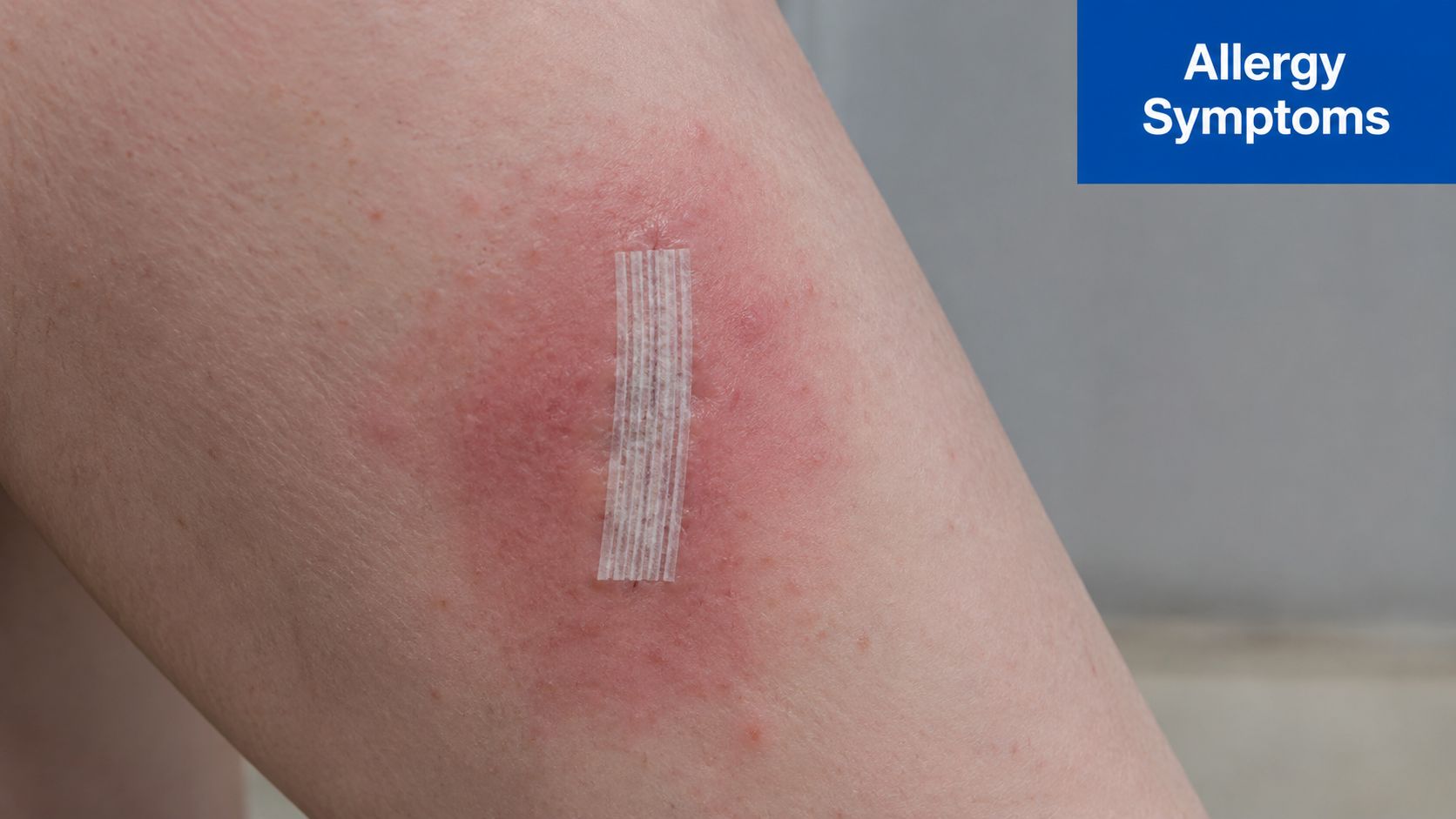
The first complaint is often itching, not pain. That's an important difference. Healing incisions can feel tight, sore, or slightly tender. Allergic skin tends to feel itchy in a persistent, distracting way.
You might notice:
Sometimes the skin becomes shiny and puffy. In other cases, it looks dry and scaly. Both patterns can happen with contact dermatitis.
As the reaction builds, the skin may shift from simple redness to a more active rash. At this stage, patients start worrying about infection, especially if the area looks wet or irritated.
More significant signs can include:
That last point matters. A little redness right under tape can happen from pressure alone. When the rash extends beyond the strip's footprint, allergy becomes more likely.
Here's a short visual explainer if you want to compare what you're seeing with common adhesive skin reactions:
Normal post-op healing is often less dramatic than patients fear. It may include mild pinkness right at the incision line, slight swelling, bruising nearby, and tenderness when you press on the area. Those changes usually follow the incision itself.
A Steri-Strip allergy behaves differently. The skin around the incision becomes the main issue.
The incision can be healing well while the skin around it is reacting badly. Those are two separate problems, and they need to be judged separately.
Cosmetic surgery patients sometimes have thin, carefully closed incisions in visible areas such as the eyelids, face, breast, or abdomen. In those locations, even a mild adhesive rash can look dramatic. Red skin on the face appears brighter. A breast incision sits in a warm area where moisture can worsen irritation. An abdominal incision may rub against waistbands or compression garments.
That's why photos help. If you're unsure, take clear pictures in good light and send them through the method your surgeon's office prefers. It's often easier for the clinical team to identify the pattern when they can see the exact border and distribution.
When patients notice an allergic reaction to Steri-Strips, their first instinct is often to peel everything off and start applying products. Slow down. The right move depends on how secure the incision still needs to be and what your surgeon used underneath or alongside the strips.
For a mild reaction, the safest first steps are gentle and simple.

Some patients also ask whether a soothing gel is reasonable for nearby irritated skin once the surgeon says topical care is appropriate. If you want a plain-language overview of when aloe is commonly used for comfort, this review of the benefits of AloeCure aloe gel may be helpful. Still, don't put any gel directly on a healing incision unless your own surgeon has cleared it.
Medical treatment is usually straightforward once the diagnosis is clear. Depending on the location, timing, and severity, your surgeon or another clinician may advise:
The exact plan varies with the procedure. A fresh facelift incision, breast reduction closure, eyelid incision, or abdominal scar won't all be handled the same way.
This part protects the scar.
| Avoid this | Why it can cause trouble |
|---|---|
| Peeling strips off aggressively | Can stress the incision edges |
| Layering multiple creams | Makes it harder to judge what's helping or worsening things |
| Using harsh cleansers or alcohol | Further irritates healing skin |
| Waiting too long when the rash is worsening | Delays relief and may affect dressing choices |
If the rash is mild, the goal is to calm the skin. If the incision support is compromised, the goal shifts to protecting the closure first.
The best time to deal with adhesive sensitivity is before surgery, not after the rash appears.
If you've ever had a reaction to bandages, surgical tape, ECG stickers, lash glue, or even certain cosmetic adhesives, bring it up during your consultation. Don't dismiss it because it “was just skin.” In plastic surgery, skin matters. The dressing that works beautifully for one patient may irritate another.
A short history is often enough to help the team plan better wound support.
Tell them if you've had:
That conversation can shape the post-op plan. It may also help your surgeon choose a closure strategy that protects the incision without repeating a known problem.
Not every patient needs the same type of external support. Depending on the location and procedure, surgeons may use different options.
Some common alternatives include:
Patients don't need to decide this themselves. What matters is knowing there are options. If you've had trouble before, ask what the backup plan would be if your skin starts reacting.
For patients preparing for surgery or reviewing aftercare, it also helps to understand the basics of how to care for surgical incisions, because prevention isn't only about the adhesive. It's also about keeping the area dry enough, clean enough, and undisturbed enough to heal well.
In plastic surgery, a skin reaction isn't just a comfort issue. Inflamed skin can lead patients to rub, scratch, over-clean, or remove support too soon. Any of those can make a scar look worse.
A proactive plan usually produces a calmer recovery. If your surgeon knows your skin tends to react, they can often tailor dressings, timing, and follow-up so you're not improvising in the middle of healing.
Bringing up adhesive sensitivity isn't being difficult. It's useful pre-op information.
For a cosmetic or reconstructive surgery patient, the question isn't only “Is this rash uncomfortable?” The key question is “Could this affect my incision, my scar, or my result?”
That's why a prompt call matters. A surgeon's office can help distinguish a local skin reaction from a bigger wound-care issue and decide whether the Steri-Strips should stay, be removed, or be replaced with something else.
Call your surgeon if you notice any of the following:

A mild adhesive reaction can often be managed well. The bigger risk comes from guessing wrong. If a patient assumes it's “just tape irritation” but the skin starts breaking down near a fresh closure, that can interfere with healing. If they assume it's infection and start applying random products, that can also create problems.
Patients recovering from facial procedures often worry most about visible scar quality. Patients healing from body contouring or breast surgery often struggle with dressings in areas of warmth and friction. In both situations, the principle is the same. Calm the skin, protect the closure, and ask early if anything seems off.
If you're trying to sort out whether your symptoms sound more like infection than adhesive dermatitis, this guide to signs of infection after septoplasty is a useful example of what clinicians watch for when redness and drainage become concerning.
When in doubt, call. It's much easier to adjust wound care early than to repair a preventable setback later.
If you're dealing with an allergic reaction to Steri-Strips after a procedure, the team at Cape Cod Plastic Surgery can help you protect both your healing incision and your final result. If something looks wrong, feels unusually itchy, or you're unsure whether to remove a dressing, reach out for professional guidance instead of guessing at home.
October 7, 2026
A Practical Guide to Healing After Breast Surgery

October 6, 2026
Your Safety Guide: What to Look for When Choosing a Plastic Surgeon

October 5, 2026
Why Our On-Site Accredited Facility Matters for Your Safety

Cape Cod Plastic Surgery offers expert cosmetic and reconstructive procedures in a safe, accredited setting. Led by Dr. Marc Fater, we combine advanced techniques with personalized care to help you look and feel your best.
Monday: 9:00 AM – 5:00 PM
Tuesday: 9:00 AM – 5:00 PM
Wednesday: 9:00 AM – 5:00 PM
Thursday: 9:00 AM – 5:00 PM
Friday: 9:00 AM – 5:00 PM