
September 9, 2026
How to Care for Surgical Incisions Properly
Expert Guide to Proper Surgical Incision Care
Jul 29, 2026
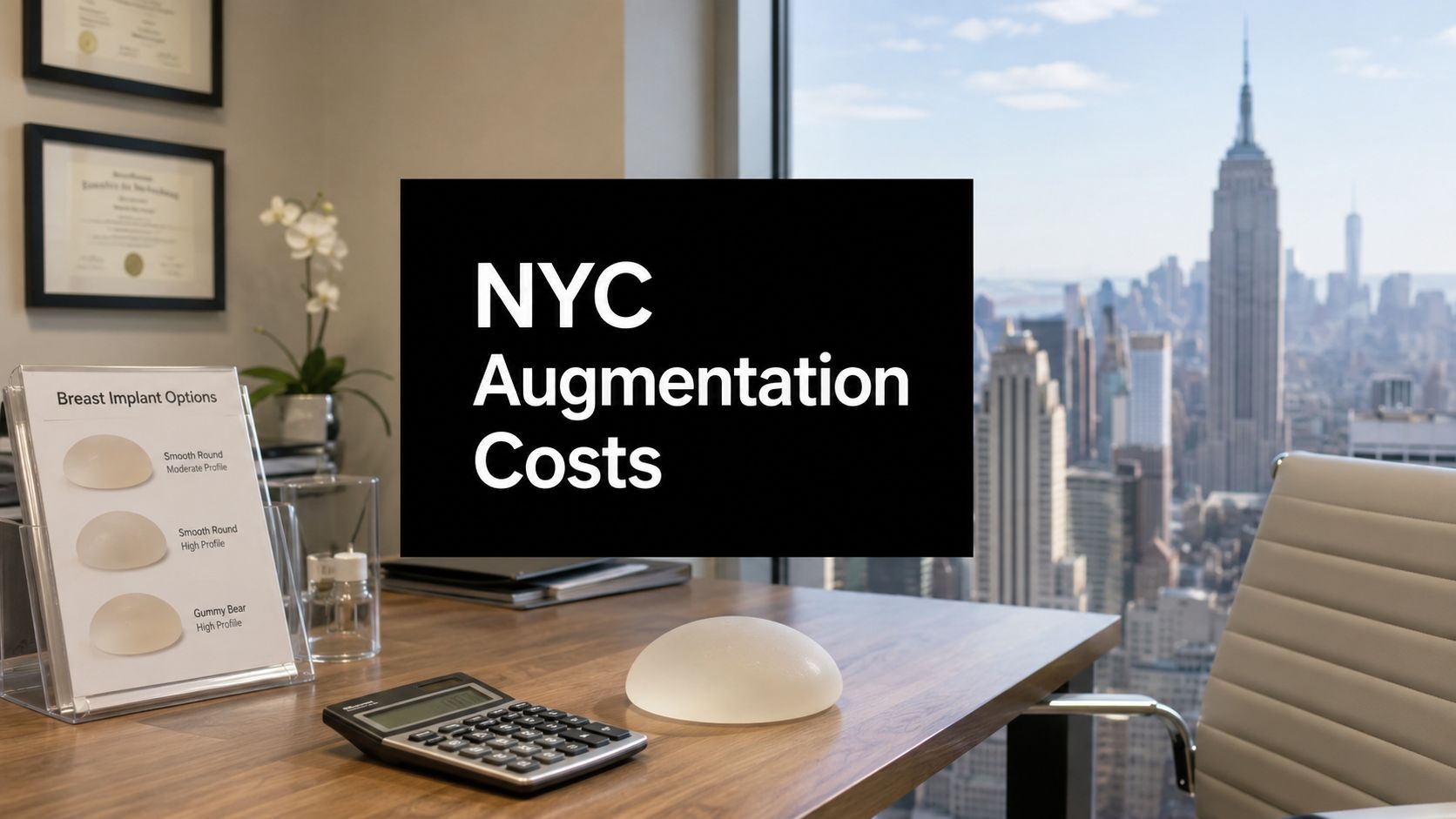
Breast augmentation cost New York usually lands around $8,500 to $15,000 all in, with $11,500 as a common midpoint, and that is about 20% to 40% above the national surgeon-fee average because New York is a premium market. If you see a quote far below that, treat it as incomplete until the surgeon shows you exactly what is and isn't included.
The number most patients ask for is the wrong number. A surgeon's fee is only one part of the bill, and in New York the total moves fast once you add the operating room, anesthesia, implants, garments, and follow-up care. If you want a clean comparison point, a national cost page like compare breast implant costs helps you separate a real package price from a bait headline.

In New York, breast augmentation cost should be read as a full surgical package, not a single fee. The citywide budget range is roughly $8,500 to $15,000, and many practices land near $11,500 for a standard case. In Manhattan, and with premium surgeons, the final bill can climb well beyond that. $20,000+ is a real number when the surgery uses a high-end facility or the plan is more involved.
The first split to understand is surgeon fee versus all-in price. The American Society of Plastic Surgeons reports an average surgeon fee of $4,875 for breast augmentation with implants, while breast augmentation with fat grafting averages $5,719. Those figures do not include anesthesia, the operating room, or related expenses, so they do not reflect what most New York patients pay. ASPS cost table
Practical rule: if a quote sounds cheap for New York, assume something is missing until the office lists every charge in writing.
A fair New York estimate should answer three questions right away. What is the surgeon charging, what facility is being used, and what implant choice is included. If any of those answers are vague, the quote is not ready for comparison. For a cleaner benchmark, compare breast implant costs.
New Yorkers get misled most often by quotes that bundle one item and omit the others. A real bill usually has six parts, surgeon fee, facility fee, anesthesia, implants, garments, and follow-up visits. The total swings because each part behaves differently, some are fixed, some depend on the implant, and some depend on the surgeon's reputation and the setting.
| Line Item | Typical NYC Range | Fixed or Variable |
|---|---|---|
| Surgeon fee | $4,575–$8,000 | Variable |
| Facility or operating room fee | Qualitative, often substantial in New York | Variable |
| Anesthesia | Qualitative, added to the total quote | Variable |
| Implants | Saline usually lower, silicone usually higher | Variable |
| Post-surgical garments | Usually a smaller add-on | Mostly fixed |
| Follow-up visits | Often included, sometimes itemized | Depends on practice |
The surgeon-fee range above comes from the ASPS 2024 fee table, which places breast augmentation at $4,575–$8,000 for surgeon services alone. That range is useful because it tells you what a professional fee looks like before the rest of the bill is layered on. ASPS cost table
The facility fee matters more in New York than in many other markets. Outpatient centers are usually cheaper than hospitals, and that difference can be significant even when the operation itself is the same. Implant choice also moves the final number, because saline is generally less expensive than silicone, and more premium implant planning often comes with a higher quote.
A low headline price is not the same as a low total price. The office has to show you the room, anesthesia, implant, and aftercare costs before you can judge value.
If a practice says the consultation fee is waived, that may be fine. If the surgical quote itself is vague, that's a problem. The winning move is not the cheapest number, it's the cleanest invoice.
Manhattan sits at the top of the pricing ladder because overhead is higher and demand is concentrated. That does not mean every Manhattan surgeon charges more than every office in Brooklyn or Queens, but the premium is real and easy to spot. A New York City plastic surgery price guide also notes that major metropolitan areas usually carry higher fees because rent, staffing, and operating costs are higher.
Brooklyn and Queens can be the better value if you want an experienced surgeon without paying for a Manhattan address. The Bronx and Long Island adjacent practices can come in lower still, especially when the surgery is done in an outpatient center instead of a hospital. Location changes overhead before it changes technique, so the borough matters, but it is only one part of the quote.
A Manhattan office address does not automatically mean a Manhattan facility fee. Many surgeons consult in one place and operate in an outpatient center elsewhere, and that difference matters to your budget. If you live in Astoria or Riverdale, comparing one borough over can make sense, but only if the quote lists the same inclusions. A fair borough-to-borough comparison should show the surgeon fee, facility fee, anesthesia, implants, and follow-up care in writing, not just a tempting headline number.
The biggest price driver is not the breast augmentation itself, it's who performs it and how complex the case is. A board-certified surgeon with a deep portfolio, strong revision experience, and premium planning tools usually charges more. That's not padding, that's the market pricing expertise, time, and lower tolerance for shortcuts.
Surgeon experience and reputation are the first filter. Higher demand surgeons often charge more because they spend more time on planning, spend less time on rushed consultations, and usually operate in better-controlled settings. That often gives the patient a cleaner experience, but it does not guarantee a better result, which is why you still need to review before-and-after photos carefully.
Primary versus revision surgery is the second major lever. Revision work is structurally more expensive because scar tissue, implant exchange, and longer operating time make the case harder. That is why a revision quote should never be compared directly with a first-time augmentation quote.
Implant choice also changes the bill. Saline tends to be less expensive, silicone generally costs more, and more specialized implant choices can increase the total further. The office should explain exactly why the implant line item is what it is.
Facility type and anesthesia round out the pricing. A hospital setting usually costs more than an outpatient center, and more involved anesthesia support adds to the total. In a city like New York, those differences can move a quote enough to make two offices look far apart when the actual surgery plan is similar.
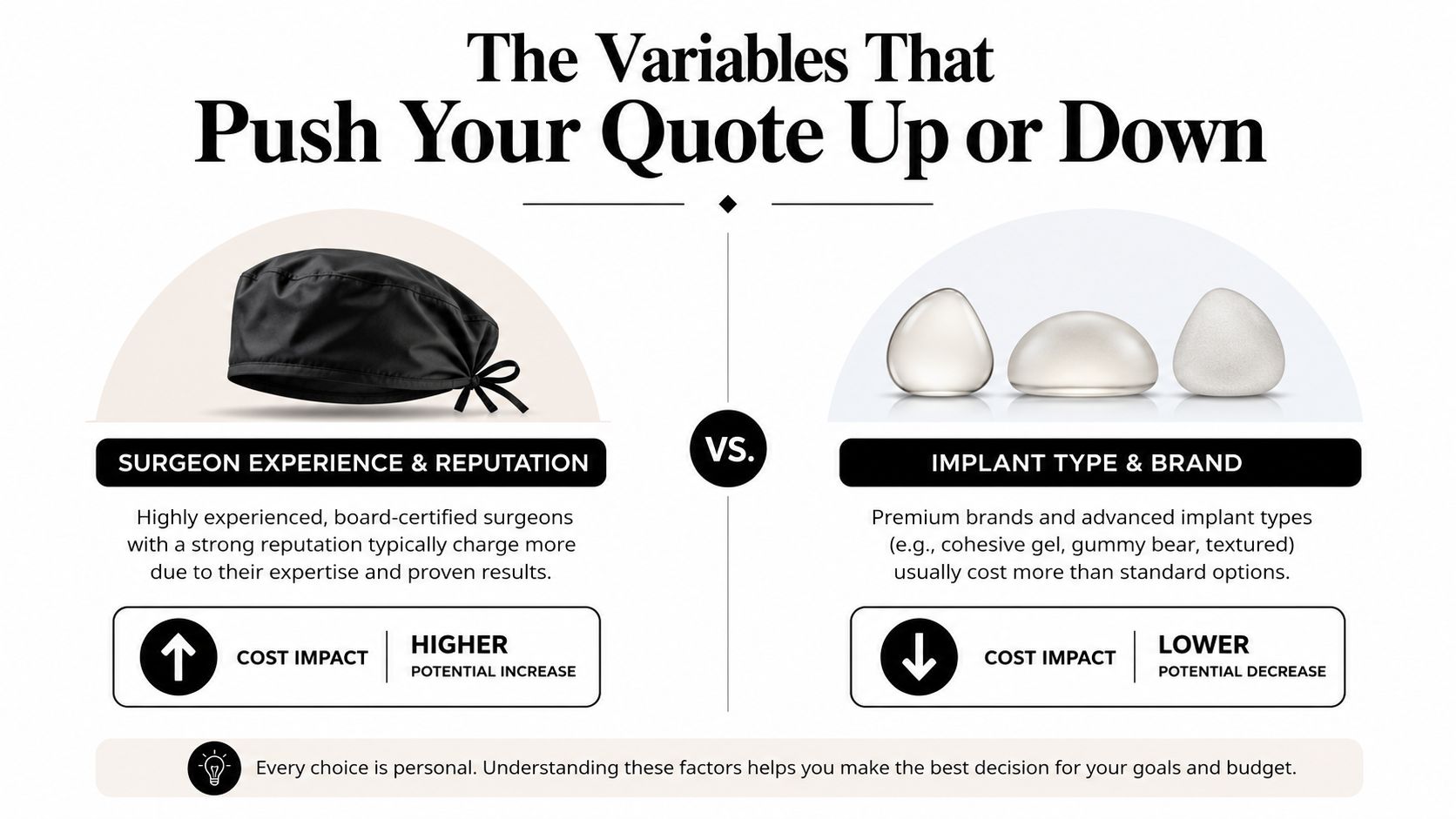
A premium-sounding quote isn't automatically overpriced. Sometimes it reflects better planning, better imaging, better implants, and a more complete fee structure. A bargain quote, by contrast, often leaves one or more of those out until the final invoice lands.
The national average only looks lower if you compare it to a stripped-down surgeon fee. That is the trap. The American Society of Plastic Surgeons lists the average surgeon fee at $4,875 for breast augmentation with implants and $5,719 for fat grafting, and those figures do not include anesthesia, operating room charges, or related costs.
New York all-in pricing belongs in a different conversation. City quotes commonly land in the $8,500 to $15,000 range, and the total can climb higher once you include a high-demand surgeon, an accredited facility, and the rest of the package.
The gap is easy to explain. Manhattan overhead is high, facility costs are higher, and practices with strong reputations can charge more for the surgeon's time and judgment. That premium does not sit in one place. It shows up across the bill, from the office fee to anesthesia to the operating room.
If you want a second frame of reference, review this breast implants price range breakdown. It shows how surgeons separate the professional fee from the rest of the case and why a quote can look modest until the missing pieces are added back in.

Compare surgeon fee to surgeon fee, and package to package. If you compare a national figure that excludes facility costs with a New York quote that includes them, you are not learning anything useful about value. That is how bait pricing works.
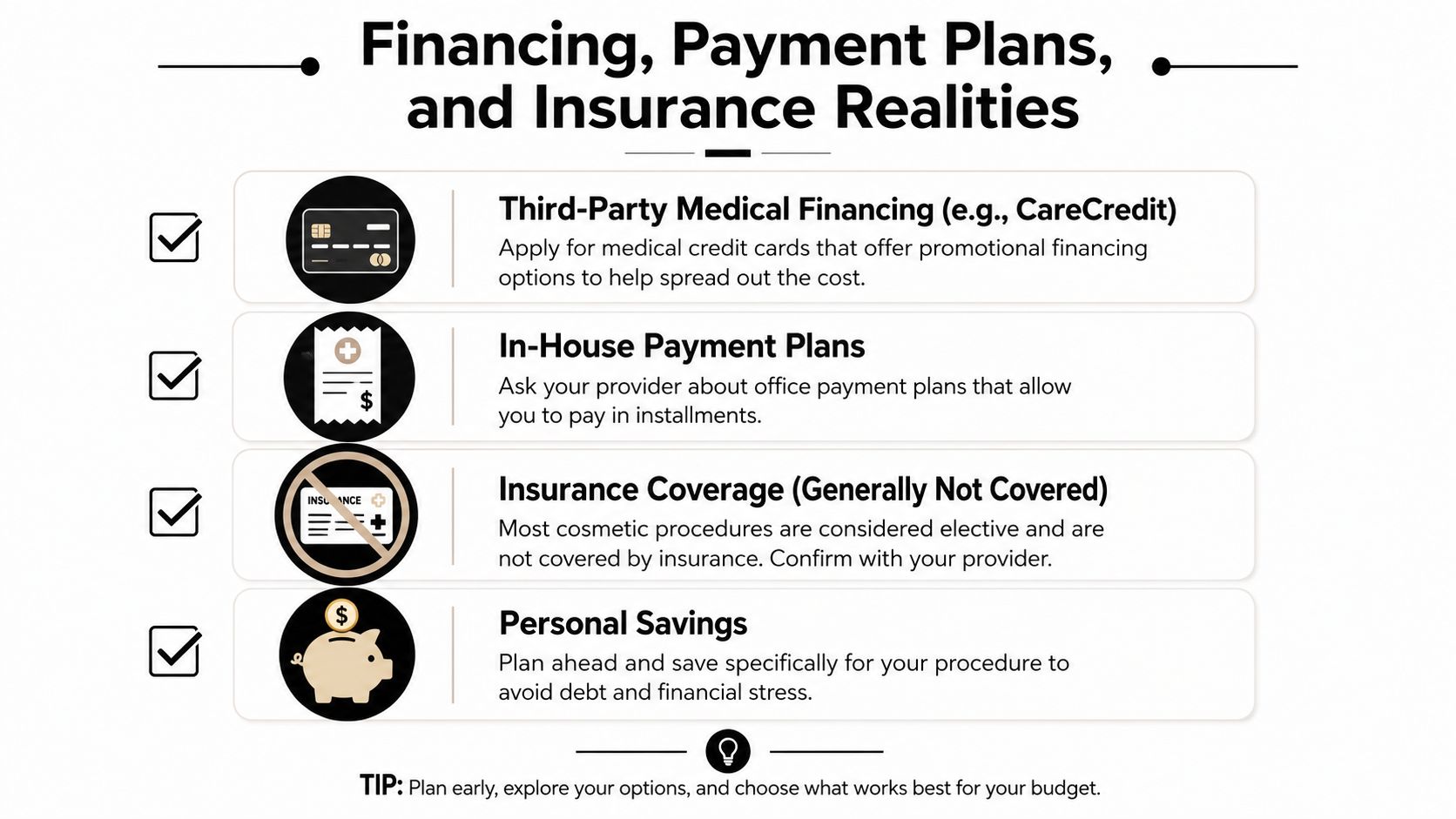
Cosmetic breast augmentation is usually paid out of pocket. Insurance generally does not cover a purely aesthetic case, so if a coordinator sounds overly confident about coverage, ask them to explain exactly what they mean. Partial coverage is a different conversation and usually applies only when the procedure is tied to reconstruction or documented medical need.
Most patients in New York use one of four payment routes, third-party medical financing, in-house payment plans, healthcare credit lines, or personal savings. If you're comparing payment offers, read the fine print on deferred interest, monthly minimums, and what happens if the balance is not paid down on time. A useful overview of medical bill negotiation tips can also help if you're trying to make a quoted package more manageable.
Billing rule: do not sign until the office tells you whether the quoted amount includes the surgeon, facility, anesthesia, implants, garments, and follow-up visits.
Some practices publish finance guidance online, and it's smart to review it before you book. A practical starting point is how to finance cosmetic surgery, then use that framework to compare your options. HSA or FSA funds may help with related medical expenses in some situations, but the office and your plan administrator need to confirm eligibility.
The right financing plan is the one you can carry without stress. If a monthly payment makes the surgery possible but leaves no cushion for recovery costs, it's too tight.
The consult comes first, and the quote should be settled before surgery day, not after. Many patients feel functional quickly after an uncomplicated augmentation, but recovery still affects your budget because time off work, transportation, and post-op supplies all cost money. A rapid-recovery approach can shorten downtime for some patients, and one New York practice describes light activity in 24 to 48 hours, desk work in two or three days, and a return to usual workouts by about six weeks in many cases. Recovery timeline
Before surgery: book the consultation, review implant options, and confirm the facility fee and anesthesia model.
Surgery day: make sure the final packet lists every charge.
Early recovery: plan for help at home, easy clothing, and minimal lifting.
Later recovery: keep follow-up visits and activity restrictions in your calendar until your surgeon clears you.
The money side needs its own checklist. If you skip this, you'll underestimate the true cost even with a good quote in hand.
If you want a structured reference for recovery planning, review the breast augmentation recovery timeline and match it to your own calendar. The smartest budget is the one that covers surgery and the weeks after it, not just the day of the operation.
The cheapest quote in New York is not the one I'd trust first. I'd start with American Board of Plastic Surgery certification, hospital privileges, an AAAASF-accredited operating facility, and a real before-and-after portfolio that shows cases similar to yours. Those are basic filters, not luxury extras.
Ask direct questions at the consultation. What implant brand do you use, what is the revision policy, who handles after-hours issues, and what exactly is included in the all-in number. If the staff can't answer those cleanly, keep shopping.
A few common questions deserve blunt answers. Is price shopping across boroughs worth it? Yes, if you're comparing the same inclusions and the same surgeon credentials. Are consultations usually fee-based? Sometimes, and sometimes not, so ask before you go. What does all-inclusive mean? It should mean surgeon, facility, anesthesia, implants, and routine follow-up, but you should never assume that without written confirmation.
One option patients sometimes review alongside other surgeons is Cape Cod Plastic Surgery, which publishes a breast augmentation cost guide and maintains an AAAASF-accredited surgical suite. That matters because it gives you a concrete example of how a practice can present pricing and facility standards in a way patients can compare.
Choose the surgeon who explains the bill before asking for the deposit.
If you're comparing breast augmentation cost New York quotes right now, focus on value, not the lowest headline number. Review the full invoice, verify the credentials, and pick the office that can justify every charge in plain language.
If you're weighing New York pricing against a surgeon's credentials, facility standards, and financing options, contact Cape Cod Plastic Surgery to review a transparent breast surgery cost structure with a board-certified plastic surgeon. Bring your quote, your questions, and your budget, and get a clear answer before you commit.
September 9, 2026
Expert Guide to Proper Surgical Incision Care

Master dermal fillers aftercare with do's and don'ts, swelling tips, activity limits and warning signs to protect your results and heal smoothly.

September 8, 2026
Ensuring Safety: Why Your Surgeon's Credentials Matter Most
Cape Cod Plastic Surgery offers expert cosmetic and reconstructive procedures in a safe, accredited setting. Led by Dr. Marc Fater, we combine advanced techniques with personalized care to help you look and feel your best.
Monday: 9:00 AM – 5:00 PM
Tuesday: 9:00 AM – 5:00 PM
Wednesday: 9:00 AM – 5:00 PM
Thursday: 9:00 AM – 5:00 PM
Friday: 9:00 AM – 5:00 PM