

September 9, 2026
How to Care for Surgical Incisions Properly
Expert Guide to Proper Surgical Incision Care
Jan 31, 2026
Without a doubt, the first question almost every patient asks is, "How long will my facelift recovery take?" It's a completely fair question. While your full results will beautifully settle over several months, a great benchmark we often use is feeling "restaurant ready" in about two to three weeks.
This initial period is where the most dramatic healing happens, paving the way for the refreshed, natural look you’re looking forward to.
Thinking about the facelift recovery timeline is a bit like looking at a map before a road trip. Knowing the key stops along the way helps you feel prepared and confident for the journey. Every person's healing journey is their own, of course, but the path generally follows a very predictable pattern.
When you break it down into stages, the process feels much less overwhelming and more like a series of manageable steps. From the first few days of quiet rest to the exciting moment you start truly enjoying your final look, each phase has a purpose. Here at Cape Cod Plastic Surgery, Dr. Fater’s entire approach is built to make this journey as smooth and predictable as possible.
We can generally break the recovery journey into three main phases, each with its own set of expectations. This progression is designed to give your body the exact time it needs to heal properly, letting your beautiful results emerge naturally.
This timeline gives you a quick visual of the main stages, from the initial bandaging right after surgery to enjoying your final, settled results down the road.
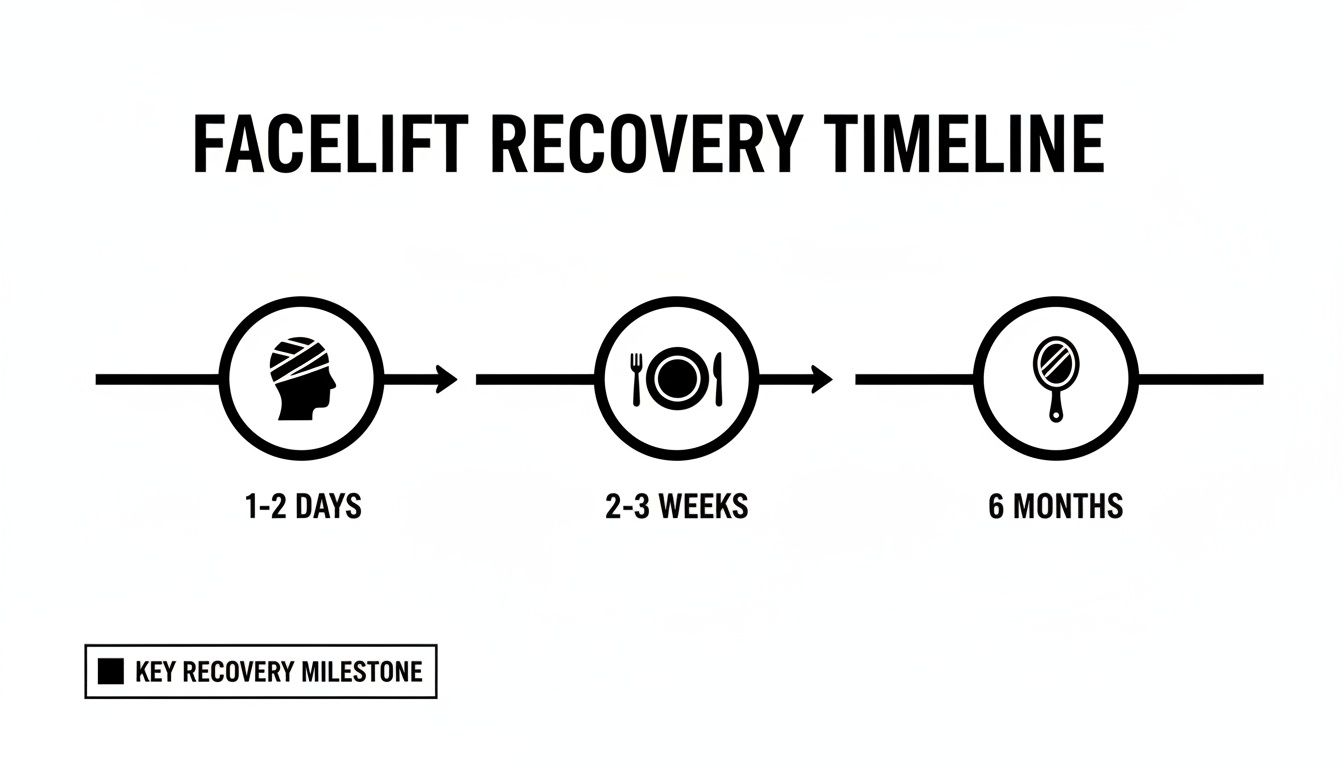
As the graphic shows, the most intense part of recovery happens right at the beginning. The complete refinement of your new contours, however, is a more gradual process that unfolds over several months.
To give you a clearer picture, I've put together a table that breaks down these major milestones. It outlines what you can generally expect in terms of physical sensations and what you'll be able to do as you heal.
This table offers a high-level summary of the major stages you'll go through. Think of it as your quick-reference guide before we get into the more granular day-by-day details in the next section.
A successful recovery is a partnership. While Dr. Fater provides the surgical expertise, your commitment to following post-operative instructions is the single most important factor in achieving a seamless healing experience and a stunning outcome.
This scannable summary helps set the stage. Now, let’s dive into what you can expect day by day and week by week.
Once your facelift is complete in our on-site AAAASF-accredited surgical suite, your body immediately gets to work on healing. The first 48 hours are all about giving it the support it needs. Think of this time as building the foundation for a beautiful result—what you do right now truly matters for the weeks ahead.
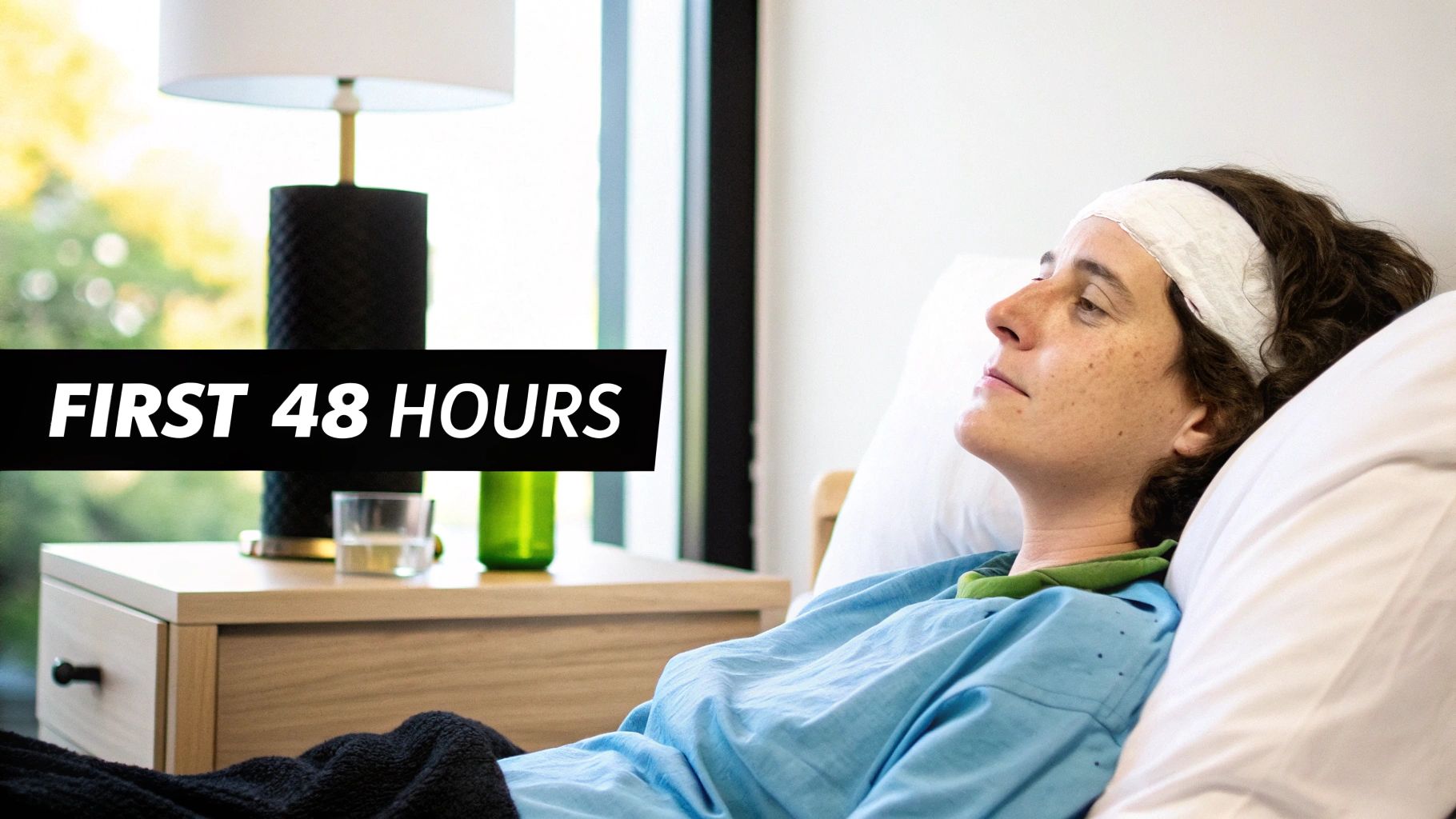
You’ll wake up from surgery with a soft, cushioned dressing wrapped around your head and neck. This isn't just a simple bandage; it's expertly placed to protect your incisions, minimize that initial puffiness, and provide just the right amount of gentle compression. Your only job for these first two days? Rest.
Your goal is to create a peaceful, comfortable nest for yourself. You’ll need a trusted friend or family member to stay with you during this time, helping with small tasks so you can focus entirely on relaxing.
The single most important thing you can do is keep your head elevated at all times. This means propping yourself up on two or three pillows whenever you're resting or sleeping. Gravity becomes your best friend here, naturally helping to drain fluid away from your face and keep swelling to a minimum.
It’s also perfectly normal to feel a few new and different sensations as your body adjusts. Most patients experience:
These feelings aren't cause for concern. They’re simply signs that your body’s natural healing powers have been activated.
The first 48 hours are about stillness, not activity. Your body is performing an incredible amount of work on the inside, and the best thing you can do is give it the quiet time it needs.
A major milestone happens within this initial 48-hour window: your first follow-up appointment with Dr. Fater. This visit is essential. Dr. Fater will carefully remove that initial bulky dressing and take a close look at your incisions to make sure everything is healing exactly as it should.
This is our chance to check in on you, answer your early questions, and give you clear instructions for the week to come. We'll show you exactly how to look after your incisions to ensure they heal into fine, barely-there lines. For a deeper dive, you can learn more about how to care for surgical incisions in our detailed guide. This first appointment is all about replacing any uncertainty with confidence, so you leave knowing you’re on the perfect path to a fantastic recovery.
Welcome to the most hands-on week of your recovery. While the first couple of days were all about deep rest, this week is where you'll see the most dramatic changes as your body's healing mechanisms kick into high gear. Expect swelling and bruising to reach their peak, then begin a steady, noticeable retreat.
It’s completely normal to look in the mirror around day three or four and see the most puffiness you’ll experience. Don't be alarmed! This is actually a great sign that your body is sending a rush of healing resources to the area. By leaning into this phase and carefully following Dr. Fater's instructions, you’re paving the way for a smooth and successful recovery.
During these next few days, your main job is to actively manage your symptoms. The feelings of tightness and numbness will likely stick around, but any actual discomfort should be very manageable. Most patients find they can switch from prescription pain medication to an over-the-counter option like Tylenol as that initial soreness fades.
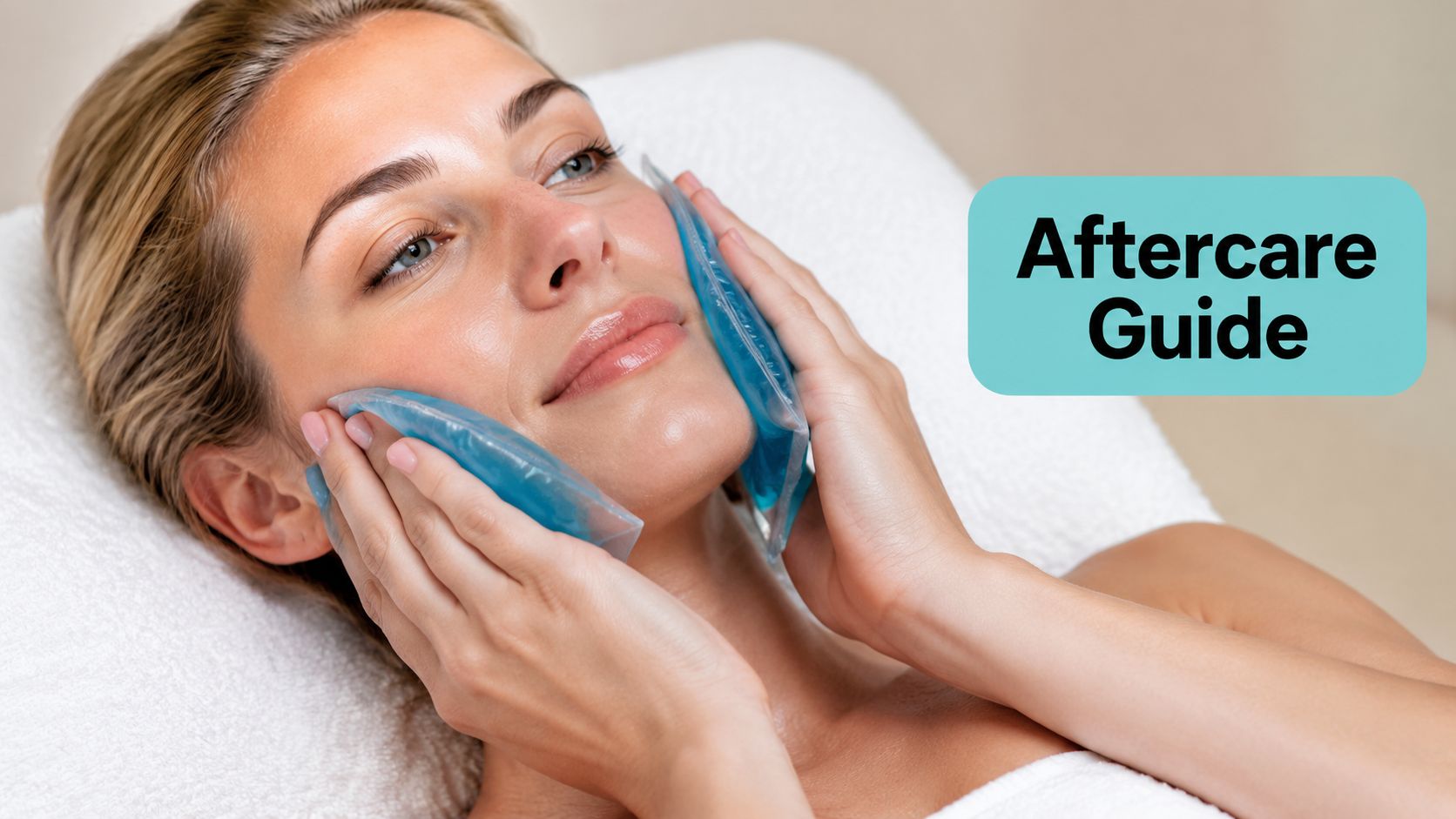
Your best friend this week will be a cold compress. Think of it as gently calming down inflammation; the cool temperature helps constrict blood vessels, which reduces fluid buildup and just plain feels good. Just be sure to always wrap the compress in a soft cloth to protect your skin and stick to the schedule Dr. Fater provides.
Following these simple steps can make a huge difference in how quickly that swelling goes down. Some of our patients also find that certain supplements can help with bruising. We have a guide that explains the benefits of taking Arnica Montana before surgery if you'd like to learn more.
Let's be honest—this can be an emotional week. It's so important to remember that what you see in the mirror right now is temporary. The puffiness and discoloration are not your final result. They are simply a necessary, and fleeting, part of the healing journey.
Patient data helps put this into perspective. Studies show that facelift discomfort typically averages a 5/10 rating and lasts about 10 days, with most people only needing prescription pain relief for the first six days. Swelling and bruising, the most visible side effects, peak early and then fade significantly over the first 10 to 14 days—which is right around the time most people feel ready to head back to work.
This first week is all about patience. Trust the process, follow your post-op plan, and know that with every day that passes, you're one step closer to seeing your beautiful, refreshed results.
Toward the end of this week comes a major turning point, both physically and psychologically: getting your sutures out. We typically schedule this appointment for around day seven to ten here in our office.
It’s a simple, quick process, but for most patients, it feels like a huge morale boost. It signals that the most intense phase of healing is over and feels like the first real step toward getting back to normal life. Once the sutures are removed, your incisions will continue to heal and fade, and you'll start to see the early, lovely contours of your new jawline and neck emerging from beneath the swelling. This is also another perfect opportunity to ask Dr. Fater any questions that have popped up during your first week at home.
If the first week is all about rest and focused healing, this next period is where the magic really starts to happen. Weeks two through four mark an incredibly exciting turning point in your recovery. It’s when you truly begin to see the beautiful results of your procedure emerge from beneath the initial swelling and bruising.
This is the time when the reflection in the mirror starts to feel like you again—just wonderfully refreshed and rejuvenated.

Once the sutures are out and the most significant swelling has gone down, the elegant new contours of your jawline and neck become much more defined. For most of our patients, this is easily the most rewarding phase. The temporary signs of surgery are fading, revealing the incredible outcome you’ve been waiting for.
By the second week, a huge boost in energy and confidence is pretty common. You'll likely feel ready to start re-engaging with the world, moving from a quiet healing period to a gentle return to your normal routines. With the most obvious swelling gone, social outings feel much more comfortable.
Here’s what you can generally expect during this phase:
The path to full recovery unfolds in clear stages. While many people are back to office work and light walking by week two, the one-month mark is a huge milestone where 80-90% of swelling is typically gone, and most feel "photo-ready." You can find more details about the typical recovery stages on yamasakifacialplasticsurgery.com.
This gradual re-entry into daily life is a massive morale booster. Every small step, whether it's running a quick errand or meeting a friend for lunch, feels like a major victory.
As your face and neck continue to heal, you’re going to notice some unique physical sensations. Don’t be alarmed—these are not only normal, but they’re positive signs that your body is recovering exactly as it should. Think of it as the quiet work happening behind the scenes.
A feeling of tightness, especially along your jawline and behind the ears, is very common. This is completely expected as your skin and the underlying tissues settle into their new, lifted positions. This sensation will gradually relax over the coming weeks.
You might also experience some tingling, itching, or even patches of numbness. This is a tell-tale sign of nerve regeneration.
As the tiny nerve endings that were disturbed during your surgery start to "wake up" and reconnect, they send out these little tingling signals. It’s your body’s way of telling you that sensation is returning and the internal healing process is right on track.
These feelings are temporary and a fundamental part of a normal facelift recovery. They almost always resolve on their own as you move into the second and third months after your procedure.
Hitting the one-month mark is a big deal. By now, the vast majority of the swelling has vanished, and your results are becoming incredibly clear. Dr. Fater skillfully places your incision lines within natural creases and along the hairline, and you’ll notice they have started to fade from pink to a much lighter, less noticeable shade.
At your one-month follow-up appointment, we'll review your progress, and Dr. Fater will likely clear you for more strenuous activities. You'll feel so much more like yourself, and you can finally start to truly enjoy the compliments from friends and family who just notice how rested and vibrant you look.
This part of your facelift journey is less about dramatic, day-to-day healing and more about the beautiful, subtle refinement of your results. Think of it less as active recovery and more like the final polish on a piece of art. The big changes are behind you; now, your body is making all the delicate adjustments that reveal the true elegance of your procedure.
Over these next few months, the last little bit of residual swelling will slowly but surely disappear. It’s a quiet process, one you might not even notice day by day, but it’s what allows the crisp, defined contours of your jawline and neck to fully come into view. You'll simply look in the mirror one day and realize how incredibly natural everything looks.

A key focus during this time is seeing your incision lines mature. This is where Dr. Fater's surgical artistry really shines. Those initial pink lines begin a remarkable transformation—softening, flattening, and fading into whisper-thin, pale lines that are expertly hidden within your natural hairline and the creases of your ears.
Of course, this process needs a little help from you. Protecting your healing skin from the sun is non-negotiable. UV exposure can darken maturing scars and make them more noticeable, so a high-SPF sunscreen becomes your best friend. This simple step is absolutely crucial for ensuring your incisions heal as discreetly as possible.
By now, you've likely been enjoying light activity for some time. This window is when you can start reintroducing more strenuous exercise back into your routine. Dr. Fater will give you a personalized green light at your follow-up appointments, but a general timeline looks something like this:
The golden rule here is to listen to your body. If you feel any unusual tightness or strain, it’s a clear signal to pull back a bit and give yourself more time.
By the six-month mark, your results don't just look completely natural—they feel that way, too. The initial tightness has resolved, and normal sensation has returned to all areas. You can finally enjoy your rejuvenated appearance without constantly being reminded that you had surgery.
This final stage is when you truly see the stunning impact of your facelift. The entire recovery process unfolds over several key stages. A well-planned day-by-day facelift recovery timeline usually involves about two weeks of dedicated downtime before most people can return to work. By four to six weeks, exercise is back on the table, and the final, softened results—which can take 10-15 years off your appearance—are fully revealed between six and twelve months.
Hitting the six-month mark is a major milestone. At this point, what you see in the mirror is your final, beautiful result. The underlying tissues have settled into their new positions, your skin has redraped perfectly over your new facial contours, and the last traces of the procedure have all but vanished.
You look rested, vibrant, and completely yourself—just a beautifully refreshed version. This is the moment when you can truly appreciate the natural-looking and long-lasting outcome of your decision, a result that stands as a testament to both your patience and Dr. Fater’s expertise.
Following your surgeon's instructions is the bedrock of a good recovery, but there’s so much you can do to be an active partner in your own healing. Think of the next few weeks as a collaboration. Your body is doing the heavy lifting, and your job is to give it everything it needs to do its best work. Simple, consistent habits can make a world of difference.
Consider Dr. Fater’s personalized post-operative plan your roadmap. This guide is meant to supplement those instructions, giving you practical tips to support your body every step of the way and help you achieve the beautiful, natural outcome you’re looking forward to.
Your body is working overtime to repair tissue and build new collagen, and that requires the right fuel. What you eat and drink has a direct impact on how well you heal.
These small dietary choices are some of the most powerful tools in your recovery toolkit. For a deeper dive, check out our 8 expert tips for effective post-surgery recovery and care.
Beyond diet, a few temporary lifestyle changes are non-negotiable. Making these adjustments is how you protect your results and sidestep potential complications.
First, you must avoid all sun exposure on your healing incisions. Your skin is incredibly fragile after surgery. UV rays can cause scars to darken and become much more noticeable down the road. Once you get the green light to go outside, a high-SPF, broad-spectrum sunscreen isn't optional—it's mandatory.
It is also absolutely critical to avoid smoking and alcohol. There's no gray area here. Both substances seriously compromise healing by constricting blood vessels, which robs your healing tissues of the oxygen and nutrients they desperately need.
Your recovery is a dedicated time for your body to heal. The most important thing you can do is create a peaceful, supportive environment for that process to happen without interference from external stressors like sun, smoke, or strain.
If you feel you might need a helping hand, exploring options for temporary home care after surgery can provide invaluable support and peace of mind. Above all, stay in close contact with our office. If you notice anything that seems off or have even the smallest concern, call us immediately. We are here for you every step of the way.
It’s completely normal to have a lot of practical, day-to-day questions as you get ready for your facelift recovery. Knowing what to expect makes the whole process feel much more manageable. Here are some of the most common questions we get from patients, with Dr. Fater's specific advice.
This is almost always one of the first things people ask! We typically give you the okay to gently wash your hair about two to three days after your surgery, right after we remove the initial bulky dressings.
The trick is to be incredibly gentle. Stick with a mild baby shampoo and use lukewarm water, letting it just run down your head. You’ll want to be careful not to scrub anywhere near your incision lines while they’re in the early stages of healing.
Patients often wonder, "How long do I really need to sleep propped up?" The answer is straightforward: plan on doing it for at least the first one to two weeks. It might not feel natural at first, but it’s one of the most important things you can do for your recovery.
When you sleep with your head propped up on two or three pillows, you're using gravity to help drain fluid away from your face and neck. This is a game-changer for minimizing swelling and can significantly shorten your social downtime. Think of it as an active step you're taking to speed up your own healing.
Keeping your head elevated is non-negotiable in early recovery. It directly controls how fast swelling goes down, which means you'll see your beautiful new contours that much sooner.
Feeling some numbness, tightness, or even tingling is a perfectly normal part of the healing process. In fact, it’s a good sign! It means the tiny nerve endings that were disturbed during surgery are slowly starting to wake back up.
So, how long does it last? Everyone heals a bit differently, but here’s a general timeline:
Patience is your best friend here as your nerves complete their final healing phase. It’s also interesting to see how different procedures compare; for example, this microneedling recovery timeline shows a much different healing journey. Just remember, all these quiet, internal healing processes are what lead to a final result that looks and feels completely natural.
Ready to begin your own rejuvenation journey with an expert you can trust? At Cape Cod Plastic Surgery, Dr. Fater provides personalized care and stunning, natural-looking results. Schedule your private consultation today.
September 9, 2026
Expert Guide to Proper Surgical Incision Care
Master dermal fillers aftercare with do's and don'ts, swelling tips, activity limits and warning signs to protect your results and heal smoothly.

September 8, 2026
Ensuring Safety: Why Your Surgeon's Credentials Matter Most

Cape Cod Plastic Surgery offers expert cosmetic and reconstructive procedures in a safe, accredited setting. Led by Dr. Marc Fater, we combine advanced techniques with personalized care to help you look and feel your best.
Monday: 9:00 AM – 5:00 PM
Tuesday: 9:00 AM – 5:00 PM
Wednesday: 9:00 AM – 5:00 PM
Thursday: 9:00 AM – 5:00 PM
Friday: 9:00 AM – 5:00 PM