
September 9, 2026
How to Care for Surgical Incisions Properly
Expert Guide to Proper Surgical Incision Care
Mar 16, 2026
So you’ve just had your Botox treatment—congratulations! The most important part of ensuring you get those fantastic, smooth results you’re looking for happens in the next 24 hours. What you do right after your appointment is just as important as the treatment itself.
The best way to think about it is that the Botox needs a little time to settle into its new home. Imagine it’s like freshly poured concrete; you don't want to walk on it or disturb it while it's setting. Following a few simple guidelines protects your investment and helps you avoid any unwanted surprises.
Proper aftercare isn’t just a list of arbitrary rules—each one has a specific purpose. When we inject Botox, we're placing it precisely where it needs to be to relax the muscles causing your wrinkles. Any activity that puts pressure on the area or significantly increases your circulation can cause the product to shift.
If the Botox migrates, it can end up in muscles we didn't intend to treat. This is what can lead to temporary side effects like a droopy eyelid or an asymmetrical look. Don't worry, it's easy to avoid! The key is to take it easy for a short while.
My Pro Tip: The first 4 to 6 hours are your golden window. Your main job is to stay upright and avoid touching the area. After that, you just need to be mindful for about 24 hours. Your actions during this time directly impact how well the Botox works.
To make it even easier, I've put together a simple timeline that breaks down exactly what to avoid and for how long.
Think of this table as your quick-reference guide for the first few days. It's designed to give you clear, actionable advice to help you get the best possible outcome from your treatment here at Cape Cod Plastic Surgery.
Following these simple steps is the best way to partner with us in achieving a beautiful, natural-looking result that you'll love.
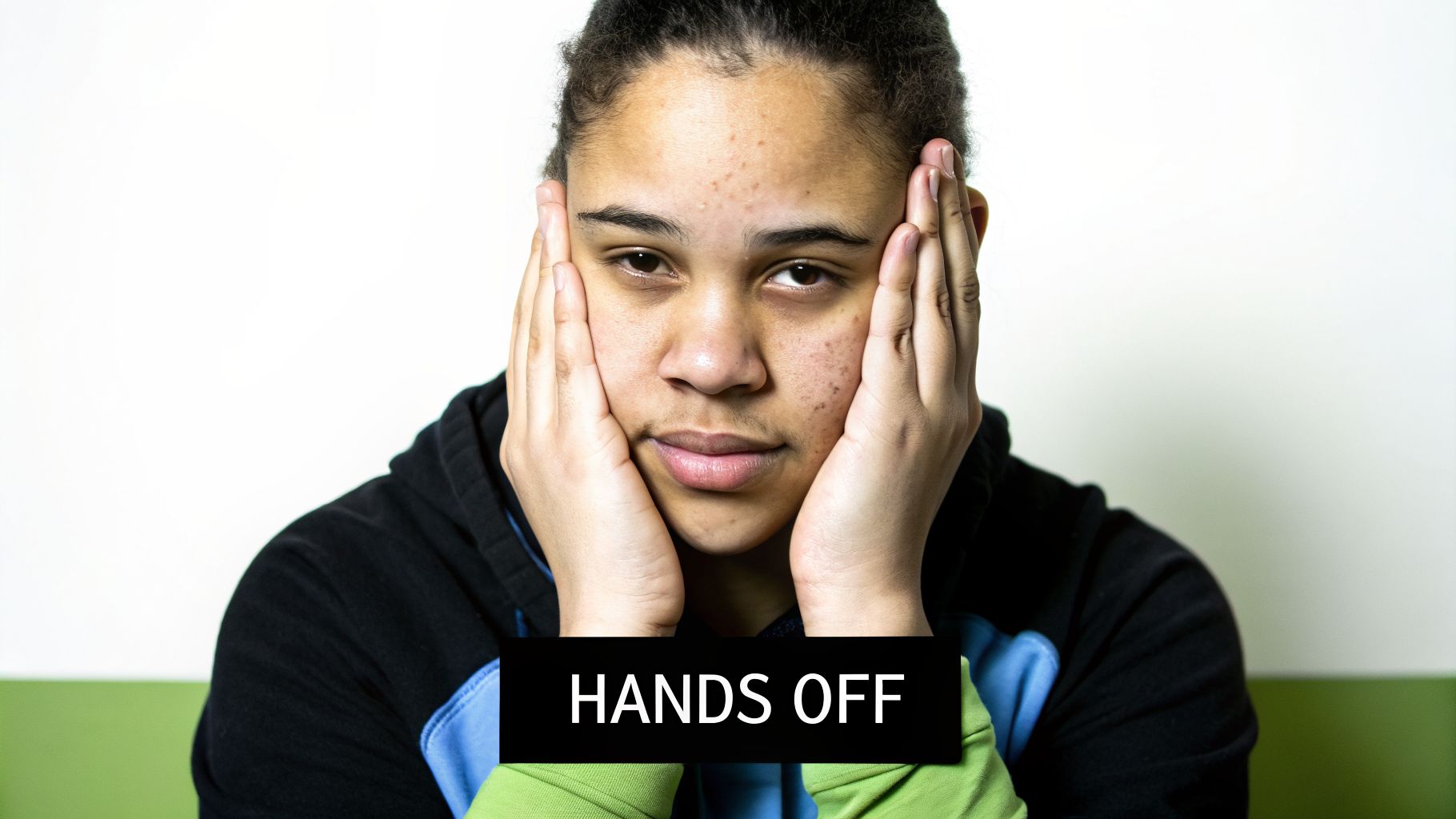
If you take away only one piece of advice from this guide, let it be this: keep your hands off your face. It’s the single most important thing you can do to protect your investment and get the beautiful, natural-looking results you came for.
Right after your appointment, the Botox solution is still a liquid. It needs a little time to work its magic and bind to the specific nerve receptors in the muscles we targeted.
Think of it like this: you've just painted a fine, delicate line on a canvas. If you let it be, it dries perfectly. But if you touch or smudge it, the paint goes where you never intended. Botox works the same way. Pushing or rubbing on the area can physically move the product into neighboring muscles.
That little bit of migration is precisely what causes most of the preventable, temporary side effects people worry about.
When Botox drifts from its intended spot, it can start to relax muscles that we didn't want to treat. This is what can lead to an uneven or asymmetrical look, like one brow sitting higher than the other. Our goal is always to soften specific lines while keeping your natural expressiveness intact, and keeping pressure off is crucial to striking that balance.
The first 24 to 48 hours are the most critical. This is the window where the neurotoxin is actively settling in. After that, the risk of it moving drops dramatically.
So, what kind of pressure are we talking about? It's often the little things you do without thinking:
While most side effects are minor things like a little bit of bruising, migration from pressure can cause more noticeable issues. For instance, blepharoptosis (a temporary droop in the upper eyelid) is the most common complication from forehead injections, with reported rates between 1–5 percent. An analysis of over 17,000 treatments found about a 2 percent risk of temporary facial weakness, which is another side effect of migration.
By simply following the "no pressure" rule for the first day, you significantly cut down your risk of seeing these issues and help ensure your results are exactly what you hoped for.
Don't worry about making normal facial expressions—smiling, frowning, and raising your eyebrows are totally fine. In fact, these small movements can help the Botox settle into the right spots. It's the external force you need to avoid.
After that first 24-hour period, you can get back to your normal routine. It’s a very small adjustment for a flawless, fantastic outcome.
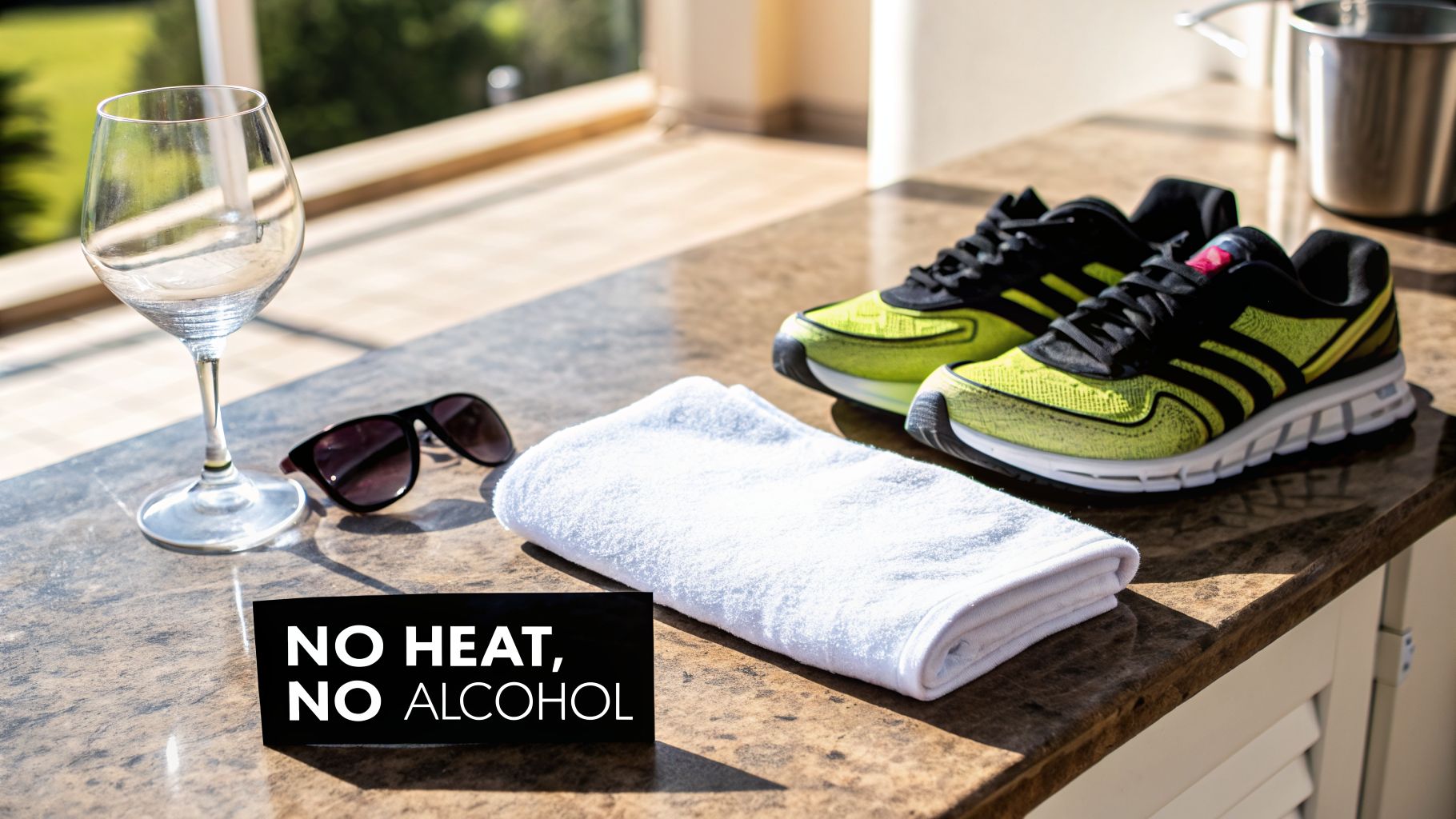
Aside from not touching the treated areas, your next most important task is to take a 24-hour break from a specific trio: intense workouts, high heat, and alcohol. At first glance, they don't seem related, but they all have one thing in common that can mess with your Botox results.
Each one significantly increases blood flow throughout your body—a process called vasodilation. When your blood vessels expand right after an injection, it creates a couple of problems. For one, it can dilute the Botox solution before it has a chance to work its magic. Even more critically, that extra circulation can cause the product to migrate away from the precise muscles we targeted.
To make sure your treatment settles perfectly and gives you that smooth, refreshed look you came for, you’ll need to hit pause on your normal routine. Let's dig into why each of these is on the "no-fly" list.
Taking a day off from your high-intensity workout is one of the most critical aftercare steps we stress to our patients. When you push yourself physically, your heart rate climbs, your blood pressure rises, and your whole system starts pumping more blood to your skin and muscles.
That rush of circulation is the enemy of fresh Botox. Think of it this way: we’ve just placed a tiny, concentrated drop of product exactly where it needs to be. If left alone, it binds to the nerve endings perfectly. But a hard workout is like splashing water on it—it can blur and spread the product before it has a chance to set.
So, what do we mean by "strenuous"?
Instead, a gentle walk is perfectly fine and won't disrupt anything. You can get right back to your regular fitness schedule 24 hours after your appointment.
Just like a tough workout, heat makes your blood vessels widen as your body tries to cool itself down. That's why we advise patients to avoid any environment that significantly raises their body temperature for at least 24 to 48 hours.
Heat-induced vasodilation carries the same risk as exercise: it can dilute the Botox and increase the chance of it spreading to unintended areas. This can compromise the precision of your results.
Be sure to steer clear of these common sources of heat:
This rule also applies to things like hot yoga or facials that use steam. If you want to learn more about navigating the sun after your treatment, our guide on tanning after Botox covers it in detail.
That celebratory glass of wine or evening cocktail will have to wait for at least a day. Alcohol is a known vasodilator, but it also has another effect: it's a blood thinner. This one-two punch makes it a major culprit behind post-injection bruising.
The spots where you were injected are tiny, but they're still puncture sites. Because alcohol thins your blood, it makes it harder for those tiny openings to clot. This increases the risk of a little blood seeping into the surrounding tissue, which is what creates a bruise.
While a small bruise isn't a medical emergency, it's a cosmetic nuisance most of us would rather skip. For the cleanest result and quickest recovery, we strongly recommend avoiding all alcoholic drinks for 24 hours both before and after your treatment. Instead, focus on drinking plenty of water—it’s the best thing for helping your body heal.
Great Botox results are about more than just the injections themselves; what you do after you leave our office plays a huge role. Your post-treatment care extends right into your medicine cabinet and your regular skincare routine. Some common medications and popular aesthetic treatments can unfortunately work against your results, mostly by increasing your chances of bruising or by accidentally shifting the Botox before it has a chance to settle.
Think of it like this: your skin is healing from a series of tiny pinpricks. Just as you wouldn't take a blood thinner right before a major surgery, you’ll want to avoid them after Botox. This lets the injection sites heal cleanly without any extra bleeding under the skin—which is exactly what causes a bruise to form.
It might surprise you, but many common over-the-counter pain relievers and health supplements have blood-thinning properties. While that’s often great for your heart, it’s not what we want immediately after your treatment, as it can lead to more noticeable bruising and swelling.
For this reason, we ask that you steer clear of the following for at least 24 hours after your appointment:
A quick but very important note: Never stop taking a prescribed medication, like a daily aspirin or another blood thinner from your cardiologist, without clearing it with your primary doctor first. Your overall health is always the number one priority, and we can easily manage a little potential bruising.
After Botox, your skin simply needs a little time to itself. Those tiny injection sites are, technically, small puncture wounds that need to heal. Putting your skin through another intensive treatment too soon can cause irritation, raise the risk of infection, and—most critically—could physically push the Botox into muscles where we don't want it.
We strongly recommend waiting at least one to two weeks before booking any other facial procedures. This grace period is crucial. It ensures the Botox has fully settled and bonded to the nerve receptors and that the injection points are completely healed.
Giving your skin this break allows the product to work precisely as intended, free from outside interference. Treatments to put on hold include:
By carefully managing your medications and timing your other treatments, you’re taking the best steps to protect your investment. This thoughtful approach helps ensure a smooth recovery with minimal bruising and the beautiful, natural-looking results you came to Cape Cod Plastic Surgery for. Once you're past that two-week mark, you can confidently get back to your regular skincare and treatment schedule.
Feeling confident after your Botox treatment comes from knowing what to expect. While serious complications are incredibly rare—especially with an experienced injector—understanding the difference between a normal reaction and a potential issue will give you total peace of mind.
It’s perfectly normal to see a bit of minor swelling, some redness, or even small bumps right at the injection sites. Think of it as your body just acknowledging the treatment. These little signs usually disappear within an hour or two. You might also get a mild headache, which is fairly common for first-timers and typically fades within a day.
So, what's just part of the process, and what's a sign you should give us a call? The most common side effects are temporary and really nothing to worry about.
These expected, short-lived effects include:
On the other hand, a few specific symptoms signal that the Botox may have wandered from its intended muscle. This is precisely why following the aftercare rules is so important.
Key Takeaway: The good news is that even the most common unwanted outcomes, like a drooping eyelid, are not permanent. They will gradually resolve on their own as the Botox wears off over the next few weeks or months.
Here's a helpful visual guide for planning other aesthetic treatments after your Botox.
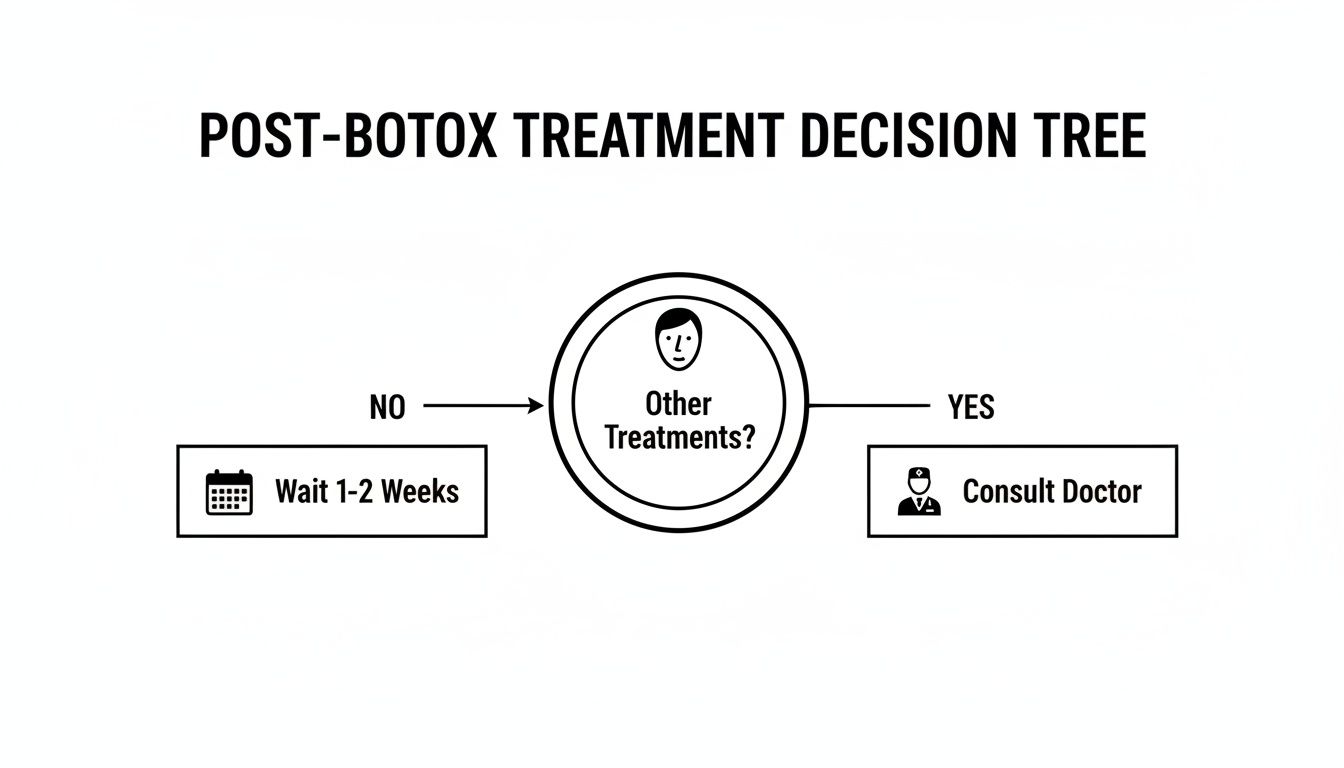
This chart simplifies the decision-making process, showing that a little patience and professional advice are your best friends for safe, beautiful results.
Please get in touch with our office if you notice any of the following. These are signs that we should assess what's going on.
It’s also important to know about the extremely rare risk of the botulinum toxin spreading and causing systemic effects, a condition called iatrogenic botulism. Signs include slurred speech, widespread muscle weakness, or difficulty swallowing or breathing, which might appear 2 to 6 days after the injection.
To put this risk into perspective, between 1989 and 2003, the FDA reported 28 deaths connected to the botulinum toxin, but none were from cosmetic use. In fact, research shows serious adverse events are 33 times more likely in therapeutic cases, where the doses used are significantly higher. You can read the full research about Botox safety here to learn more.
At Cape Cod Plastic Surgery, your safety and your results are our absolute priorities. If anything feels off or if you have any questions—no matter how small—please don't hesitate to call us. We would always rather you check in than worry at home.
Even with a detailed list of do's and don'ts, it’s completely normal to have a few questions pop up after your Botox treatment. You want to get back to your routine safely while making sure you get the beautiful results you were hoping for.
We get it. That’s why we’ve put together answers to the most common questions we hear from our patients. Think of this as your go-to resource for navigating the first few days with confidence.
This is probably the single most important—and most asked—question we get. The rule is simple: we ask all our patients to stay upright for at least four to six hours after their appointment. There’s a very practical reason for this, and it all comes down to how Botox settles into the muscle.
Think of gravity as your helpful assistant during these first few hours. Staying upright helps ensure the Botox solution stays precisely where your injector placed it. If you lie down, bend over, or recline completely too soon, you risk encouraging the product to drift into nearby muscles. That’s how unwanted side effects, like a droopy eyelid, can happen.
Once that four-to-six-hour window is up, you’re clear to lie down. For that first night, however, we do suggest you try to sleep on your back. This simply helps you avoid putting any sustained, direct pressure on the injection sites while you sleep.
Patience is a virtue, especially when waiting for your Botox results to appear! You won't see a change the moment you leave the office. The neurotoxin needs a little time to get to work on a cellular level, gradually relaxing the muscles that cause wrinkles.
Most of our patients begin to see the first signs of change—a softening of lines and less muscle movement—within three to five days. From that point on, the results will just keep getting better.
The big reveal happens at the 14-day mark. This is when you can expect to see the full, final effect of your treatment, as the targeted muscles will be completely relaxed.
After your results have fully developed, they should last about three to four months. As they start to wear off, we can schedule your next treatment to maintain that smooth, refreshed look. For a more detailed look at this process, check out our guide on how long before Botox kicks in.
Yes, you can absolutely wear makeup after your appointment, but it's best to wait a bit. The real concern isn't the makeup itself, but how you apply it. Remember, your number one rule is to avoid putting pressure on the treated areas.
When you're ready to apply your makeup, the key is to be incredibly gentle.
Giving it a few hours allows those tiny pinprick-sized injection points to close up. This not only lowers the risk of introducing any bacteria but also ensures you don't accidentally push the Botox around.
A safe Botox treatment really comes down to two things: the skill of your provider and getting the right dose. The concentration of the product and how often it's administered are critical for avoiding side effects. In fact, most serious complications stem from improper dosing. Research has shown that the risk of botulism-like symptoms increases significantly when practitioners inject too much or give treatments too frequently. A review of complications found that serious issues were 33 times more common with therapeutic uses of Botox, which often involve median doses four times higher than what’s used for cosmetic treatments. This is exactly why choosing a board-certified provider who understands the art of precise, conservative dosing is non-negotiable. For a deeper dive, this guide covers various applications, like Botox for Migraines, and offers more helpful context.
It is. A mild headache is a fairly common and temporary side effect, particularly for first-timers or those who had their forehead treated. It's usually just a minor reaction to the injections themselves or the muscles starting to respond to the neurotoxin.
These headaches are typically mild and go away on their own within 24 to 48 hours. If you need some relief, acetaminophen (Tylenol) is perfectly safe to take. Just be sure to avoid NSAIDs like ibuprofen (Advil) or aspirin for the first day, as they can thin the blood and increase your chances of bruising. If you experience a severe headache, one that lasts more than a couple of days, or have any other concerning symptoms, please don’t hesitate to call our office.
At Cape Cod Plastic Surgery, we believe an informed patient is a happy patient. If you have more questions or are ready to schedule your consultation, please visit us online to start your journey toward a refreshed, confident appearance.
September 9, 2026
Expert Guide to Proper Surgical Incision Care
Master dermal fillers aftercare with do's and don'ts, swelling tips, activity limits and warning signs to protect your results and heal smoothly.

September 8, 2026
Ensuring Safety: Why Your Surgeon's Credentials Matter Most

Cape Cod Plastic Surgery offers expert cosmetic and reconstructive procedures in a safe, accredited setting. Led by Dr. Marc Fater, we combine advanced techniques with personalized care to help you look and feel your best.
Monday: 9:00 AM – 5:00 PM
Tuesday: 9:00 AM – 5:00 PM
Wednesday: 9:00 AM – 5:00 PM
Thursday: 9:00 AM – 5:00 PM
Friday: 9:00 AM – 5:00 PM