

October 7, 2026
What to Expect During Your Breast Surgery Recovery
A Practical Guide to Healing After Breast Surgery
Aug 24, 2026
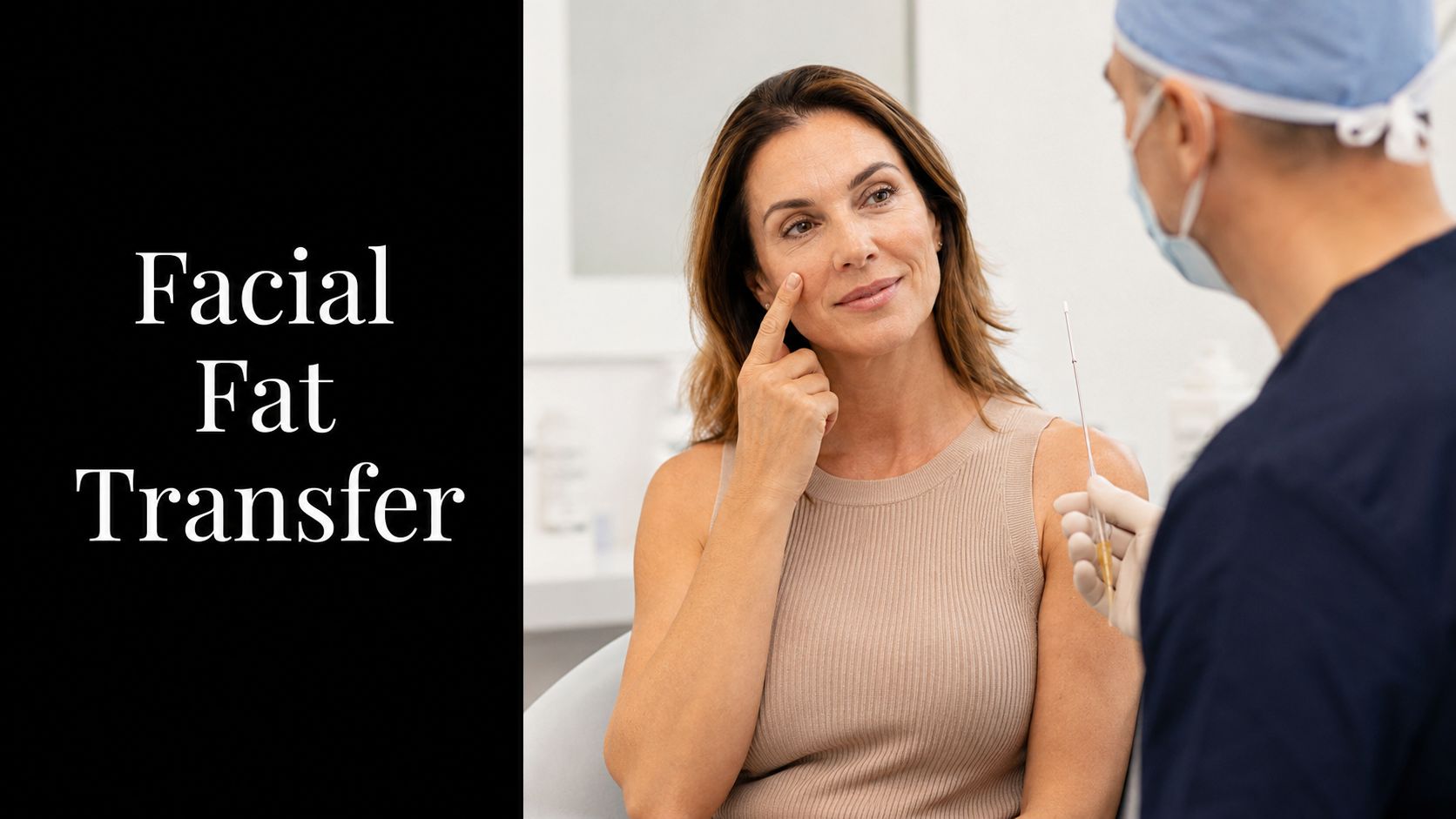
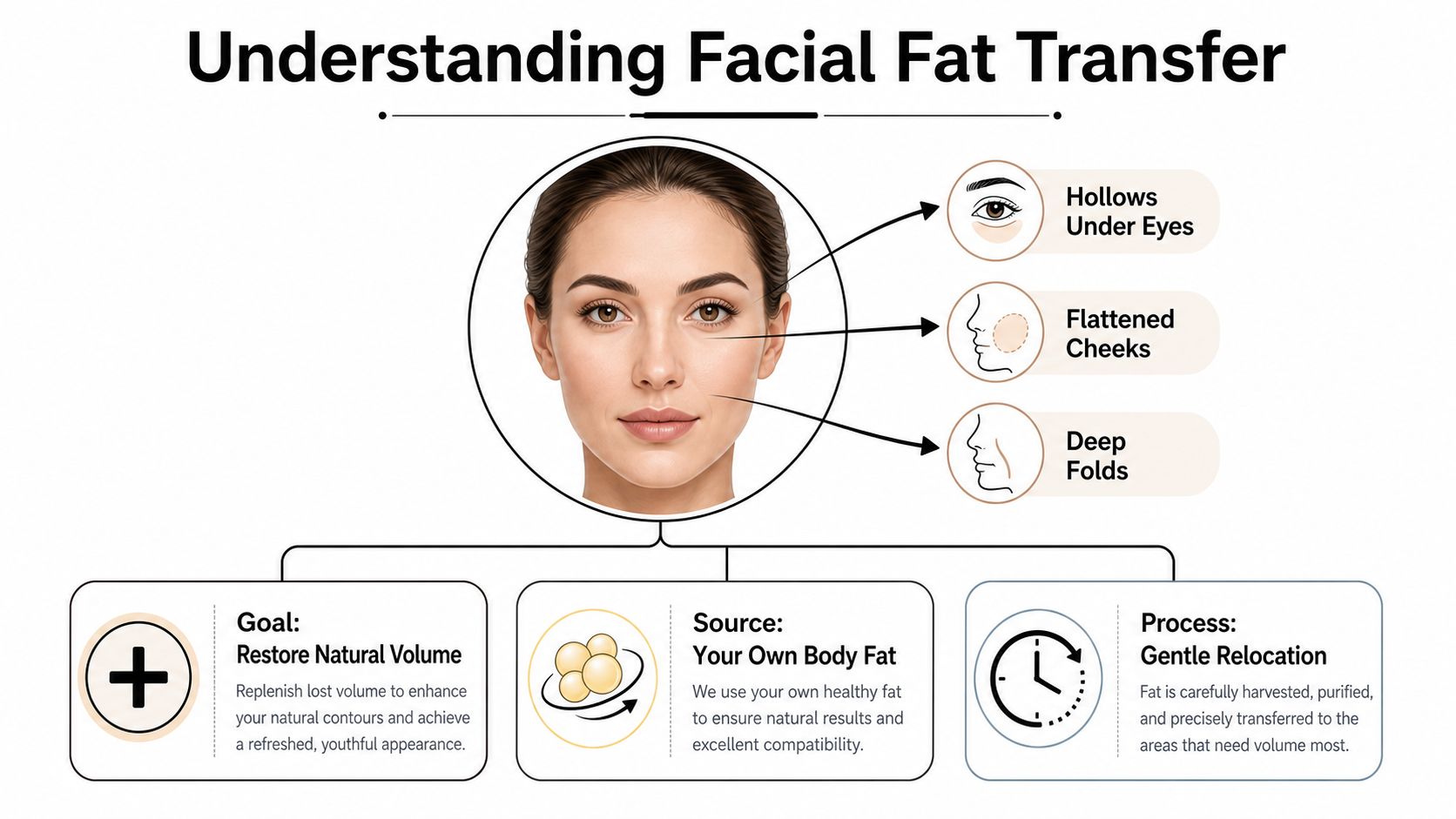
You're in a consultation, pointing to the hollows beneath your eyes, the flattening across your cheeks, and folds that weren't as noticeable a few years ago. You want more support and softness, but you don't want to look overfilled. The natural question is whether your own fat could restore that lost contour.
Facial fat transfer can be an option, but it isn't a permanent filler placed under the skin. It's a surgical procedure followed by a biological healing process. Some transferred fat may establish a blood supply and remain, while another portion is expected to resorb. That distinction shapes candidacy, technique, recovery, and expectations.
Facial fat transfer, also called facial fat grafting, relocates your own fat from a donor area to facial areas that need additional volume. Surgeons commonly harvest fat from the abdomen, flanks, or thighs, then purify it before placing small amounts into areas such as the cheeks, temples, lips, tear troughs, or contour irregularities caused by scarring.
The idea has a long reconstructive history. The first documented facial fat grafting is widely attributed to Gustav Neuber in 1893, when he transferred adipose tissue from the arm to the lower orbit to correct depressed scars related to osteomyelitis. Later developments in the early twentieth century helped move the technique from reconstruction toward aesthetic facial rejuvenation. The historical review of facial fat grafting describes that evolution.
A dermal filler is a manufactured injectable material. Hyaluronic acid fillers can be adjusted and, in appropriate circumstances, dissolved. Other fillers are designed to stimulate tissue response rather than just add volume. Facial implants are solid devices placed surgically to create structural projection in selected areas.
Fat differs from all of these. It's harvested from your body, processed, and placed as a living graft. For the graft to persist, surviving fat cells need to connect with the surrounding blood supply. The procedure therefore has two parts: the surgeon must handle and place the tissue carefully, and your body must support its integration.
That's why promotional language about permanence can be misleading. A surgeon may create a durable improvement, but the final amount of retained volume varies by person, facial region, indication, and technique. A thoughtful consultation should address not only the desired shape, but also how much volume may settle and whether a later refinement could be appropriate.
Practical rule: Choose a treatment plan based on anatomy and expected biology, not on a promise that every transferred cell will remain.
Patients often need help evaluating the practice itself as well as the procedure. Clear patient education, careful consultation follow-up, and ethical communication matter in medical practices, much as they do when a clinic evaluates marketing services for dentists. For facial fat transfer, the practical questions are straightforward: Are you a suitable candidate? How will the surgeon protect the graft? What alternatives fit your goals? What recovery and future maintenance should you expect?
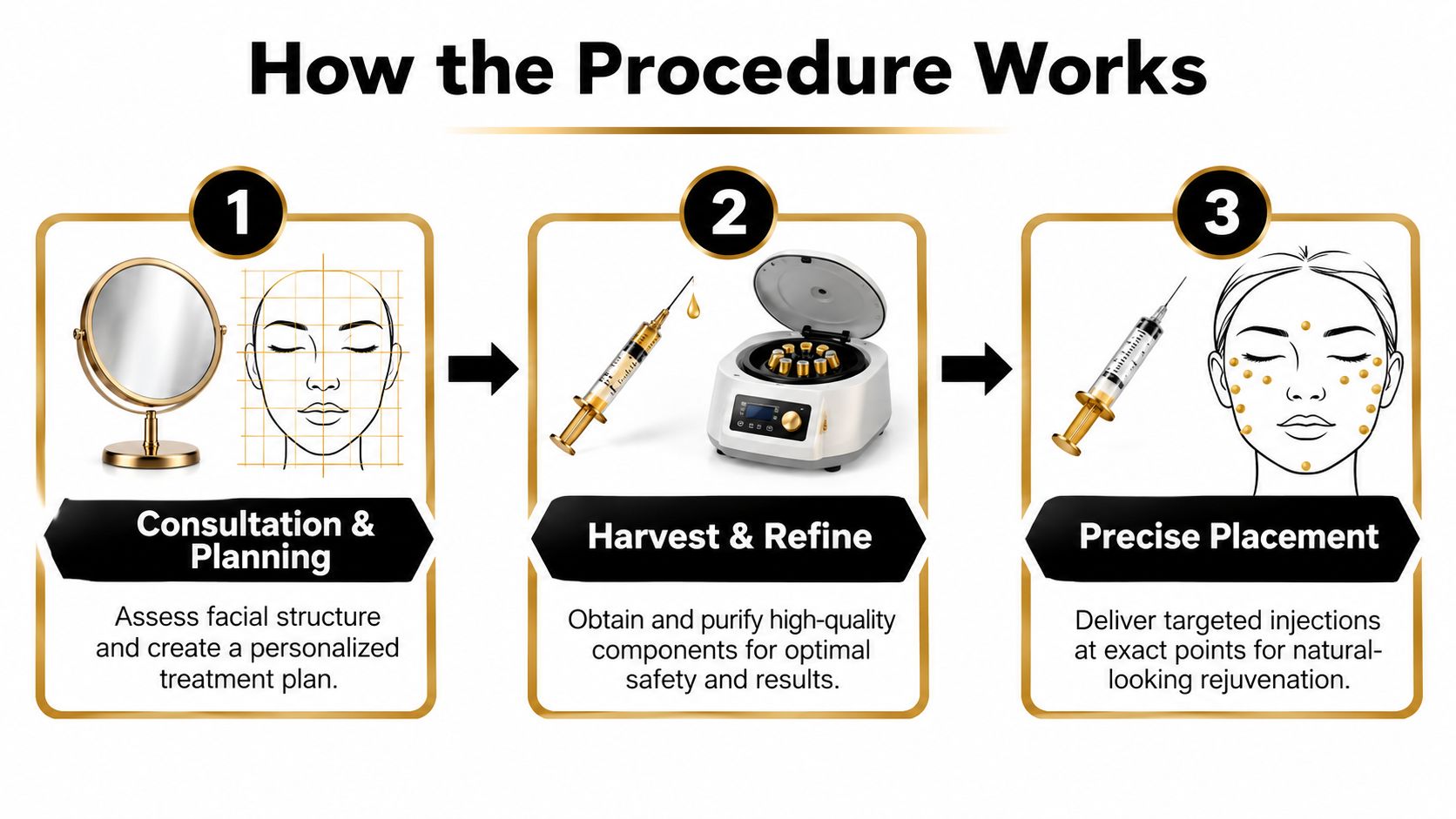
Think of facial fat transfer as a relocation process. The surgeon harvests tissue from one area, refines it, and places it in another area where volume has diminished. Each stage affects how much usable fat is available and how precisely the final contours can be shaped.
The consultation usually includes facial analysis, photographs, discussion of the areas you want treated, and an assessment of potential donor sites. Your surgeon may evaluate whether you need broad restoration across the cheeks or small, precise corrections around the eyes and mouth. The plan also considers skin quality, facial symmetry, scarring, medical history, and the type of anesthesia that suits the procedure.
Harvesting typically uses liposuction through a thin cannula. Depending on the extent of treatment and your medical plan, this may take place with local anesthesia and sedation or with general anesthesia. Gentle, controlled suction is intended to limit unnecessary trauma to the fat cells and produce tissue suitable for refinement.
The aspirated material contains more than fat. It can include blood, oil, and tumescent fluid. Surgeons may use centrifugation, filtration, or sedimentation to separate unwanted material and concentrate the tissue intended for grafting. These methods differ, but the purpose is similar: prepare a cleaner, more consistent graft for placement.
Injection is not a single deposit. The surgeon uses a fine cannula to place small parcels of fat at multiple depths and angles. Building volume gradually helps the tissue contact surrounding structures rather than creating one large bolus. The injection plane matters especially in areas with important blood vessels.
After placement, the team addresses both the face and the donor site. Facial dressings may be used, and compression garments can support the liposuction area. Early swelling doesn't represent the final result. The tissue still has to settle, and some of the transferred volume may resorb during healing.
The following video offers another visual explanation of the procedure and its stages:
The operation ends when the surgeon completes placement. The biological process continues for months afterward.
No single volume treatment fits every face. The right choice depends on how much correction you want, how many areas need treatment, whether you have a suitable donor site, and how comfortable you are with surgery and variable graft retention.
| Option | Source / Material | Setting & Anesthesia | Typical Longevity | Reversibility | Key Trade-Off |
|---|---|---|---|---|---|
| Facial fat transfer | Your own harvested fat | Surgical setting, with anesthesia selected for the case | Variable, because some grafted fat resorbs and surviving tissue may remain | Limited compared with filler | Uses autologous tissue but requires a donor site, surgery, and recovery |
| Hyaluronic acid filler | Manufactured hyaluronic acid gel | Usually office-based, often with local numbing | Temporary and requires maintenance | Often adjustable and, for appropriate products, reversible | Precise and convenient, but repeat treatment is part of the plan |
| Biostimulatory filler | Materials such as calcium hydroxylapatite or poly-L-lactic acid | Usually office-based | Variable and dependent on product and treatment response | Less directly reversible than hyaluronic acid filler | Can support gradual change, but it isn't an immediate fat-graft substitute |
| Facial implant | Solid manufactured implant | Surgical setting, with anesthesia selected for the case | Durable structural augmentation | Removal requires another procedure | Offers projection, but involves implant-specific risks and a more permanent commitment |
Fat transfer may appeal to someone who wants several facial areas treated with their own tissue and accepts a longer procedure. A filler may make more sense for someone seeking a small, adjustable correction without liposuction. An implant may suit a patient seeking defined structural projection rather than soft volume.
The comparison also includes non-surgical treatments that address skin quality rather than replace lost fat. Readers researching newer options may find this overview of RF facial treatment 2026 useful, but radiofrequency treatment and fat transfer solve different problems. A surgeon may recommend one, the other, or a combination depending on whether the main concern is volume, laxity, texture, or contour.
For a focused discussion of the decision between injectable filler and transferred fat, review this comparison of fat transfer and filler. The most useful consultation question isn't “Which treatment is best?” It's “Which trade-offs match my anatomy, goals, budget, and tolerance for recovery?”
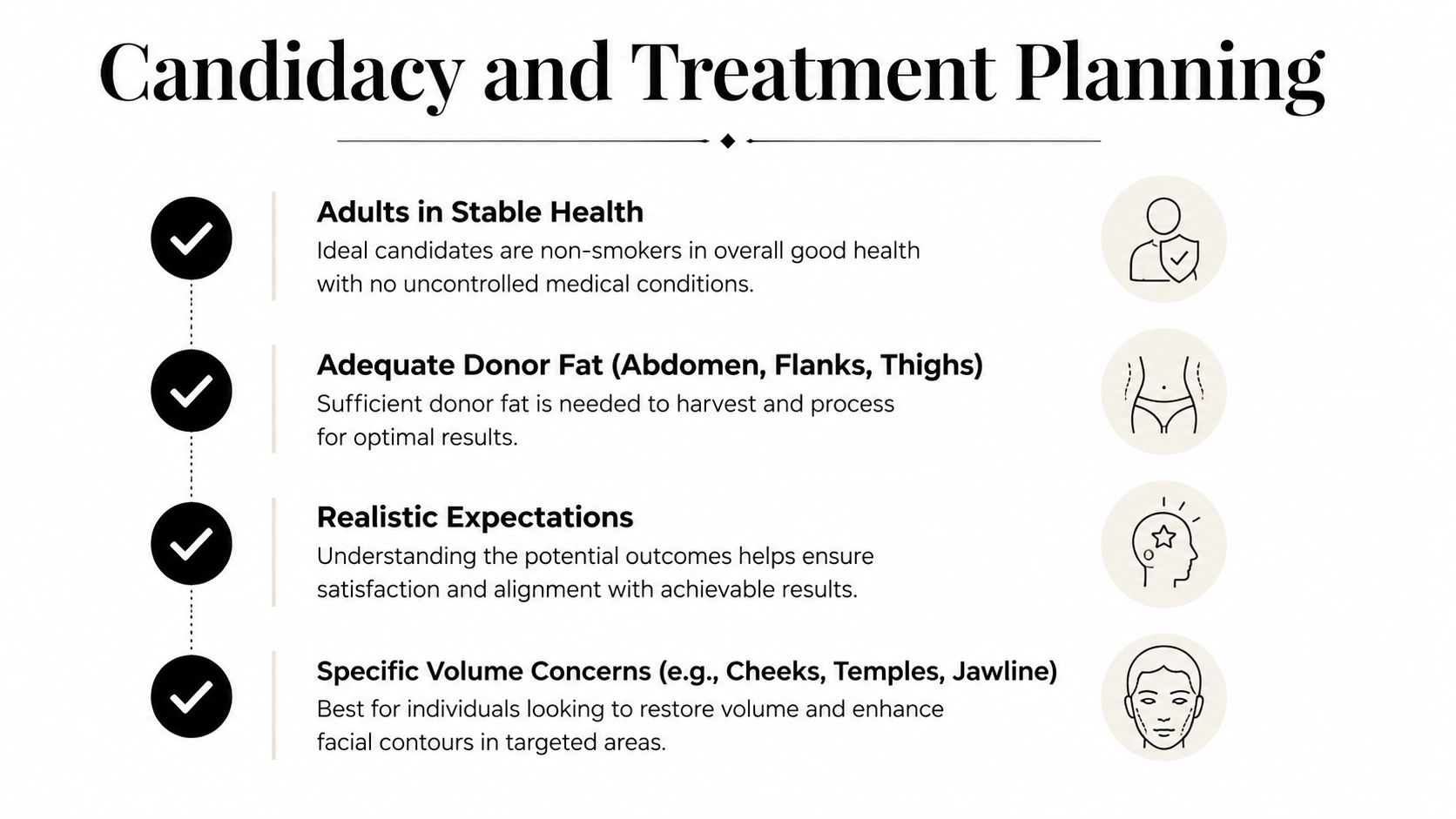
Facial fat transfer is often considered by adults in stable health who have enough donor fat for harvesting and a clear, realistic goal. The concern might be hollow temples, reduced cheek fullness, thinning lips, tear trough shadowing, or an irregular contour after surgery or injury.
Patients often assume that one operation will produce the final amount of volume permanently. The evidence supports a more cautious expectation. A meta-analysis of facial fat transfer studies involving 27 studies and 1,011 patients reported pooled graft retention of 47%, with a 95% confidence interval of 41% to 53%, over follow-up periods ranging from 3 to 24 months. Reported retention varied from 26% to 83%, and the measurement method significantly affected the apparent result. The meta-analysis explains why retention figures vary.
That variation doesn't mean the procedure is unpredictable in every individual. It means the surgeon must plan conservatively and explain that early fullness isn't necessarily final fullness. Facial zones, diagnosis, processing, injection technique, healing, and follow-up methods all influence what remains.
A separate systematic review found average retention of about 50% to 60% at 1 year and an average of 1.5 sessions. In acquired atrophic deformities, retention was reported at 43%, compared with 64% in mixed deformities at 12 months. The review of indications and outcomes supports staged planning rather than a blanket promise of a single definitive session.
Your consultation may include:
Patients considering under-eye treatment can also review this discussion of tear trough treatment, then ask whether fat, filler, surgery, or a combination is appropriate for their anatomy.
Practical preparation matters. Arrange transportation, plan time away from work, disclose supplements that may affect bruising or clotting, and ask whether a refinement session is included in the proposed treatment pathway.
Facial fat transfer can restore soft volume with tissue that feels natural because it comes from your own body. The same harvest may provide limited contouring at the donor site, although it shouldn't be treated as a substitute for full body contouring.
Surgeons may use fat transfer alongside facelift surgery, eyelid surgery, brow surgery, or revision procedures when lifting or tightening alone wouldn't address volume loss. That combination can be useful when a patient has both tissue descent and hollowing, but it also increases the importance of coordinated planning.
The main potential benefits include:
Most procedures have a low overall complication profile, but low risk isn't the same as no risk. In facial reconstructive surgery, a meta-analysis reported 91.1% patient satisfaction, 88.6% surgeon satisfaction, and clinical complications in 4.8% of procedures after about 1.5 sessions, with volume retention stabilizing at 50% to 60% at 1 year. The reconstructive-surgery review provides that safety and outcome context.
Possible complications include asymmetry, undercorrection, overcorrection, infection, oil cysts, calcification, firmness, and irregularities at either the face or donor site. Rare but severe complications can include fat embolism, neurologic injury, skin necrosis, and vision loss.
A later systematic review identified 58 reported complications in 38 patients, including 32 severe or permanent events such as hemiplegia and vision loss. Most severe events occurred after injections in the forehead and temporal areas. The review of aesthetic facial fat-grafting complications emphasizes why anatomy, cannula control, injection plane, and avoidance of high-risk vascular territories matter.
Safety question to ask: How does the surgeon reduce risk in the specific facial areas I want treated?
Swelling commonly becomes most noticeable around 48 to 72 hours, while bruising may fade over 1 to 2 weeks. The donor area can feel sore or tight, and compression may be recommended there. Your surgeon's instructions take priority because recovery depends on the areas treated and the extent of harvesting.
A typical pattern may look like this:
Call the surgical team promptly for worsening rather than improving pain, spreading redness, fever, drainage, sudden visual symptoms, marked weakness, severe headache, or any symptom that feels neurologically unusual. Patients can also consult this recovery guide for plastic surgery while following their own postoperative instructions.
Early facial fullness can be deceptive. Some of it reflects swelling, and some of the transferred fat may resorb before surviving cells establish a blood supply. The final contour therefore develops gradually rather than appearing immediately after surgery.
Initial settling often becomes clearer over 3 to 6 months, while the appearance can continue evolving for up to a year. Retention depends on the harvesting method, processing approach, injection technique, facial area, indication, and individual healing response. A well-planned result still may not retain the same volume in every treated zone.
Weight changes and ongoing aging also affect the appearance. Surviving transferred fat behaves like fat elsewhere in the body, while skin, bone support, and untreated facial areas continue to change. Some patients choose a refinement session later, not because the first procedure failed, but because their goals or facial aging have changed.
A facial fat transfer estimate can contain more than the surgeon's fee. Ask whether the written proposal separates the following:
| Cost Component | What It Covers |
|---|---|
| Surgeon fee | Planning, operation, and the surgeon's professional services |
| Anesthesia | Local anesthesia, sedation, or general anesthesia services |
| Facility fee | Use of the operating room or surgical facility |
| Liposuction supplies | Cannulas, collection materials, and related procedural supplies |
| Compression garment | Support for the donor area when recommended |
| Postoperative visits | Scheduled examinations and routine follow-up |
| Possible refinement | Whether future touch-up planning is discussed or priced separately |
Costs vary with region, surgeon experience, facility, anesthesia, number of facial areas, donor-site work, and case complexity. Combining fat transfer with a facelift, eyelid surgery, or another procedure changes the estimate.
Ask for an itemized estimate, what happens if you need refinement, and which postoperative visits are included. A single advertised price rarely explains the whole plan.
Facial fat transfer makes the most sense when you view it as both surgery and biology. The surgeon controls harvesting, processing, injection plane, cannula technique, and contour design. Your body determines how much grafted tissue establishes a blood supply and remains. Facial anatomy and the original reason for volume loss add further variation.
A sound decision framework includes four questions:
Verify board certification and ask to see before-and-after photographs of patients with similar anatomy and treatment goals. Ask how the surgeon handles asymmetry, undercorrection, overcorrection, and urgent complications. The consultation should also cover alternatives, including fillers, implants, skin treatments, or surgery when volume isn't the only concern.
Clinical safety data show high satisfaction and low aggregate complication rates, but the documented severe events make technique and anatomy impossible to dismiss. You can ask for a second opinion if the recommendation feels rushed, the risks are minimized, or the provider promises permanence without discussing resorption.
A consultation is a planning conversation, not a commitment. Leave with a clear understanding of what facial fat transfer can change, what it can't change, how long recovery may take, and whether its trade-offs fit your priorities.
Cape Cod Plastic Surgery offers personalized consultations for facial procedures, including facial fat transfer, with treatment planning designed to match facial volume and contour goals. Visit Cape Cod Plastic Surgery to learn about available options and arrange a consultation focused on realistic results, safety, and your individual anatomy.
October 7, 2026
A Practical Guide to Healing After Breast Surgery

October 6, 2026
Your Safety Guide: What to Look for When Choosing a Plastic Surgeon

October 5, 2026
Why Our On-Site Accredited Facility Matters for Your Safety

Cape Cod Plastic Surgery offers expert cosmetic and reconstructive procedures in a safe, accredited setting. Led by Dr. Marc Fater, we combine advanced techniques with personalized care to help you look and feel your best.
Monday: 9:00 AM – 5:00 PM
Tuesday: 9:00 AM – 5:00 PM
Wednesday: 9:00 AM – 5:00 PM
Thursday: 9:00 AM – 5:00 PM
Friday: 9:00 AM – 5:00 PM