

October 7, 2026
What to Expect During Your Breast Surgery Recovery
A Practical Guide to Healing After Breast Surgery
Apr 18, 2026
You may be staring at the mirror and thinking a frustratingly familiar thought: I take care of myself, my weight is fairly stable, but certain areas still don’t match the rest of me. Maybe it’s the lower abdomen that stays full no matter how disciplined you are. Maybe your flanks, back, thighs, or upper arms seem to ignore every healthy habit you’ve built.
That’s often where interest in full body liposuction begins. Not with vanity in the shallow sense, but with the desire for proportion. Patients usually aren’t asking to become a different person. They want their outer shape to better reflect the work they already put into their health.
Full body liposuction can help with that, but it’s not a shortcut and it’s not a simple “remove fat everywhere” procedure. Done well, it’s a carefully planned body contouring operation that considers balance from one area to the next, safety at every stage, and the reality that your body has limits that an ethical surgeon must respect.
When several areas bother you at once, it’s easy to feel like you need a single dramatic fix. Many people come in saying some version of, “My stomach bothers me, but so do my hips, my outer thighs, and my back. If we only treat one area, will the rest look out of balance?” That’s a smart question.
Full body liposuction is best understood as extensive contouring rather than spot treatment. The goal isn’t just to make one part smaller. It’s to improve how the abdomen, waist, flanks, back, thighs, arms, or other selected zones relate to each other so your shape feels more harmonious overall.
That helps explain why liposuction remains such a common choice. In 2023, body contouring surgeries increased by 6% to 599,862 total procedures, led by liposuction at 347,782 procedures, according to reported liposuction statistics and body contouring trends. People continue to choose it because it addresses a problem that diet and exercise often can’t fully solve: stubborn fat distribution.
Some patients exploring this topic also look at related shaping procedures, especially when the lower body silhouette is part of the goal. If you’re comparing options that affect the waist-to-hip transition, this overview of a body contouring butt lift can help you understand how contouring choices may work together.
A broader body reshaping plan also makes more sense once you understand how surgeons define contouring in the first place. This explanation of body contouring surgery is useful background if you’re still sorting out where liposuction fits among other procedures.
Full body liposuction works best when the question isn’t “How much can you take out?” but “How can we create a balanced result safely?”
That shift in thinking changes everything. It leads to better planning, better expectations, and usually a better experience for the patient.
Many people hear “full body liposuction” and picture a large-volume weight loss procedure. That’s the wrong mental model. A better one is sculpture.

A sculptor doesn’t attack the whole block at random. They study the form, decide what to preserve, and remove material selectively so the final shape looks natural from every angle. Liposuction works the same way. The surgeon isn’t just subtracting fat. The surgeon is deciding where less volume will improve proportion and where leaving volume in place is part of a beautiful result.
The most important distinction is simple. Full body liposuction is not obesity treatment and it is not a substitute for weight loss surgery. It targets subcutaneous fat, which is the layer just beneath the skin, in areas that remain disproportionate despite healthy habits.
That’s why success usually isn’t measured by the number on the scale. Patients often feel happiest when clothes fit better, the waist looks more defined, the torso transitions more smoothly into the hips, and the thighs no longer dominate the silhouette.
“Full body” rarely means every inch of the body is treated. In practice, it usually means multiple major zones are planned as one contouring project. That may include combinations such as:
The key word is selective.
Clinical perspective: The best full body liposuction plans are selective enough to preserve natural anatomy and comprehensive enough to create balance.
This procedure can remove stubborn fat, but it doesn’t solve every body concern.
It won’t tighten severely loose skin on its own. It won’t erase cellulite. It won’t change the quality of skin that has been stretched by major weight changes, aging, or genetics. And it won’t improve deep internal abdominal fat around the organs, because that isn’t the kind of fat liposuction treats.
Those limitations are not a flaw in the procedure. They’re part of honest surgical planning. Once you understand that, full body liposuction makes much more sense. It’s a shaping procedure for the right candidate, not a catch-all solution.
A modern plastic surgeon doesn’t approach full body liposuction with one instrument and one method. Think of the operating room as a workshop. Different body areas behave differently. Fat in the lower abdomen doesn’t feel the same as fat in the male chest or upper back. Skin quality varies. Scar tissue changes resistance. Dense, fibrous zones need a different strategy than softer areas.
That’s why technique selection matters.
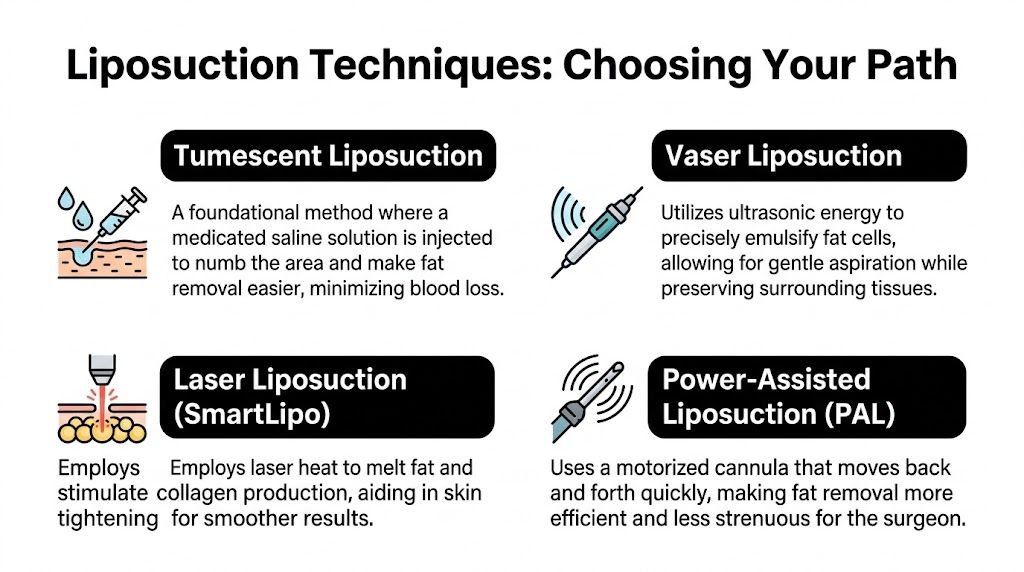
Before discussing devices, it helps to understand the tumescent technique, because it underpins many liposuction procedures. A medicated fluid is placed into the treatment area before fat is removed. That solution typically includes lidocaine, epinephrine, and IV salt solution. It expands the tissue, improves comfort, and helps control bleeding.
One of its biggest advantages is blood-loss reduction. The tumescent approach can minimize blood loss by up to 70% compared with dry techniques, as described in this explanation of the full body liposuction process.
In plain language, the fluid prepares the field. It turns a rough job into a controlled one.
Suction-assisted liposuction, often shortened to SAL, is the classic form many people picture. A thin hollow tube called a cannula is inserted through very small incisions, and the surgeon removes fat with controlled suction.
SAL remains valuable because it is direct, reliable, and versatile. In experienced hands, it can produce elegant results across many body areas. It’s often part of a larger plan even when advanced technologies are also used.
Why surgeons still rely on it:
Power-assisted liposuction, or PAL, uses a cannula that vibrates rapidly. Patients often understand this best when I describe it as a tool that helps “shake fat loose” more efficiently.
PAL can be especially useful in areas where the tissue is stubborn or fibrous. It also reduces the physical force required from the surgeon, which matters during larger contouring cases where precision has to stay high from the first pass to the last.
A few practical advantages stand out:
| Technique | Best use | Simple way to think about it |
|---|---|---|
| SAL | General contouring and blending | Manual sculpting |
| PAL | Dense or resistant areas | A vibrating sculpting tool |
| Combined SAL and PAL | Large multi-zone contouring | Broad shaping plus fine finishing |
Ultrasound-assisted liposuction, including VASER, uses ultrasonic energy to help break down fat before it is suctioned away. This can be especially helpful in dense, fibrous regions where traditional removal is more difficult.
According to the ASPS overview of the liposuction procedure, UAL and VASER are over 90% efficient in dense, fibrous areas and preserve 70% to 80% more connective tissue than traditional methods. That’s one reason many surgeons value them for more detailed contouring.
What that means for patients:
A skilled surgeon chooses technology the way a carpenter chooses a saw. Not because one tool is fashionable, but because one tool is right for the material in front of them.
Laser-assisted devices, often discussed under names such as SmartLipo, use heat energy to liquefy fat and may offer some skin-tightening effect in carefully selected areas.
These tools are often discussed for smaller or more delicate zones, not because they’re weak, but because every technology has a sweet spot. In broader full body contouring, they may play a supporting role rather than serve as the main method.
The public often asks which method is “best.” That’s like asking whether a paintbrush is better than a palette knife. It depends on the canvas and the effect you want.
In full body liposuction, a surgeon may use one technique for bulk reduction, another for fibrous tissue, and another for finishing. The point isn’t to use the most devices. The point is to create a smooth, natural contour while respecting tissue health.
Even when the final plan is customized, patients usually notice that some areas feel more sore, swollen, or stiff than others. That isn’t unusual. Different tissues respond differently, and some technologies may be selected specifically because they allow gentler treatment in more demanding zones.
What matters most isn’t whether your procedure includes SAL, PAL, VASER, or a combination. It’s whether the surgeon understands why each tool belongs in your case.
The difference between average contouring and excellent contouring is usually visible in the transitions. A waist can be smaller, but if it doesn’t flow naturally into the hips and back, the result can still look unfinished. Thighs can be reduced, but if the outer silhouette is flattened too aggressively while adjacent areas remain full, the body loses harmony.
That’s why planning matters so much.
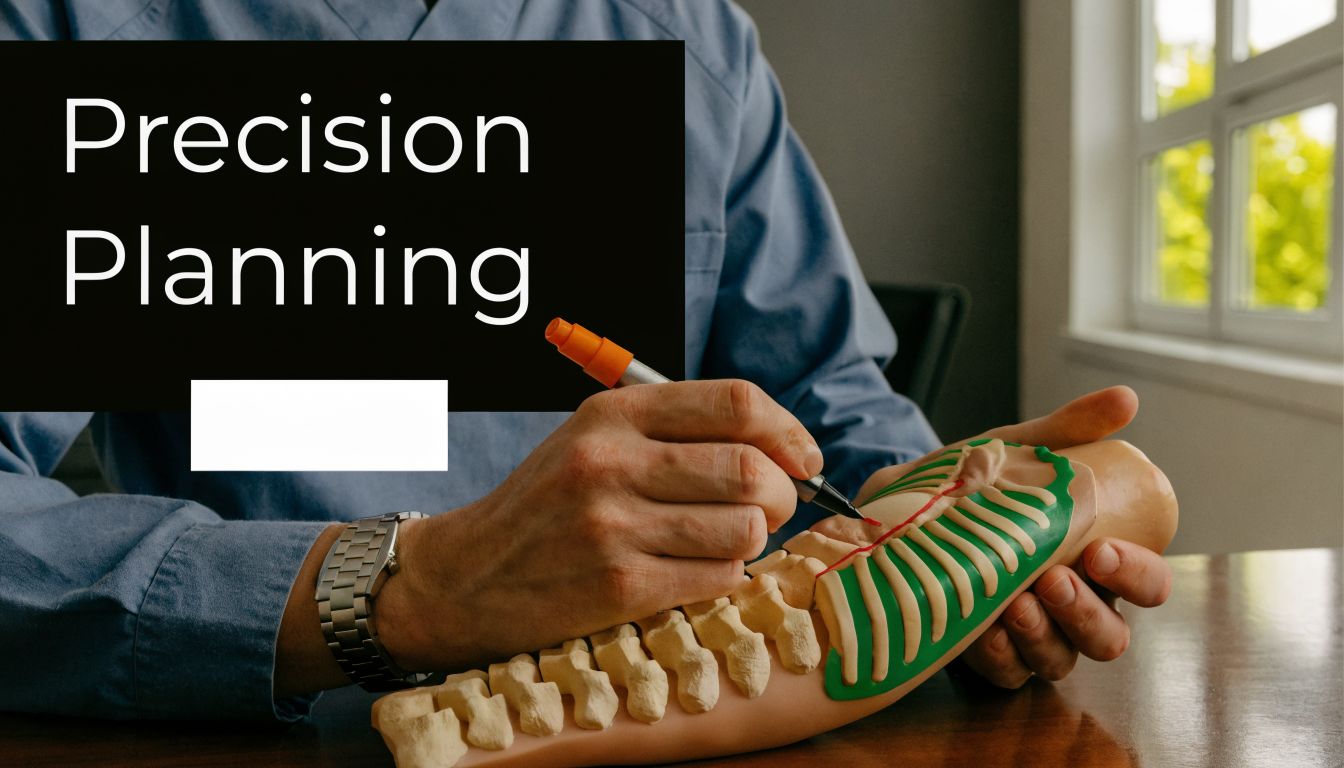
A master surgeon doesn’t think in isolated circles drawn around “problem spots.” The body is viewed as a connected system. The abdomen affects the flanks. The flanks affect the lower back. The outer thigh affects the hip line. The arm shape changes how the torso looks in clothing.
That broader view changes the surgical plan in important ways.
Many patients assume doing everything at once is more efficient. Sometimes it is. Often, it isn’t.
A thoughtful surgeon may recommend staging, which means treating body areas in separate operations rather than one long session. According to this discussion of questions patients should ask about liposuction, surgeons often consider staging for safety and recovery management, especially when treatment spans many zones and total removal would otherwise be extensive.
That advice becomes easier to understand when you think of contouring as both surgery and physiology. The more areas treated at once, the more swelling, fluid shifts, and recovery demand the body has to manage.
Sometimes the safest plan is also the most aesthetic plan, because tissues recover better when they aren't pushed beyond reason.
Planning full body liposuction involves much more than deciding where fat sits. Several factors shape the strategy:
| Planning factor | Why it matters |
|---|---|
| Skin elasticity | Determines how well the skin may contract after fat removal |
| Fat distribution | Helps decide where contouring will have the biggest visual impact |
| Existing asymmetry | Prevents a surgeon from chasing “perfect” symmetry that doesn’t exist naturally |
| Muscle tone | Affects how much definition will show after swelling resolves |
| Prior procedures or scar tissue | Can make some areas less predictable and may require technique changes |
Patients sometimes worry that a conservative plan means a timid surgeon. Usually, the opposite is true. Restraint is one of the hardest skills in body contouring.
Removing too little can disappoint. Removing too much can create dents, adhesions, or an over-skeletonized look that is far harder to fix. Good planning lives in the middle. It creates shape while preserving softness, natural femininity or masculinity, and enough tissue support for an elegant result.
Most anxiety around full body liposuction comes from not knowing what the process feels like. Patients can imagine the result, but the steps between “I’m thinking about it” and “I’m healed” often seem vague. A clearer map helps.

The first visit should feel like a planning conversation, not a sales presentation. You should expect questions about your health, weight stability, past surgeries, medications, and what specifically bothers you when you look in the mirror or get dressed.
Good candidates usually share a few traits:
This is also where a surgeon decides whether one procedure makes sense or whether a staged plan will produce a safer and more attractive result.
Once surgery is scheduled, the practical work begins. Patients receive instructions about medications, supplements, smoking avoidance, arranging help at home, and what to wear or bring on the day of surgery.
Safety decisions matter here more than patients often realize. According to the ASPS press release on how much liposuction is safe, high-volume liposuction is capped at 5 liters in an outpatient setting, and data showed an overall complication rate of 1.5%, rising to 3.7% for cases over 5 liters. That’s why surgeons who respect limits and consider staging are practicing judgment, not caution for its own sake.
If you want a practical look at healing milestones after surgery, this liposuction recovery timeline helps patients understand what daily life may look like as swelling improves and activity gradually returns.
On surgery day, the process is organized and methodical. Markings are usually made while you’re standing because gravity helps the surgeon see the actual contour. Once you’re positioned and anesthesia is underway, the selected technique or combination of techniques is used according to the plan made before the operation.
Patients often don’t realize how much of a body contouring result depends on this quiet discipline:
Recovery mindset: The operation creates the new contour. Healing reveals it slowly.
A visual overview can make that process easier to grasp:
The early recovery period is usually the most awkward, not the most dramatic. Expect swelling, drainage from small incision sites, tightness, fatigue, and a bruised or sore feeling. Many patients say they feel less “sharp pain” and more stiffness, pressure, and tenderness.
Compression garments matter because they help support tissues as swelling evolves. Walking early, in short gentle intervals, is usually encouraged because movement supports circulation.
A few common experiences surprise patients:
Over the following weeks, bruising fades and movement becomes easier. Compression usually remains an important part of the plan for a period directed by your surgeon. Daily tasks get simpler, but that doesn’t mean the tissues are done healing.
Some people return to desk work fairly quickly. More strenuous exercise usually waits longer. The right timing depends on how many areas were treated, how your body is healing, and whether your surgery was staged or more extensive.
Full body liposuction isn’t finished when you leave the operating room. Follow-up visits are where a surgeon tracks swelling patterns, checks contour development, and makes sure recovery is moving in the right direction.
That ongoing supervision is part of good surgery. It reassures the patient, catches problems early, and helps distinguish normal healing from something that needs attention.
Patients often ask the same question in different words: “Will the result last?” The honest answer is yes, if you understand what liposuction changes and what it doesn’t.
Liposuction permanently removes fat cells from treated areas. According to this discussion of key liposuction questions, fat cells do not regrow in treated areas, but if you gain weight later, that weight tends to be distributed more evenly among the remaining fat cells rather than returning only to the old trouble spots.
That’s good news, but it doesn’t mean the result is maintenance-free.
The best outcomes don’t look “done.” They look consistent. The waist is cleaner. The back is smoother in clothing. The outer thigh no longer throws off the hip line. The arms look more proportional to the torso.
In other words, a natural result often feels less like a dramatic reveal and more like relief. Patients say they recognize themselves, only more balanced.
Full body liposuction can change shape, but it doesn’t replace long-term self-care. If skin quality is a major concern, some patients may need additional treatment beyond fat removal alone. For that reason, it can help to understand options related to skin tightening after weight loss, since contour and skin behavior are closely linked.
The other limit is lifestyle. Surgery can remove resistant fat pockets, but it can’t make daily choices irrelevant.
A practical way to stay grounded is to track health trends rather than obsess over a single weigh-in. Some patients find tools like a body fat weight scale helpful for keeping an eye on body composition habits over time, especially when they’re trying to preserve a contouring result without becoming scale-obsessed.
Your surgeon creates the contour. Your habits protect it.
One of the most common emotional swings after surgery happens when patients expect the final look too early. Swelling can linger, and contour lines reveal themselves gradually. The body needs time to settle into its new shape.
That delay isn’t a sign something is wrong. It’s how healing works. Patients who understand that tend to have a healthier recovery experience because they judge progress over months, not day by day.
Some questions come up in nearly every consultation. Clear answers help you judge whether full body liposuction fits your goals and whether a surgeon is approaching your case thoughtfully.
| Question | Answer |
|---|---|
| Is full body liposuction a weight loss procedure? | No. It’s a body contouring procedure designed to remove stubborn subcutaneous fat from selected areas to improve proportion and shape. Patients usually benefit most when they are already near a stable, realistic weight. |
| How many areas can be treated at once? | That depends on your anatomy, health, skin quality, and the overall surgical plan. Safe planning is individualized. In some patients, multiple areas can be treated in one operation. In others, staging is the better choice. |
| Why would a surgeon recommend staging? | Staging can reduce the physical stress of treating too many areas in one session and can allow better contour control. It often reflects careful judgment, especially when swelling and recovery demands would be substantial in a single operation. |
| Will I lose loose skin with liposuction? | Not necessarily. Liposuction removes fat, not excess skin. If skin elasticity is limited, a surgeon may discuss whether skin tightening or an excisional procedure would better address the issue. |
| Does fat come back after liposuction? | The removed fat cells are gone from the treated area. If you gain weight later, the remaining fat cells in the body can still enlarge, so maintaining stable habits matters. |
| Is it painful? | Most patients describe soreness, tenderness, tightness, and swelling more than sharp pain. Discomfort varies by treatment area and surgical extent, but it is usually manageable with a structured recovery plan. |
| How do I know if a facility is safe? | Ask where the procedure is performed, who provides anesthesia, what safety standards the facility follows, and how emergencies are handled. Accreditation and experienced surgical staff matter. |
| How much does full body liposuction cost? | Cost varies based on the number of areas treated, technique, anesthesia, facility fees, and whether the procedure is staged. A reputable practice should give you a clear written quote after your consultation rather than a generic estimate detached from your anatomy. |
A strong consultation usually includes more than enthusiasm about your goals. It should include limits, tradeoffs, and alternatives.
Listen for whether the surgeon talks about:
If the conversation centers only on how much fat can be removed, you’re not hearing the most important part of full body contouring.
Patients do best when they approach full body liposuction as a collaboration. You bring goals, discipline, and honesty about your lifestyle. The surgeon brings judgment, technical skill, and an eye for proportion.
That combination tends to produce results that feel refined rather than forced.
If you're considering full body liposuction and want experienced guidance grounded in safety, proportion, and natural-looking results, Cape Cod Plastic Surgery offers consultations with Dr. Marc Fater, a board-certified plastic surgeon with over 30 years of experience. A personalized evaluation can help you understand whether single-stage contouring or a staged plan makes the most sense for your body and your goals.
October 7, 2026
A Practical Guide to Healing After Breast Surgery

October 6, 2026
Your Safety Guide: What to Look for When Choosing a Plastic Surgeon
October 5, 2026
Why Our On-Site Accredited Facility Matters for Your Safety

Cape Cod Plastic Surgery offers expert cosmetic and reconstructive procedures in a safe, accredited setting. Led by Dr. Marc Fater, we combine advanced techniques with personalized care to help you look and feel your best.
Monday: 9:00 AM – 5:00 PM
Tuesday: 9:00 AM – 5:00 PM
Wednesday: 9:00 AM – 5:00 PM
Thursday: 9:00 AM – 5:00 PM
Friday: 9:00 AM – 5:00 PM