

October 7, 2026
What to Expect During Your Breast Surgery Recovery
A Practical Guide to Healing After Breast Surgery
May 27, 2026
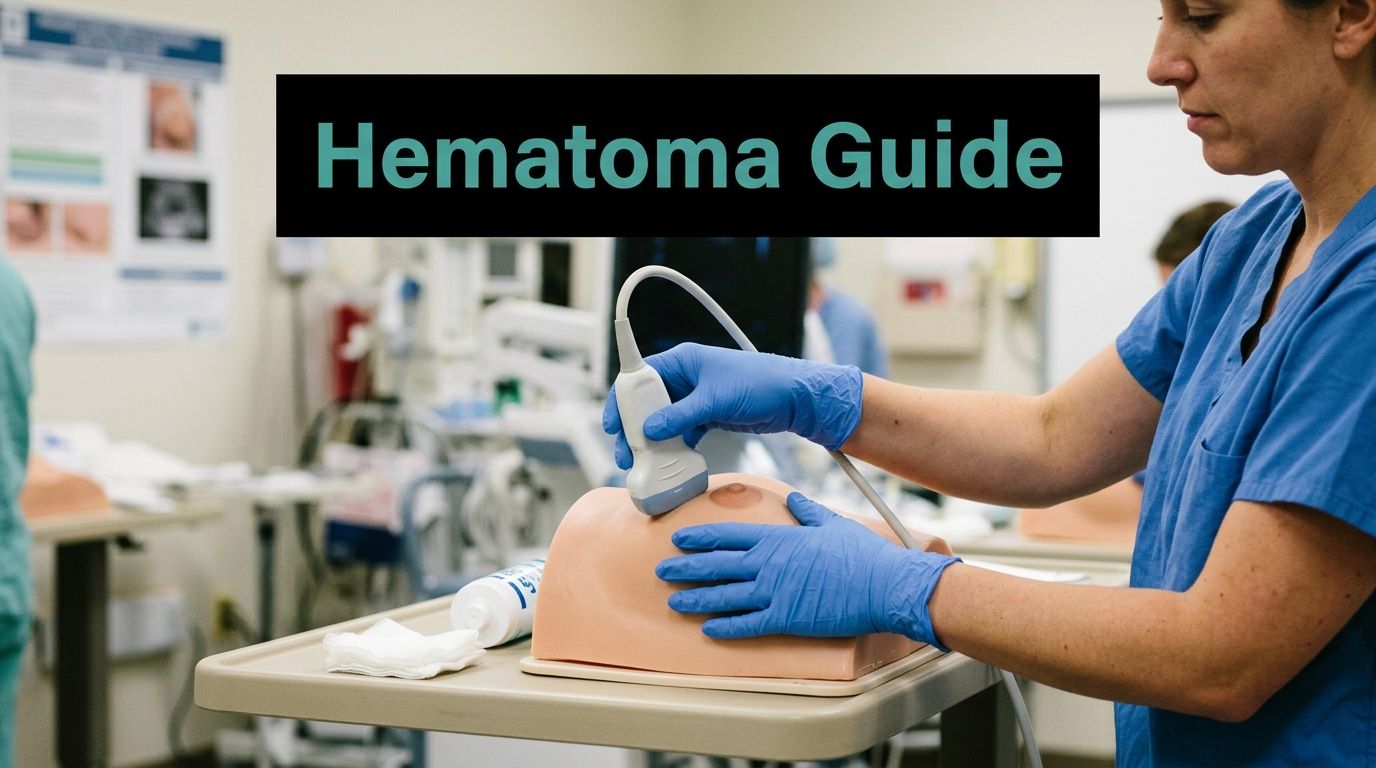
If you're reading this because one breast suddenly looks more swollen, tighter, or more bruised than the other after implant surgery, you're not overreacting. That kind of change gets your attention fast, and it should. Most patients can tell when recovery discomfort feels expected and when something feels off.
A breast implant hematoma is one of those problems that can sound frightening but becomes much less mysterious once you understand what it is and how surgeons think about it. In practical terms, it means blood has collected around the implant instead of staying contained inside tiny blood vessels. Sometimes that collection is small and settles down. Sometimes it grows, creates pressure, and needs urgent treatment.
What matters most is not panic. It's recognizing the pattern, contacting your surgeon promptly, and understanding why one patient may need observation while another needs a return to the operating room. That difference can be confusing if you've been searching online and finding only two messages: either "it's normal swelling" or "it's an emergency."
My goal here is to explain this the way I would in a consultation room. Clear language. No minimizing. No dramatizing. Just what a hematoma around a breast implant means, what symptoms deserve quick attention, and how treatment decisions are usually made.
After breast augmentation, some swelling, soreness, and bruising are expected. Healing tissue reacts to surgery. Muscles tighten. Skin stretches. The body sends fluid to the area as part of normal recovery. That background noise is exactly why hematomas can be confusing at first.
The concern starts when the pattern changes. You may wake up and notice one breast suddenly looks fuller. Your bra may feel tighter on one side. Pain may increase instead of steadily improving. Many patients describe a sense of pressure or heaviness that feels different from routine postoperative soreness.
A hematoma breast implant problem is a known complication, not a bizarre or unheard-of event. Surgeons who perform breast surgery watch for it early because quick recognition protects both your health and your result. The good news is that it is manageable. The right response depends on the size of the blood collection, whether it's stable or enlarging, and how you're feeling overall.
Practical rule: Symmetry usually improves gradually after surgery. A sudden one-sided change deserves a call.
Patients often get stuck on one question: "Does this automatically mean I need surgery?" Not always. That's where nuance matters. Some small hematomas can be monitored while the body reabsorbs the blood. Others need prompt evacuation because pressure, pain, or ongoing bleeding puts the implant pocket and surrounding tissue at risk.
This is also why experienced follow-up matters. A surgeon isn't just asking, "Is there blood there?" They're asking, "Is it expanding, is it affecting the breast shape, and is the safest path watchful waiting or intervention?" Once you understand that framework, the whole topic feels much less overwhelming.
A breast implant hematoma is a collection of blood inside the surgical pocket around an implant. The simplest way to picture it is this: a bruise usually spreads through soft tissue and fades on the skin surface, but a hematoma is more like that bruising gets trapped in a limited space. Around an implant, that space is the pocket the surgeon created.
Because the blood is collecting in a defined area, it can create pressure. That pressure is why patients often notice swelling, tightness, asymmetry, firmness, or more pain than expected. It isn't just discoloration. It's volume in a place where volume matters.
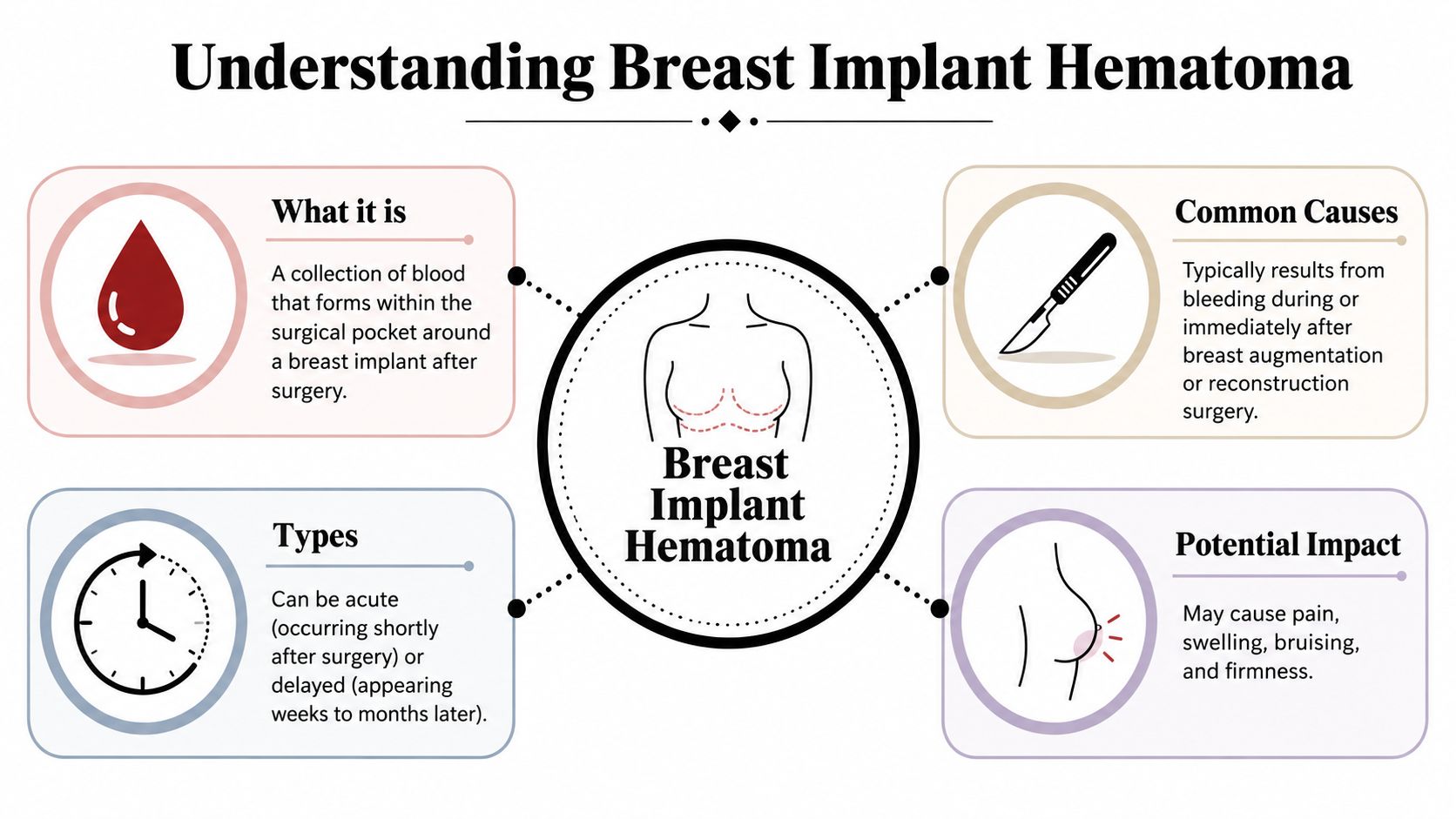
Doctors often classify hematomas by when they appear. In the medical literature, reported incidence for breast augmentation hematomas ranges from 2% to 10.3%, and they are categorized by timing as acute at 3 to 7 days, subacute at 7 days to 3 to 5 months, and late at 3 to 5 months or more after surgery, as summarized in this peer-reviewed review of breast augmentation complications.
That timing matters because it changes how a surgeon interprets the problem. An early hematoma raises concern for postoperative bleeding from the initial surgery. A later one may require a different kind of workup because the question shifts from "What bled right after surgery?" to "Why is bleeding happening now?"
Part of the confusion is that "hematoma" sounds like a single event, but patients experience it in different ways.
A hematoma is not the same thing as ordinary bruising. Bruising can be visible on the skin. A hematoma means blood has pooled in a space inside the breast pocket.
If you remember one point from this section, remember this: a hematoma isn't defined just by blood. It's defined by where that blood collects and how it affects the implant pocket.
The first clue is often visual. Before you feel anything dramatic, you may notice that one breast no longer matches the other in a way that seems too sudden or too pronounced to be routine healing.

The U.S. Food and Drug Administration identifies hematoma as a breast implant complication that can cause swelling, bruising, and pain, and notes that it usually occurs soon after surgery but can happen after a breast injury, as described in the FDA's breast implant risks and complications guidance.
Normal postoperative swelling tends to be fairly predictable. Both breasts may look high, firm, and somewhat puffy at first. A hematoma often breaks that pattern.
A helpful question is whether the breast looks like it's steadily recovering, or whether it suddenly looks like it took a step backward.
Pain after surgery is expected. The issue is pain that changes character.
If the breast feels like it's filling up, tightening, or becoming heavier over hours instead of days, call your surgeon.
Some patients find it easier to see examples and hear a surgeon explain the difference between expected healing and a concerning postoperative change. This overview can help put those symptoms into context.
A hematoma doesn't always come with fever or generalized illness. If you're feeling unwell, your surgeon may also consider other possibilities, such as infection or another postoperative issue. That's why self-diagnosis has limits. The symptom checklist is useful, but it's not the final word.
The safest approach is simple. If the change is sudden, one-sided, painful, or clearly progressive, contact your surgeon the same day.
Most patients want to know one thing right away: "Did I cause this?" Usually, that isn't the right way to think about it. Hematomas happen because bleeding occurs within a fresh or previously stable implant pocket. Sometimes there's an obvious trigger. Sometimes there isn't.
One category involves the operation itself. Even with careful technique, surgery creates raw surfaces and small blood vessels that must seal off. The published review on breast augmentation complications notes that causes can include inadequate hemostasis during surgery, which is the medical term for stopping bleeding thoroughly.
In plain language, this means a tiny vessel may ooze after the procedure even when everything looked controlled during surgery. That's why surgeons monitor patients closely in the early postoperative window.
Another category involves the patient's own bleeding tendency. The same review notes that coagulation disorders can contribute. Even when a patient doesn't have a formal bleeding disorder, medicines and supplements that affect clotting can matter.
For patients who use injectable blood thinners, it helps to understand the medication side as well. A plain-language resource on side effects of Lovenox shots can give useful background before you discuss your personal risk with your surgeon. That kind of conversation is especially important before any elective breast procedure.
The third category is what happens after surgery. The medical literature also identifies trauma as a possible cause. That doesn't always mean a major accident. It can mean pressure, strain, or an injury to the breast after surgery.
Common real-life examples include:
The key idea is simple. A hematoma usually reflects an interaction between the surgical pocket, blood vessels, and healing tissues. It isn't a sign that your body has failed. It's a complication your surgeon is trained to prevent, recognize, and manage.
When a surgeon evaluates a possible hematoma, the first step is usually old-fashioned clinical judgment. How does the breast look? How tense is it? Has the shape changed quickly? Is the pain increasing? A physical exam often tells us a lot before any machine enters the room.
Imaging can help when the picture isn't clear or when the surgeon wants to define the size and location of the collection more precisely. In practice, ultrasound is commonly used because it can help distinguish fluid or blood from ordinary postoperative swelling. If a patient also has concerns about implant condition or another implant-related issue, the evaluation may expand. Patients asking broader questions about breast pocket changes after surgery sometimes also review guidance on healing after breast implant removal, because many of the same concerns about swelling, asymmetry, and pocket behavior come up there too.
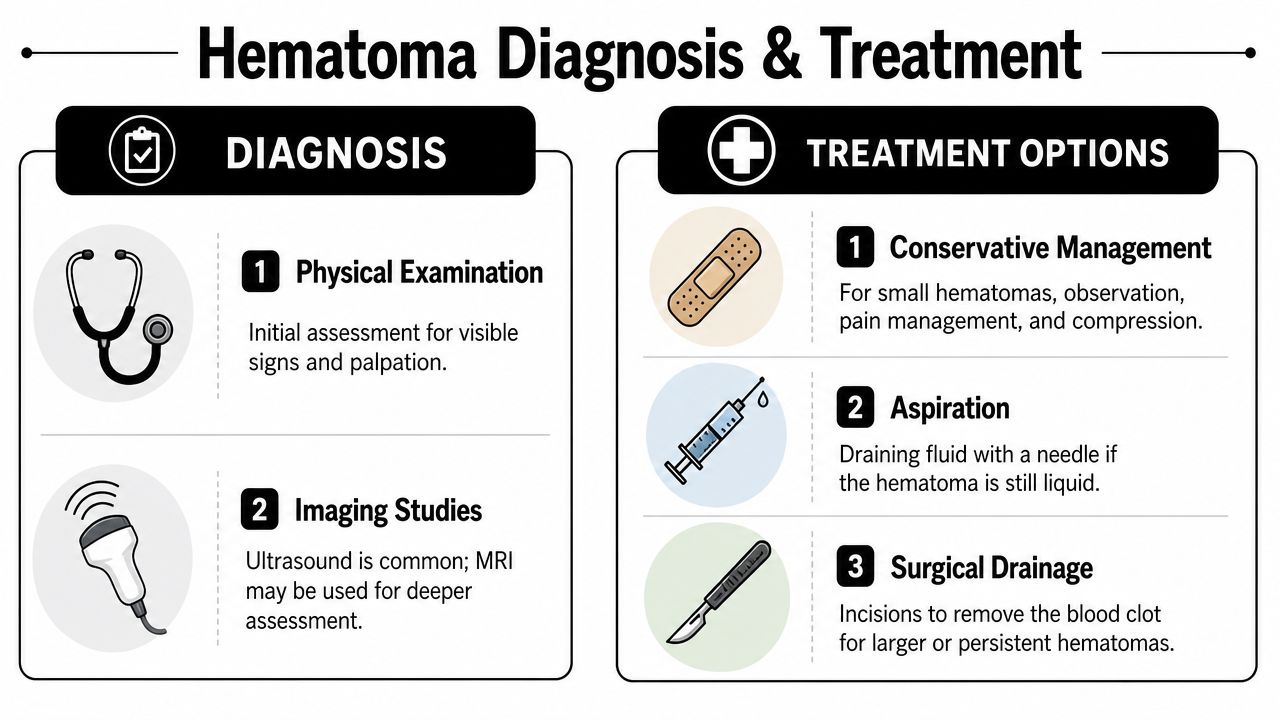
Many online articles oversimplify the issue. Not every hematoma means an emergency trip back to surgery. Clinical guidance notes that most small breast hematomas resolve on their own without treatment, while rapidly enlarging or clinically concerning cases may require operative evacuation, as explained by Cleveland Clinic's overview of breast hematoma.
That principle matters. Surgeons don't treat the word "hematoma." They treat the actual problem in front of them.
| Factor | Conservative Management (Observation) | Surgical Evacuation |
|---|---|---|
| Typical situation | Small, stable collection with symptoms that aren't worsening | Large, expanding, tense, or clearly symptomatic collection |
| What the surgeon watches | Size, pain, bruising, breast shape, and whether symptoms are improving | Ongoing bleeding, pressure, distortion of the implant pocket, and significant discomfort |
| Main goal | Let the body gradually reabsorb the blood safely | Remove collected blood, relieve pressure, and identify the bleeding source if possible |
| What treatment may involve | Follow-up exams, possible imaging, activity restriction, symptom monitoring | Return to the operating room for evacuation and control of bleeding |
| What the patient needs to do | Report any increase in swelling, pain, or asymmetry right away | Follow postoperative instructions again and attend close follow-up |
| Why this path is chosen | The hematoma appears limited and not dangerous to the pocket or tissues | The hematoma threatens healing, comfort, implant position, or ongoing safety |
A good treatment decision comes down to a few practical questions:
The safest plan is often the simplest one. If a hematoma is small and settling, observation may be reasonable. If it's expanding, decisive treatment protects both the patient and the outcome.
That judgment call is where experience matters most.
Recovery depends on which path you take. The experience of living with a small stable hematoma is different from recovering after surgical evacuation, and it helps to know that in advance.
In the observation pathway, the first phase is mostly about patience and monitoring. The body slowly breaks down and reabsorbs the blood collection. During that period, one breast may remain more bruised, fuller, or firmer than the other for a while.
The hardest part is often emotional, not physical. Patients worry that any asymmetry means the final result is ruined. Usually, that's not how healing works. Tissues often need time to settle before the breast looks more natural again.
During this stage, your surgeon may ask you to avoid activities that could aggravate the pocket and to keep a close eye on any change in size, shape, or pain. If you want a broader sense of what normal healing milestones look like after breast surgery, a breast augmentation recovery timeline can help you compare the big picture while still following your own surgeon's specific instructions.
When surgery is needed, most patients feel relief once the pressure is gone and they know the issue has been addressed directly. The recovery clock often resets in a limited way because the breast has undergone another procedure. You may have renewed swelling, soreness, and a fresh period of close follow-up.
What patients usually want to know is whether this permanently damages the cosmetic result. It can affect the short-term appearance, but many patients still go on to heal well after appropriate treatment. The final outcome depends on how much blood collected, how long the tissues were under pressure, and whether the implant pocket remains well controlled afterward.
A hematoma can be disruptive, but it doesn't automatically mean a long-term problem. With proper monitoring or timely evacuation, many patients recover with a good breast shape and stable implant position.
What matters most is avoiding delay. The earlier a concerning hematoma is recognized, the more options your surgeon has to protect the tissues and preserve the result.
A careful breast surgeon thinks about hematoma risk before the first incision, during the procedure, and throughout recovery. Prevention starts with planning. Patients are screened for medications, supplements, and health issues that could increase bleeding risk. Operative technique matters too. Gentle tissue handling and meticulous control of bleeding are part of standard risk reduction, not optional extras.
For patients, the prevention side continues at home. Detailed activity restrictions, compression guidance when appropriate, and clear instructions about when to call all matter. Even excellent surgery can be undermined by early strain or unrecognized bleeding, so postoperative communication is part of the treatment plan.
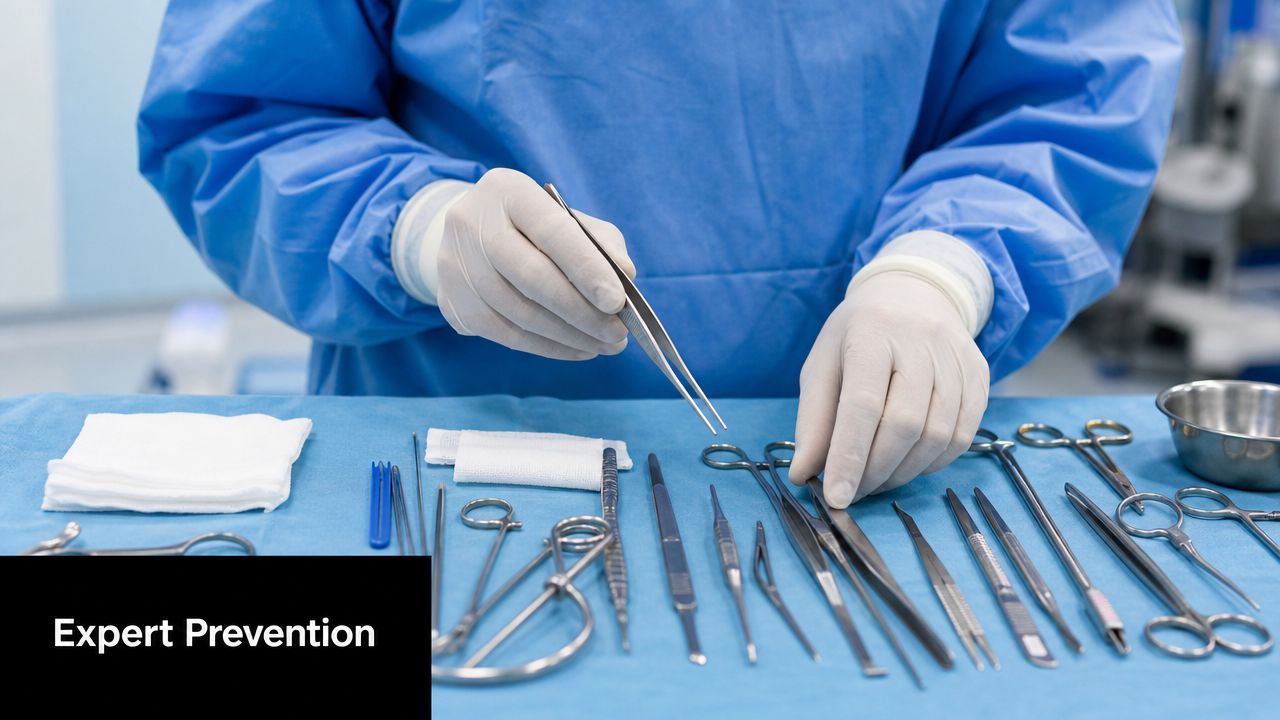
An experienced practice usually follows a protocol that includes:
For patients looking to reduce avoidable bruising and bleeding risk during recovery, practical guidance like how to minimize bruising after surgery can be useful alongside your surgeon's personalized instructions.
Dr. Marc Fater's background includes over 30 years of surgical experience and an on-site AAAASF-accredited surgical suite, which means patients are cared for in a setting built around perioperative safety. If a patient reports sudden one-sided breast swelling or pressure, the right next step isn't reassurance by text alone. It's prompt assessment.
That assessment usually starts with a few direct questions. When did the change begin? Is the breast getting larger? Is the pain rising? Was there any strain or injury? From there, the patient may be brought in urgently for examination and, if needed, further evaluation.
Fast communication is part of good surgical care. A patient with possible hematoma shouldn't be left wondering whether to "wait and see" without guidance.
The best protocol is the one that catches problems early and tailors treatment to the actual findings.
Yes, although it's uncommon and often surprises patients. A literature review found only 20 reported cases of delayed capsular hematoma occurring between 4 months and 22 years after the original implant surgery, as described in this review of delayed hematoma after augmentation mammaplasty. The practical takeaway is that sudden swelling years later still deserves evaluation. It isn't always a rupture or infection.
No. Some small hematomas can be observed if they're stable and symptoms aren't worsening. The key is that the decision should come from a surgeon who can examine you and decide whether the collection is settling or creating enough pressure to justify intervention.
You usually can't do that reliably on your own. A hematoma often involves swelling, bruising, pressure, and asymmetry. Infection may bring warmth, redness, drainage, or feeling sick. A seroma is a fluid collection rather than a blood collection and can feel similar in terms of fullness or swelling. Because these can overlap, the safest move is not trying to label it yourself. The right move is to contact your surgeon promptly so the breast can be examined and, if needed, imaged.
If you're worried about sudden breast swelling, pain, or asymmetry after implant surgery, Cape Cod Plastic Surgery can help you figure out what needs urgent evaluation and what may be safely monitored. When a possible hematoma is involved, timely assessment matters. Getting clear guidance early can protect both your recovery and your result.
October 7, 2026
A Practical Guide to Healing After Breast Surgery
October 6, 2026
Your Safety Guide: What to Look for When Choosing a Plastic Surgeon

October 5, 2026
Why Our On-Site Accredited Facility Matters for Your Safety

Cape Cod Plastic Surgery offers expert cosmetic and reconstructive procedures in a safe, accredited setting. Led by Dr. Marc Fater, we combine advanced techniques with personalized care to help you look and feel your best.
Monday: 9:00 AM – 5:00 PM
Tuesday: 9:00 AM – 5:00 PM
Wednesday: 9:00 AM – 5:00 PM
Thursday: 9:00 AM – 5:00 PM
Friday: 9:00 AM – 5:00 PM