
September 9, 2026
How to Care for Surgical Incisions Properly
Expert Guide to Proper Surgical Incision Care
Jul 2, 2026
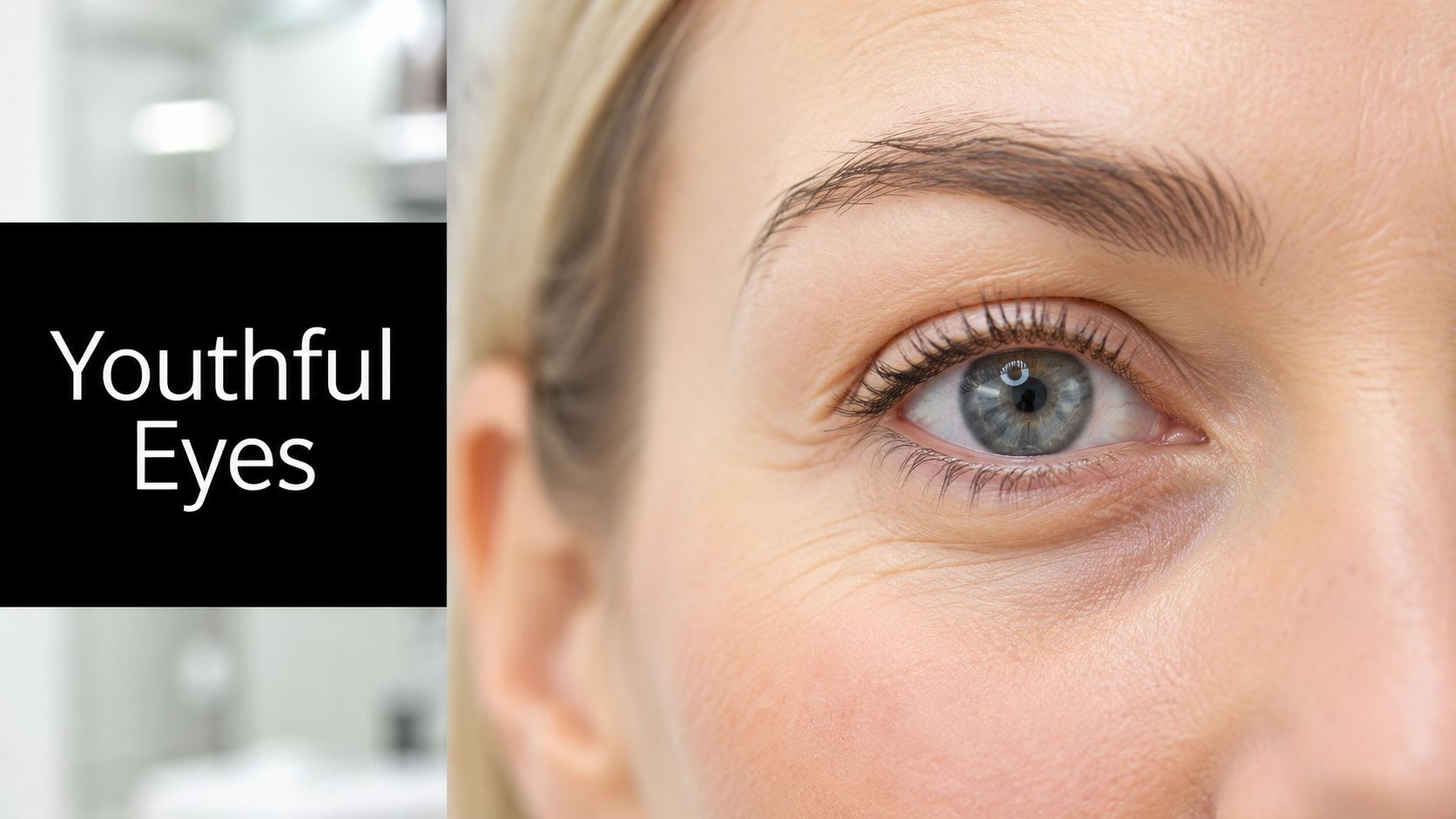
You may be looking in the mirror each morning and seeing the same thing: puffiness under the eyes, shadows that make you look tired, and a face that doesn't match how you feel. Maybe you slept well. Maybe you're healthy. But the under-eye area still sends the wrong message.
That frustration is common. For many people on Cape Cod, the lower eyelids are one of the first places where age, genetics, and tissue laxity start to show. Makeup can only do so much. Creams can improve skin quality a bit. But if the issue is structural, such as bulging fat pads or loose support in the eyelid, the answer usually has to be structural too.
A patient will often tell me, “I don't want to look different. I just want to stop looking exhausted.” That's exactly the right place to begin. Lower eyelid surgery is not about changing who you are. It's about removing the visual cues that make you look older, worn down, or unhappy when that isn't how you feel.

The under-eye area ages in a very specific way. Fat can push forward and create bags. Skin can loosen and wrinkle. The border between the eyelid and cheek can hollow, which creates a shadow. Even in bright light, the eyes can look heavy.
This procedure has become much more visible because many people are dealing with the same concern. In 2024, eyelid surgery became the most common surgical procedure globally for the first time, with more than 2.1 million procedures performed worldwide, a 13.4% increase from the prior year, and North America accounting for 37.1% of the global market, according to the ISAPS Global Survey 2024 report.
Lower eyelid surgery works best when the goal is simple: look more rested, not remade.
A good result looks natural. Friends may say you look refreshed, healthier, or less tired. They usually shouldn't be able to point to exactly why. That's the standard I believe patients should expect.
Not everyone with under-eye concerns needs surgery. Some people have pigmentation, some have volume loss, and some have true eyelid bags. The key is figuring out which problem you have.
You may be a good candidate if you notice one or more of these concerns:
If you've ever wondered why under-eye bags can become so persistent, this explanation of what causes under-eye bags can help you connect what you're seeing in the mirror with the anatomy underneath.
The best candidates are usually healthy adults who understand what surgery can and can't do. Lower eyelid surgery can improve contour. It can reduce bags and excess skin. It can create a smoother transition from the eyelid to the cheek.
It can't stop natural aging. It also won't change your overall identity or erase every line around the eye.
A consultation should also look carefully at the eye itself, not just the skin. That includes tear production, lid tone, and how the lower eyelid sits against the eye. If someone already has significant dryness, irritation, or poor eyelid support, those issues need to be addressed in the plan.
Practical rule: If your lower lid already feels loose, pulls away easily, or your eyes run dry now, those details aren't minor. They affect both safety and technique.
A few situations call for extra care:
The right candidate isn't just someone with under-eye bags. It's someone whose anatomy, goals, and health all line up with a safe, natural plan.
Lower eyelid surgery works best when the plan matches the problem. Under-eye bags, loose skin, hollows, and lid laxity can look similar in the mirror, but they are not corrected the same way. A careful surgeon chooses the route, the amount of tissue adjustment, and the support strategy based on your anatomy, not a one-size-fits-all recipe.
Surgeons usually use one of two access points to treat the lower lid.
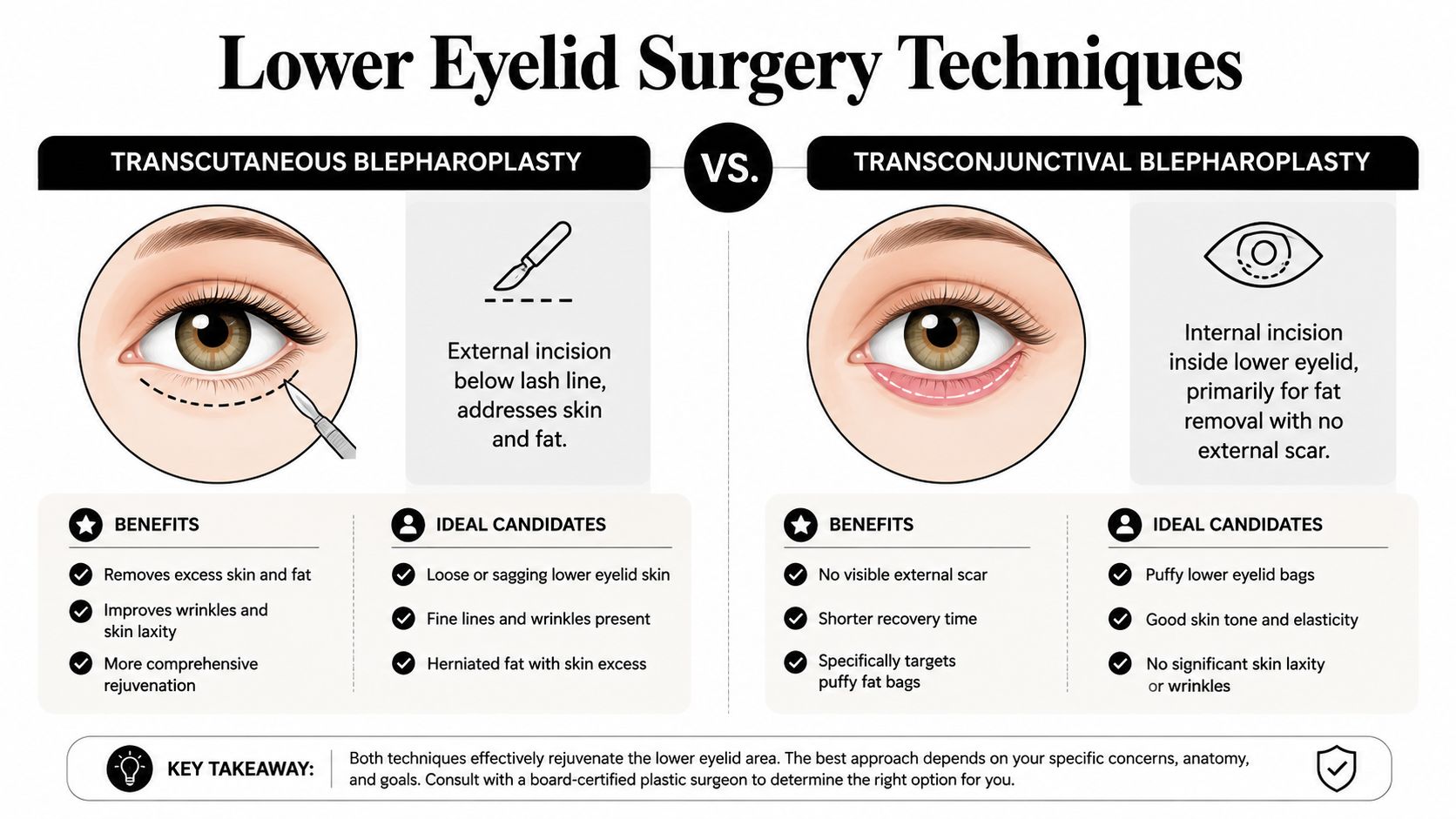
One route is through the skin, just below the lash line. This is called a transcutaneous approach. It gives direct access to skin, muscle, and fat, so it can be useful when someone has visible excess skin or wrinkling that needs direct treatment.
The other route is from inside the eyelid. This is called a transconjunctival approach. There is no external skin incision, which makes it a good option when puffiness from fat is the main issue and the skin itself is still in relatively good shape.
A good way to understand the difference is this: both approaches reach the same neighborhood, but they do not start at the same front door. The best choice depends on whether the surgeon needs to treat skin, fat, support, or all three. For readers comparing options more broadly, this overview of blepharoplasty procedures explains how upper and lower eyelid surgery differ.
Many patients come in assuming the goal is simple fat removal. Sometimes that is part of the plan, but modern lower eyelid surgery is often more refined than that.
If a patient has a bulge right above a hollow, removing all the fat can trade one problem for another. The area may look flatter, but also more skeletonized or tired. In the right patient, a surgeon may reposition some of that fat to soften the transition between the eyelid and the cheek, rather than subtracting volume across the board.
That approach is often more natural-looking because aging around the eyes is not only about excess. It is also about shifting support and uneven contour.
This is the part many online guides barely mention. The lower eyelid is not just skin draped over the eye. It is a supported structure, more like a hammock with anchor points at the corners. If tissue is tightened or removed without reinforcing those anchors, healing forces can pull the lid downward.
That downward pull is called lower eyelid retraction. Patients may notice more white showing beneath the iris, a rounded or startled eye shape, irritation, tearing, or an appearance that looks surgical instead of natural.
One of the most important ways to reduce that risk is canthopexy. In plain terms, canthopexy tightens and reinforces the outer corner support of the lower lid. It does not exist to make the eye look different. Its job is to help the eyelid stay in the right position against the eye as it heals.
If skin removal is trimming loose fabric, canthopexy is reinforcing the corner of the frame so the fabric does not sag afterward.
This step matters even more in patients who already have some lid looseness, weaker tone, prominent eyes, or anatomy that makes the lower lid easier to pull down. In those patients, support should be part of the surgical design from the start, not an afterthought added only after a problem appears.
A published review in Plastic and Reconstructive Surgery Global Open describes canthopexy and related support procedures as common adjuncts in lower blepharoplasty, especially when surgeons need to maintain lid position and reduce the chance of malposition after surgery: Lower Eyelid Blepharoplasty: An Overview.
Patients often focus on the incision. Surgeons focus on tension.
That difference is important. A barely visible incision means very little if the lower lid heals in the wrong position. The safer, more thoughtful operation is the one that improves puffiness or loose skin while also protecting the eyelid's relationship to the eye itself.
That is why technique should never be reduced to “fat removed” or “skin trimmed.” The key question is whether the operation preserved support, respected the anatomy, and was designed to lower the chance of retraction. On Cape Cod, where many patients want refreshment without looking operated on, that distinction matters a great deal.
A lot of Cape Cod patients come in with the same worry. They are less afraid of bruising than of looking pulled down, round-eyed, or obviously operated on. A good surgical journey starts by addressing that fear early, because lower eyelid surgery is not just about removing puffiness. It is about improving the area while protecting the eyelid's position against the eye.
Your consultation should feel calm, careful, and specific to your anatomy. You explain what you see in the mirror. Your surgeon studies what is causing it. That often includes skin excess, bulging fat, hollowing near the tear trough, and the tone of the lower lid itself.
The support exam matters a great deal here. The lower lid works like the edge of a fitted sheet. If that edge is already a little loose, removing skin or shifting fat without reinforcing support can make the lid sit lower as it heals. That is why surgeons who focus on safety spend time checking lid laxity, eye prominence, dry-eye symptoms, and how the outer corner of the eyelid holds its shape.
Photos are usually taken, and they are useful for more than before-and-after comparison. They help map the plan with precision and document details that can be easy to miss in conversation alone.
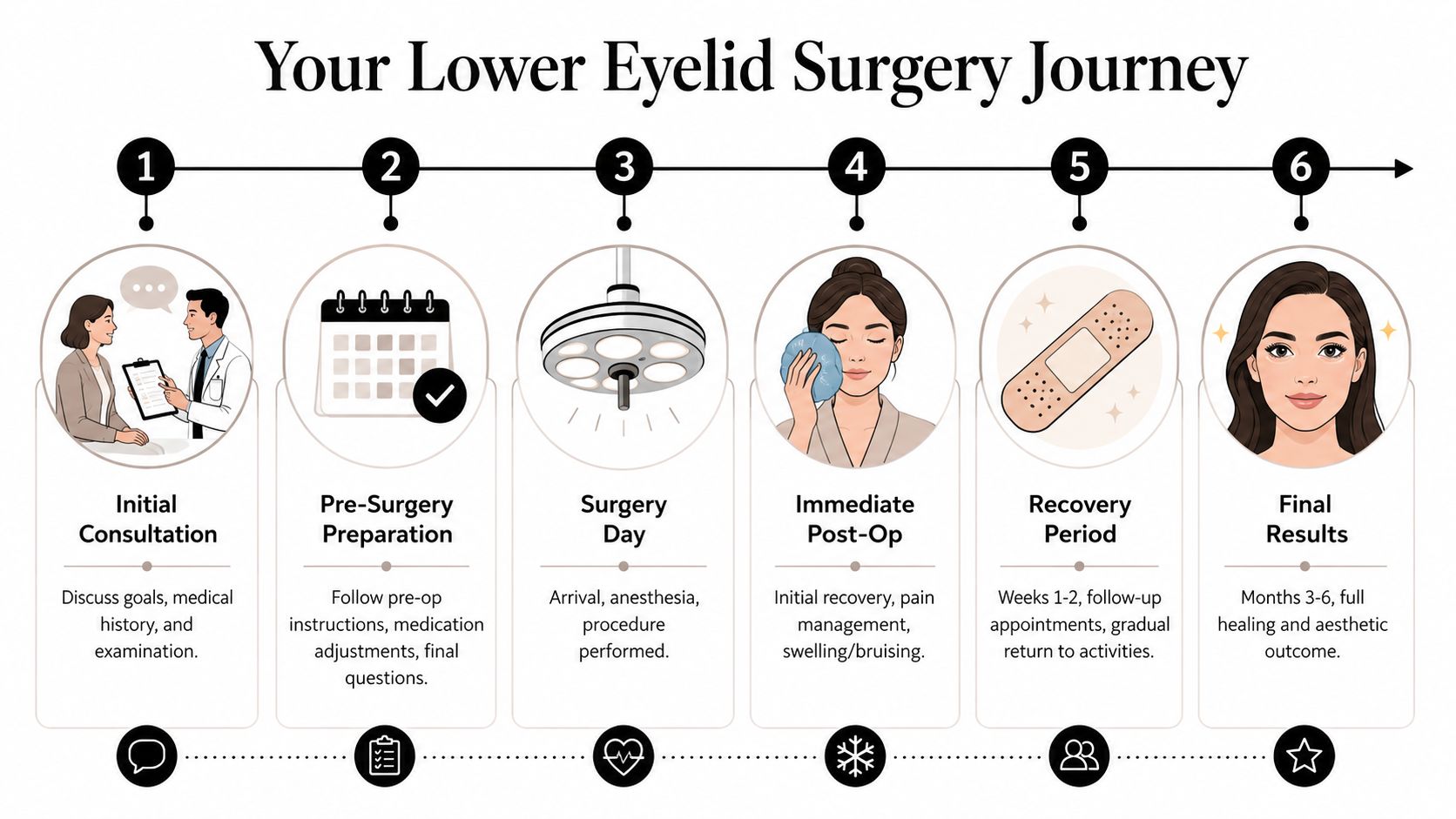
By the end of the visit, you should understand three things clearly. What is causing the tired look. Which technique fits your anatomy. Whether you need structural support such as canthopexy built into the plan from the start.
Surgery day is usually more organized and less dramatic than patients expect. After a final review of the plan, anesthesia is given, the eyes are protected, and the surgeon follows the approach chosen at consultation. Depending on your needs, that may involve a hidden incision inside the eyelid, a fine incision just beneath the lashes, fat repositioning, conservative skin treatment, or a support procedure at the outer corner.
For many patients, the most reassuring part is knowing the operation is not merely a matter of taking tissue away. It is more like careful tailoring. Fullness may be reduced or repositioned, but the shape of the lid and its support have to be preserved throughout the procedure.
If your lid has even mild looseness, reinforcement may be performed during surgery so the eyelid heals in a stable position. That step is often overlooked in online summaries, but it can make the difference between a refreshed result and a lid that heals with too much downward tension.
If you'd like to see a surgeon explain the experience in a more visual way, this video offers a helpful overview:
Patients are monitored closely before, during, and after the procedure in an accredited surgical setting. Safety checks, eye protection, and thoughtful technique matter more than speed.
Recovery asks for patience more than toughness. The first week is usually defined by swelling, bruising, tightness, and frequent use of cold compresses and lubricating drops. Your vision can feel a little blurry at times from ointment or tearing, which is common and usually temporary.
A recent review in JAMA Otolaryngology notes that swelling and bruising often improve over the first 7 to 10 days, with contour becoming more apparent after the second week as healing continues.
A practical timeline helps:
The same review describes lower eyelid surgery as one of the less painful cosmetic procedures, with discomfort often improving within two weeks. In day-to-day life, patients are usually more bothered by swelling, temporary asymmetry, or dryness than by pain itself.
Follow-up visits are not a formality. They are part of the procedure. Your surgeon checks how the lid is sitting, whether the eye surface is staying comfortable, and whether healing is following the expected course. If you already have dry eyes, prominent eyes, or a naturally looser lower lid, that follow-up becomes even more important because small changes are easier to address early.
The goal is steady healing, not rushed healing. Most patients do not wake up one morning suddenly "done." They improve in stages, and that is normal.
A careful lower eyelid operation is not just about removing puffiness. It is also about protecting the shape and position of the lid while you heal. That second part is the piece many online guides skip, and it matters because one of the complications patients fear most is lower eyelid retraction, where the lid sits too low and shows more white below the iris.
The lower lid works like a hammock supporting the eye. If skin or fat is adjusted without checking the hammock's tension, the lid can drift downward as swelling and scar tension develop. That is why surgeons often assess whether the outer corner of the eyelid needs reinforcement with a canthopexy. In simple terms, canthopexy tightens and supports the lid at the outer corner so it heals in a safer, more stable position.
Every surgery has tradeoffs, and lower eyelid surgery is no exception. Some issues are temporary and improve with healing. Others are less common but deserve a plain-language discussion before you decide.
The goal is not to make risk sound frightening. The goal is to make it understandable, because informed patients make better decisions.
At Cape Cod Plastic Surgery, this is part of the safety conversation. Some patients have naturally looser lower lids, prominent eyes, prior eye surgery, or skin quality that puts them at higher risk for retraction. In those patients, adding support is not an extra flourish. It is a protective step.
A canthopexy does not make every patient look tighter or pulled. Done well, it usually helps preserve a natural eyelid shape. You should still look like yourself, just less tired. That is the standard worth aiming for.
A good result looks rested, not operated on. The under-eye area should appear smoother and less heavy, with a softer transition from the lid to the cheek. You should not look hollow, rounded, or startled.
Realistic expectations also depend on identifying the underlying problem. Some patients have fat bulges. Others have hollowing, pigment, skin creasing, or a combination. If hollowness is the bigger issue, surgery alone may not be the full answer. This explanation of tear trough treatment for under-eye hollows helps clarify why bags and hollows are treated differently.
For patients who are not ready for surgery, or whose concerns are mild, non-surgical eyelid lift options can help explain where fillers, lasers, and skin-tightening treatments may fit. Those treatments can improve certain concerns, but they do not reposition a loose lower lid or remove structural fat bags the way surgery can.
Results can be long-lasting, but the eyelids will continue to age. Surgery resets the clock for a while. It does not stop time. The best outcomes come from matching the technique to the anatomy, protecting eyelid support, and aiming for improvement that looks believable in daylight, conversation, and photographs.
A common Cape Cod consultation goes like this. A patient points to the bags under the eyes, asks about filler first, then asks the next question almost immediately: “If I do choose surgery, what am I really paying for?”
The honest answer is that the price reflects more than removing puffiness. Lower eyelid surgery often includes the surgeon's fee, anesthesia, and facility costs, but the key difference is in the plan. A straightforward case is different from one that also needs skin tightening, fat repositioning, or support of the outer corner of the eyelid. That support step, called canthopexy, is one of the details that can make surgery safer and more durable because it helps protect eyelid position and lowers the risk of the lid pulling downward as it heals.
That last point matters.
Many online cost discussions treat every lower blepharoplasty as if it were the same operation. It is not. Two patients can both say they have “under-eye bags” and need very different treatment. One may need fat adjustment alone. Another may also have lid looseness that should be reinforced at the same time. If structural support is ignored to make a quote look simpler or cheaper, the lower price can be misleading.
Non-surgical treatment can be a good choice for the right problem. Fillers can soften a hollow area. Lasers and resurfacing can improve fine lines or crepey skin. Skin-tightening treatments may offer modest improvement in mild laxity.
They do not tighten a loose lower lid the way surgical support does.
That distinction is easy to miss because bags, hollows, shadows, and skin texture often overlap in the mirror. If you are trying to sort out which issue you have, this guide to tear trough treatment for under-eye hollows explains why a hollow needs a different solution than a fat pad bulge.
If you're exploring office-based options more broadly, this overview of non-surgical eyelid lift options is a useful reference for understanding where lasers, fillers, and skin-tightening treatments may fit.
| Treatment | Best For | Longevity | Downtime |
|---|---|---|---|
| Lower eyelid surgery | Structural bags, loose skin, eyelid support problems | Long-lasting | More recovery than office treatments |
| Tear trough filler | Hollowing and contour shadowing | Temporary | Minimal |
| Laser or resurfacing treatment | Fine lines and skin texture | Varies | Usually shorter than surgery |
A simple way to compare these options is to separate camouflage from correction. Fillers and resurfacing can improve the surface or disguise a contour problem. Surgery can correct deeper anatomy, and when needed, reinforce the lid so the result looks rested without sacrificing eyelid function.
A patient on Cape Cod often comes in with a very reasonable fear: “I want my under-eye bags improved, but I do not want my eyes pulled down or changed.” That concern gets to the heart of lower eyelid surgery. The lower lid is not just skin. It is a small structural support system that has to look natural and still protect the eye.
That is why surgeon selection matters so much here. An attractive before-and-after photo is not enough. You want to know how the surgeon examines lid tone, how they decide whether support is needed, and what they do to reduce the risk of lower lid retraction. In many cases, that means discussing canthopexy, which is a technique used to reinforce the outer corner support of the lower lid. It works like tightening the corner of a hammock so the fabric rests where it should instead of sagging over time.
Look for a surgeon who can explain the operation in plain language and answer safety questions without brushing them aside. Helpful signs include:

If you're evaluating options locally, Cape Cod Plastic Surgery provides facial procedures including blepharoplasty in an on-site accredited setting. The more important point is what happens during the consultation. You should leave understanding which part of your under-eye area is causing the problem, whether the lid itself needs added support, where the incision would go, and what tradeoffs come with that plan.
A good consultation should feel less like a sales pitch and more like a careful exam. If a surgeon skips over lid position, snap-back testing, eye dryness, prior eye surgery, or asymmetry, that is worth asking about. Lower eyelid surgery succeeds when the result looks rested and the eyelid still sits in the right place against the eye.
The goal is to look like yourself, just less tired. Good lower eyelid surgery softens bags, smooths contour problems, and respects your natural eye shape.
Sometimes no. Sometimes a fine scar sits just below the lash line. The decision depends on whether you need skin removal, internal fat adjustment, structural support, or a combination of those steps.
Patients usually describe more tightness, swelling, and dryness than true pain. Recovery is often more about patience and eye protection than about severe discomfort.
Ask, “How will you support my lower eyelid and reduce the risk of retraction?” That question often leads to the most useful part of the discussion. It tells you whether the surgeon is thinking beyond fat removal and skin trimming, and whether they are planning for long-term eyelid position and safety.
If you're considering lower eyelid surgery and want a careful evaluation of under-eye bags, skin laxity, and eyelid support, Cape Cod Plastic Surgery offers consultations in Hyannis for patients seeking a natural, safety-focused plan.
September 9, 2026
Expert Guide to Proper Surgical Incision Care
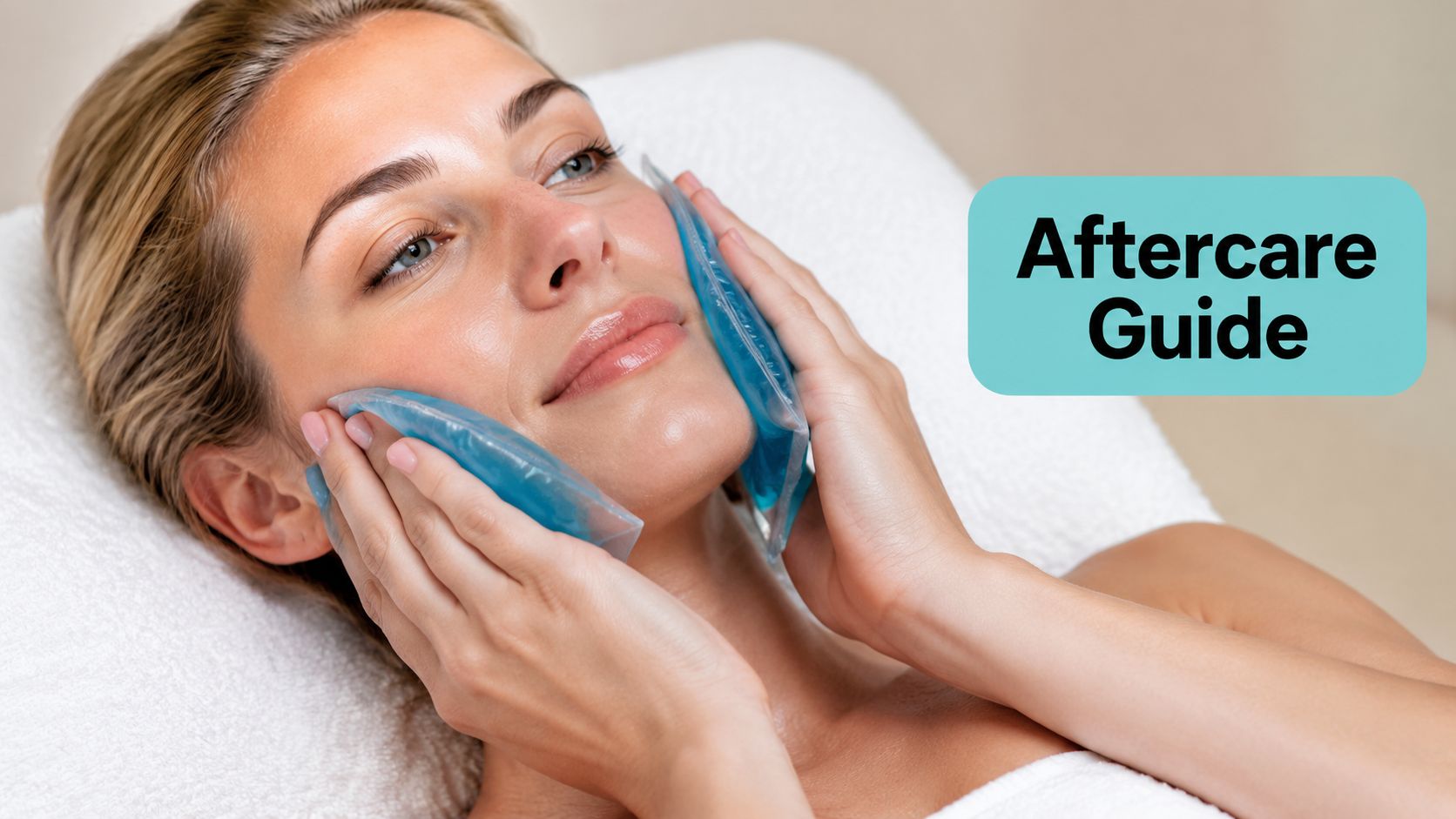
Master dermal fillers aftercare with do's and don'ts, swelling tips, activity limits and warning signs to protect your results and heal smoothly.

September 8, 2026
Ensuring Safety: Why Your Surgeon's Credentials Matter Most

Cape Cod Plastic Surgery offers expert cosmetic and reconstructive procedures in a safe, accredited setting. Led by Dr. Marc Fater, we combine advanced techniques with personalized care to help you look and feel your best.
Monday: 9:00 AM – 5:00 PM
Tuesday: 9:00 AM – 5:00 PM
Wednesday: 9:00 AM – 5:00 PM
Thursday: 9:00 AM – 5:00 PM
Friday: 9:00 AM – 5:00 PM