

October 7, 2026
What to Expect During Your Breast Surgery Recovery
A Practical Guide to Healing After Breast Surgery
Jul 22, 2026
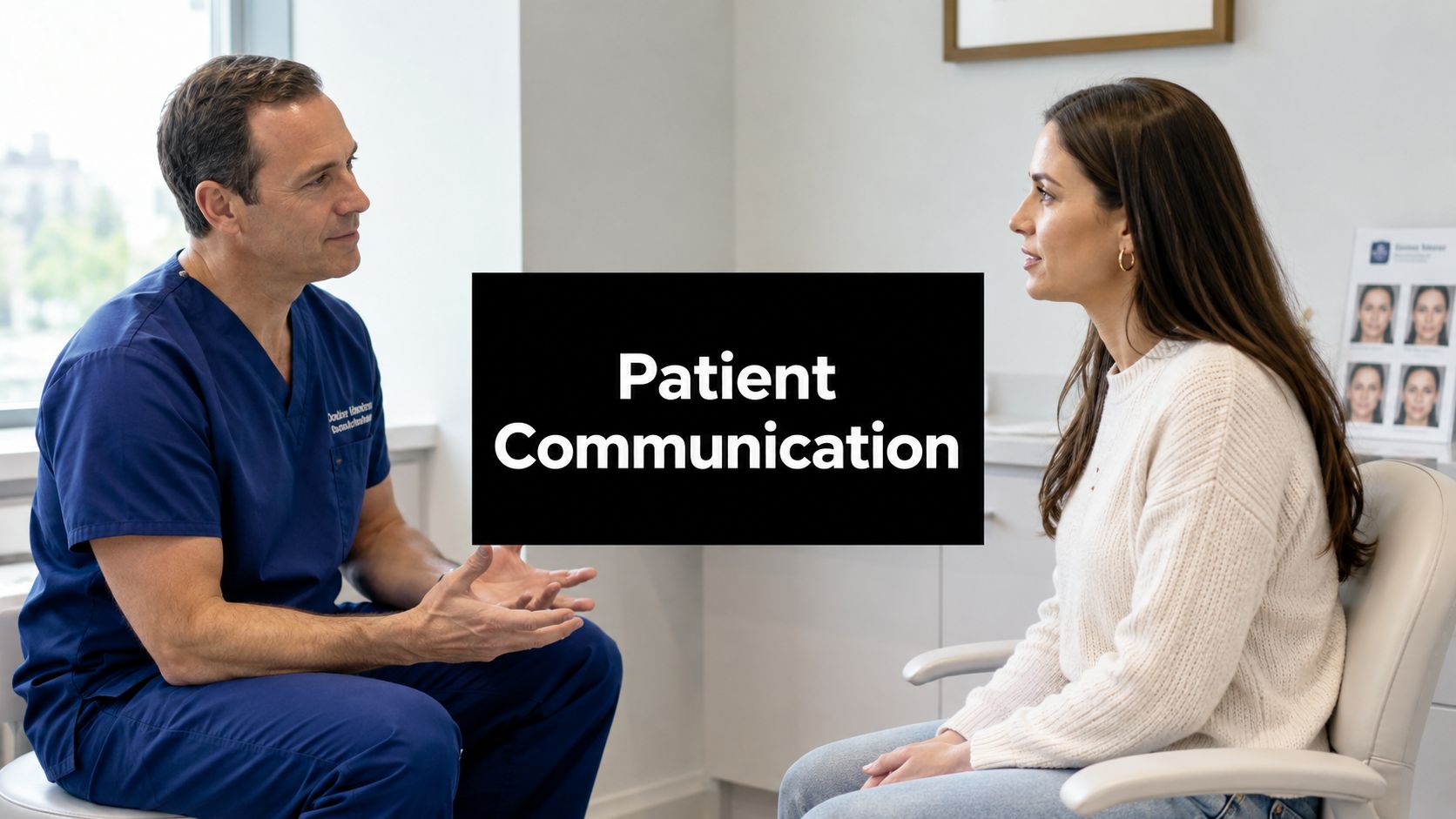
You've done the surgery well. The incision looks clean, the implant or contour is where it should be, and the objective signs are reassuring. Then the patient says they're frightened because the swelling looks “wrong,” or they expected to be back to normal by now, and the visit shifts from technical success to emotional friction.
That moment is where patient communication either protects the outcome or undermines it. In plastic surgery, the result isn't only what I see on exam. It's what the patient understands, remembers, expects, and trusts enough to live through the recovery process.
A technically excellent operation can still feel like a failure if the patient feels blindsided by recovery. That's not a branding problem, it's a clinical one. When a patient interprets ordinary swelling, bruising, or scar maturation as evidence that something went wrong, the gap is usually in communication, not in surgical execution.
The strongest proof comes from outcomes data. In a large U.S. analysis of nearly 37,000 plastic surgery patients, about 87% reported satisfaction with their results, and the strongest drivers of satisfaction were surgeon communication behaviors such as answering questions thoroughly, explaining procedures clearly, and involving patients in decision-making. That makes communication part of the outcome itself, not something decorative around it. Plastic surgery satisfaction statistics and communication drivers
Patients judge their care through the lens of how they were treated during uncertainty. If the surgeon explains recovery clearly, answers the awkward questions, and treats the patient as a partner, the patient usually tolerates normal variability with more confidence. If the office feels rushed or inconsistent, even a routine healing course can generate doubt.
Practical rule: if a patient leaves the visit confused, the care plan isn't finished yet.
That's why team communication matters too. A practice can't depend on one warm surgeon while the rest of the staff delivers mixed messages. For a useful outside lens on this, Learniverse's insights on communication skills for teams is a solid reminder that communication quality is a system property, not a personality trait.
Elite surgeons know that the consultation, the postoperative phone call, the consent discussion, and the recovery check-in all belong to the same clinical chain. Break one link, and the patient experiences the whole process as weaker.
The first consultation is not a performance. It's the beginning of a working alliance, and the patient is deciding whether they feel safe enough to proceed. If the surgeon spends the appointment talking at the patient instead of with them, the patient may leave with facts but no confidence.
Good consultations begin before the room door opens. Review the patient's chart, note their stated goals, and look at any photos or prior correspondence they've sent. That preparation signals respect, and it keeps the conversation from starting cold.
The patient should feel that their concerns are already being taken seriously. Even small details matter here, because a thoughtful opening lowers anxiety and makes it easier for the patient to speak openly about what they want, what they fear, and what they can't quite articulate yet.
A patient may ask for a lift, revision, or contour change, but the deeper goal is often emotional. They may want to feel more confident in clothes, less self-conscious in public, or more like themselves after a life change. Reflecting that back in plain language helps the patient feel understood.
One useful habit is to summarize both the physical request and the emotional reason behind it. That sounds like, “You're not only hoping for a change in shape, you want to feel comfortable and less preoccupied with this area.” That kind of reflection builds trust faster than repeating anatomy or procedure names.
A strong consultation ends with mutual clarity. The teach-back method is one of the most reliable ways to check whether the patient retained the key points. Ask them to explain the plan in their own words, including what the operation is meant to change and what the early recovery will involve.
A patient who can restate the plan is far less likely to leave with dangerous assumptions. And if they can't, that's useful information, not a failure. It tells the surgeon where the explanation needs to be simpler, slower, or more concrete.
For a structured look at the consult itself, this overview of 10 essential steps to expect during your plastic surgery consultation fits well with a partnership-first approach.
Informed consent is often treated like a legal checkpoint. That's too small a view. Consent should be a comprehension process, because patients can't meaningfully agree to risks they only partially remember.
A landmark facial plastic surgery study found that patients retained only about 40% of the risks and complications discussed during consultation when reassessed 15 days later, with an overall recall rate of 48% across procedures. When patients received printed pamphlets, recall improved from 1.5 to 2.5 risks remembered on average, and that increase was statistically significant. Facial plastic surgery risk recall study
That finding matters because it exposes a flaw in the old model of consent, which assumes that a single verbal discussion is enough. It isn't. Patients are trying to absorb anatomy, options, trade-offs, recovery, and risk, often while processing anxiety about appearance and function.
The fix is layered communication. Say the key point aloud, give it in writing, and reinforce it with visuals where appropriate. Printed instructions matter because they turn a fleeting conversation into something the patient can revisit after the appointment, when memory is less reliable and emotion is less intense.
Patients don't need false reassurance, and they don't need a scare tactic either. They need a clear sense of what is expected, what is variable, and what should trigger a call. Scar appearance, swelling, and bruising should be discussed as part of the normal arc of healing, not as afterthoughts.
A useful practical habit is to distinguish between normal, expected but uncomfortable, and concerning. That structure helps patients orient themselves when they're alone at home and anxious. It also reduces the chance that ordinary postoperative changes get misread as a complication.
The most effective education materials don't just say “call if you're worried.” They explain what kind of change is worth calling about, when to call, and why the team wants the patient to speak up early rather than wait.

A practical resource on setting recovery expectations is this guide to realistic expectations for facial procedures, which aligns with the same principle, expectations should be explicit, not implied.
Complications, delays, and unmet expectations don't automatically destroy trust. The way the team handles the first difficult conversation usually determines whether the relationship strengthens or fractures. A patient who feels dismissed will remember the tone more than the explanation.
When a patient is upset, move the conversation to a quiet private space if you can. Sit down at eye level, keep your posture open, and let the patient talk without interruption long enough to explain what they're seeing and why they're concerned. That first minute matters because it tells them whether you're listening or defending.
The clinical facts still matter, of course, but the order matters more. If you jump straight into correction mode, the patient hears dismissal. If you first confirm the concern, the patient is more likely to hear the explanation.
A practical model is LEAP, which stands for Listen, Empathize, Apologize, Plan. The apology doesn't have to mean fault. It can acknowledge the distress and the gap between what the patient expected and what they're experiencing.
A sample script can be as direct as this: “I can see why this worries you. Let me make sure I understand exactly what changed, then I'll explain what I think is happening and what we should do next.” That language slows the interaction down without making it feel scripted or cold.
“Let them finish before you solve the problem.”
That advice is basic, but in practice it's hard to follow when staff are busy. Still, interruption is one of the fastest ways to escalate tension.
For teams looking at trauma-informed support more broadly, PTSD support in Grande Prairie is a helpful reminder that some patients bring prior distress into the surgical setting, and communication needs to account for that sensitivity.
The common failure points are usually predictable. Inconsistent messaging across staff, minimizing complications, and overloading the patient with too much information at once all make situations worse. So does failing to set realistic expectations early.
The best complaint prevention is disciplined communication before the complaint exists. That means one clear message from the surgeon, reinforced by the rest of the team, and delivered in language the patient can use when they get home.
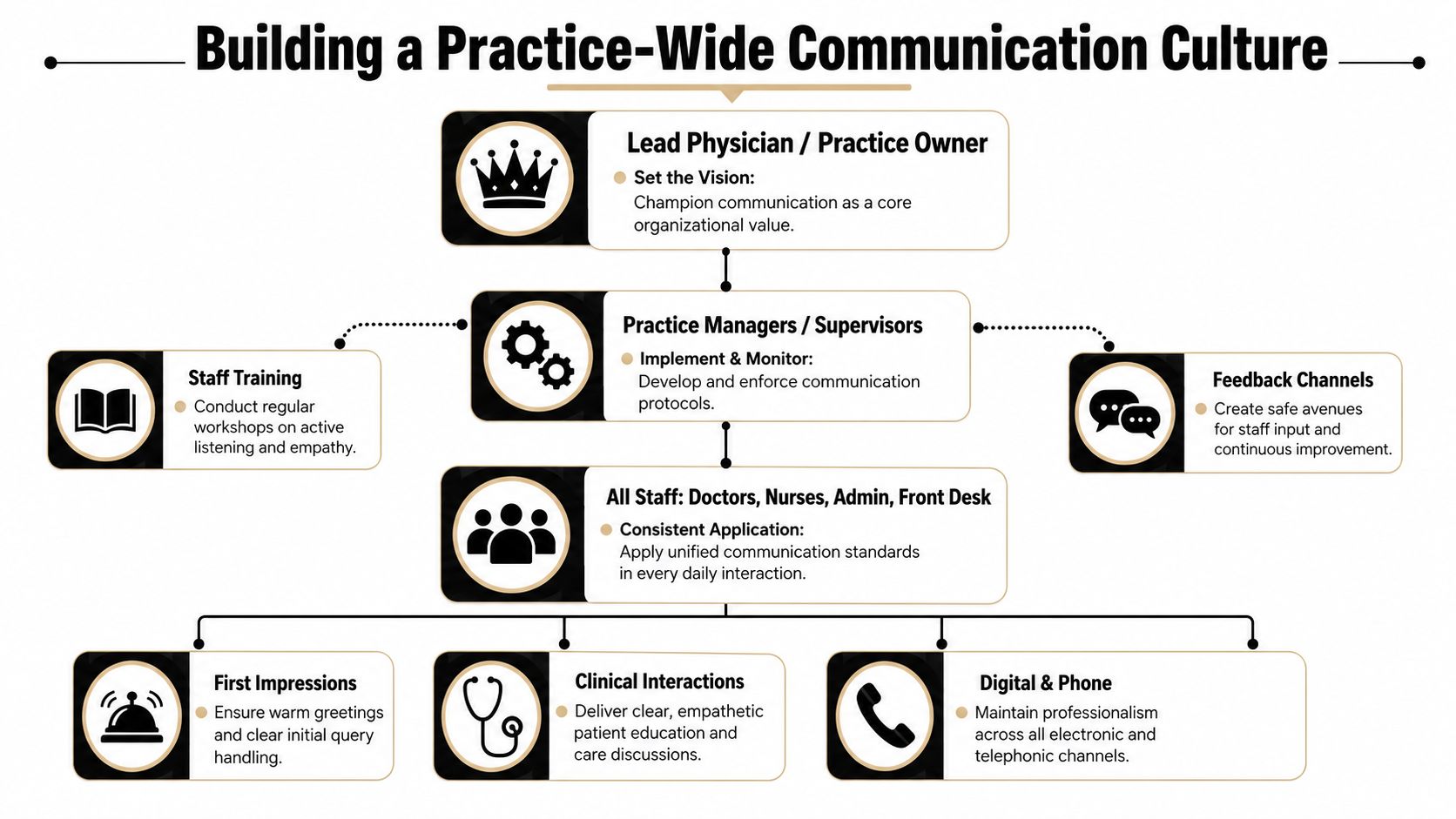
A top-tier practice doesn't leave communication to chance. It builds a repeatable standard so the front desk, surgical coordinator, nursing team, and surgeon all sound like they belong to the same clinical philosophy. Patients notice immediately when that's missing.
A patient calls a few days after surgery saying the area looks more swollen than expected. In a weak system, the call gets rushed, the concern is brushed off, and the patient hangs up feeling foolish. The next call may come from a more anxious, more frustrated version of the same person.
In a strong system, the first responder thanks the patient for calling, gathers the facts, and uses a consistent escalation path. The patient is told what information matters, what the team needs to review, and when they'll hear back. That structure lowers anxiety because it replaces guessing with process.
The practice-wide lesson is simple. Communication isn't just the surgeon's job. It's a workflow.
A useful reference point for patient experience work is patient satisfaction improvement strategies, because the best improvements usually come from consistency, not charisma.
Every practice should have written and digital instruction templates that cover the same essential points. They should be clear, current, and easy for staff to use without improvising. Staff also need internal alignment so that one person's casual phrasing doesn't undo another person's careful counseling.
A high-reliability workflow includes active listening, jargon-free language, verbal and written instructions, teach-back, and clear documentation of every education step. That's not extra work, it's risk control. Communication workflow guidance for plastic surgery patients and families
Under pressure, teams default to whatever is easiest. If the office culture tolerates shortcuts, communication degrades exactly when it matters most. If the culture expects calm, consistent explanation, the patient experience stays steadier even on hard days.
That's why training matters for everyone, not just physicians. The front desk sets the tone, the clinical team reinforces it, and the surgeon gives it authority. Once those roles are aligned, communication stops being an individual talent and becomes a practice standard.
The best surgical result still needs a patient who understands what happened, what's normal, and what comes next. That's why patient communication belongs in the same conversation as technique, safety, and outcomes. It isn't separate from the procedure, it's part of how the procedure succeeds.
The pattern is consistent. A strong first consultation builds trust. A layered consent process improves comprehension. A structured response to difficult conversations prevents small concerns from turning into major grievances. A practice-wide system keeps the message clear no matter who answers the phone or opens the chart.
That system is what turns individual skill into dependable excellence. It also protects the team from avoidable friction, because everyone knows how to explain, document, escalate, and follow through. Patients feel that consistency, and they reward it with confidence, adherence, and referrals.
Elite surgical skill is necessary. Elite communication is what lets patients experience that skill as care they can trust.
Cape Cod Plastic Surgery brings that same standard to every patient conversation, from the first consult through recovery and follow-up. If you're ready for a practice that pairs refined technique with clear, compassionate guidance, visit Cape Cod Plastic Surgery.
October 7, 2026
A Practical Guide to Healing After Breast Surgery

October 6, 2026
Your Safety Guide: What to Look for When Choosing a Plastic Surgeon

October 5, 2026
Why Our On-Site Accredited Facility Matters for Your Safety

Cape Cod Plastic Surgery offers expert cosmetic and reconstructive procedures in a safe, accredited setting. Led by Dr. Marc Fater, we combine advanced techniques with personalized care to help you look and feel your best.
Monday: 9:00 AM – 5:00 PM
Tuesday: 9:00 AM – 5:00 PM
Wednesday: 9:00 AM – 5:00 PM
Thursday: 9:00 AM – 5:00 PM
Friday: 9:00 AM – 5:00 PM