

October 7, 2026
What to Expect During Your Breast Surgery Recovery
A Practical Guide to Healing After Breast Surgery
Sep 4, 2026
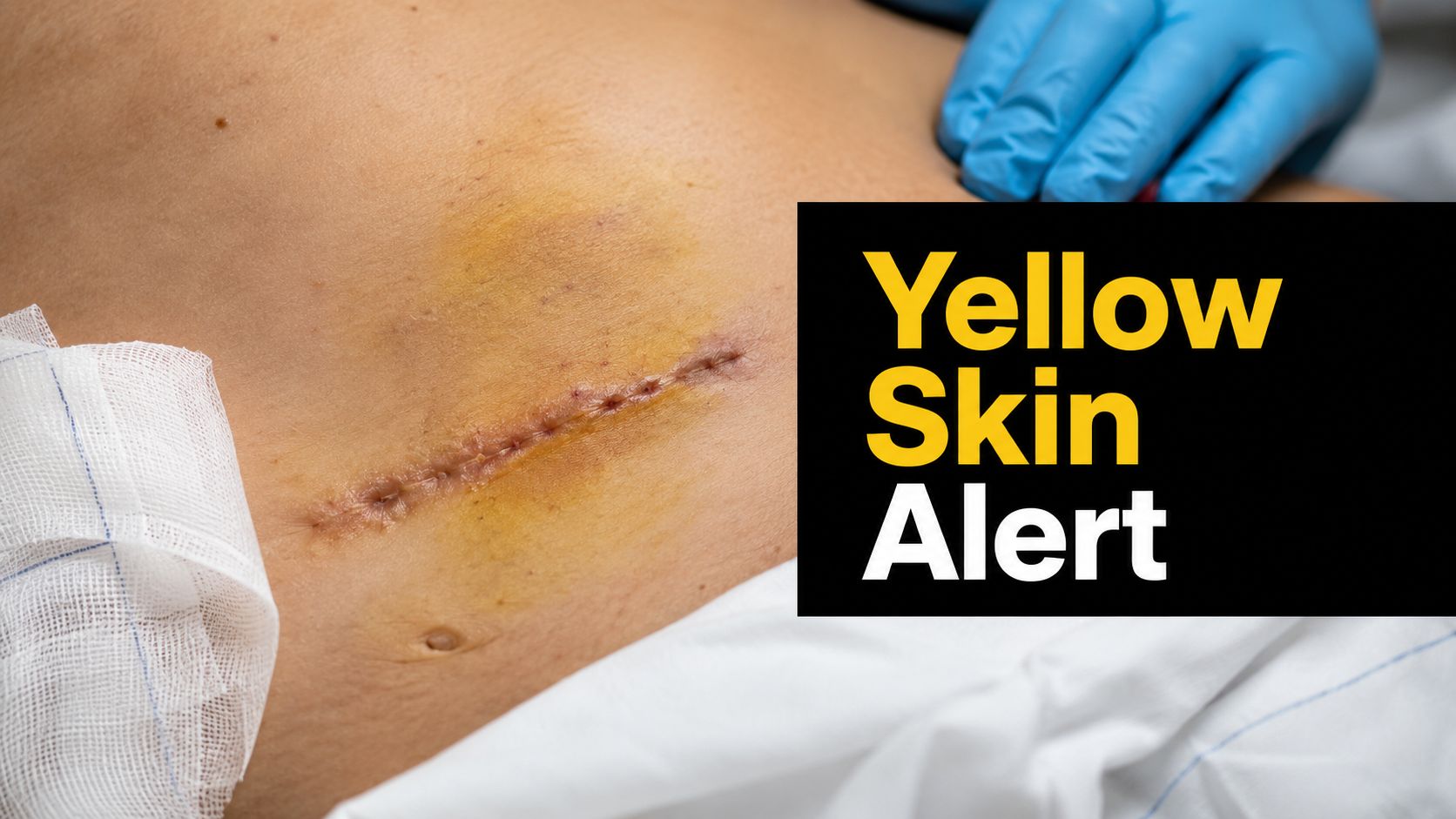
You're a few days out from surgery, standing in front of the bathroom mirror, when you notice a yellow tint across your skin. The incision looks acceptable, but the color is new, and it's easy to wonder whether something is going wrong.
Yellow skin after surgery can result from a bruise breaking down, fluid being reabsorbed, or a rise in bilirubin throughout the body. These causes can look similar at first, but their patterns are different. The location of the color, the whites of your eyes, your urine and stool, and symptoms such as fever or abdominal pain provide important clues.
A patient recovering from abdominal surgery might see yellow-green color spreading around the incision and assume it represents liver trouble. In many cases, the discoloration is the later stage of a bruise. Blood that has collected beneath the skin changes color as the body processes it, and gravity can allow that color to travel away from the original surgical site.
Another patient may notice yellowing on the face, chest, and eyes rather than only near the bruised area. That pattern deserves a different level of attention because it can indicate jaundice, meaning bilirubin has accumulated in the bloodstream. Surgery can affect blood cells, liver blood flow, medication metabolism, and bile drainage, so the same surface color can arise from very different causes.
Yellow discoloration limited to the edges of a bruise is more consistent with normal bruise resolution. It may appear patchy, follow the shape of the original bruising, and gradually become lighter. Skin around a larger hematoma can remain yellow or green as the body reabsorbs blood outside the blood vessels.
Systemic jaundice tends to be less confined. It may involve the face or trunk and is especially noticeable in the sclera, the whites of the eyes. Yellowing of the eyes, dark urine, pale stools, unusual fatigue, fever, or abdominal discomfort makes a simple healing bruise less likely.
Not every yellow change near an incision comes from blood under the skin. Wound fluid, drainage, or tissue changes can also look yellow. If the concern is yellow material on or in a wound rather than yellow skin, a guide to wound slough management can help explain why wound appearance still requires assessment based on moisture, odor, drainage, and surrounding redness.
Practical rule: A localized yellow bruise that is steadily fading is usually less concerning than yellowing that spreads beyond the operative area or appears in the eyes.
The operation itself matters. Major surgery, substantial bleeding, transfusion, infection, reduced blood flow to the liver, and medication exposure can all influence bilirubin levels. Cosmetic procedures often produce visible bruising without causing jaundice, but a new color change shouldn't be judged by appearance alone when other symptoms are present.
The body can create yellow coloration through a local process under the skin or a systemic process within the bloodstream. Understanding that distinction makes the visual differences easier to recognize.
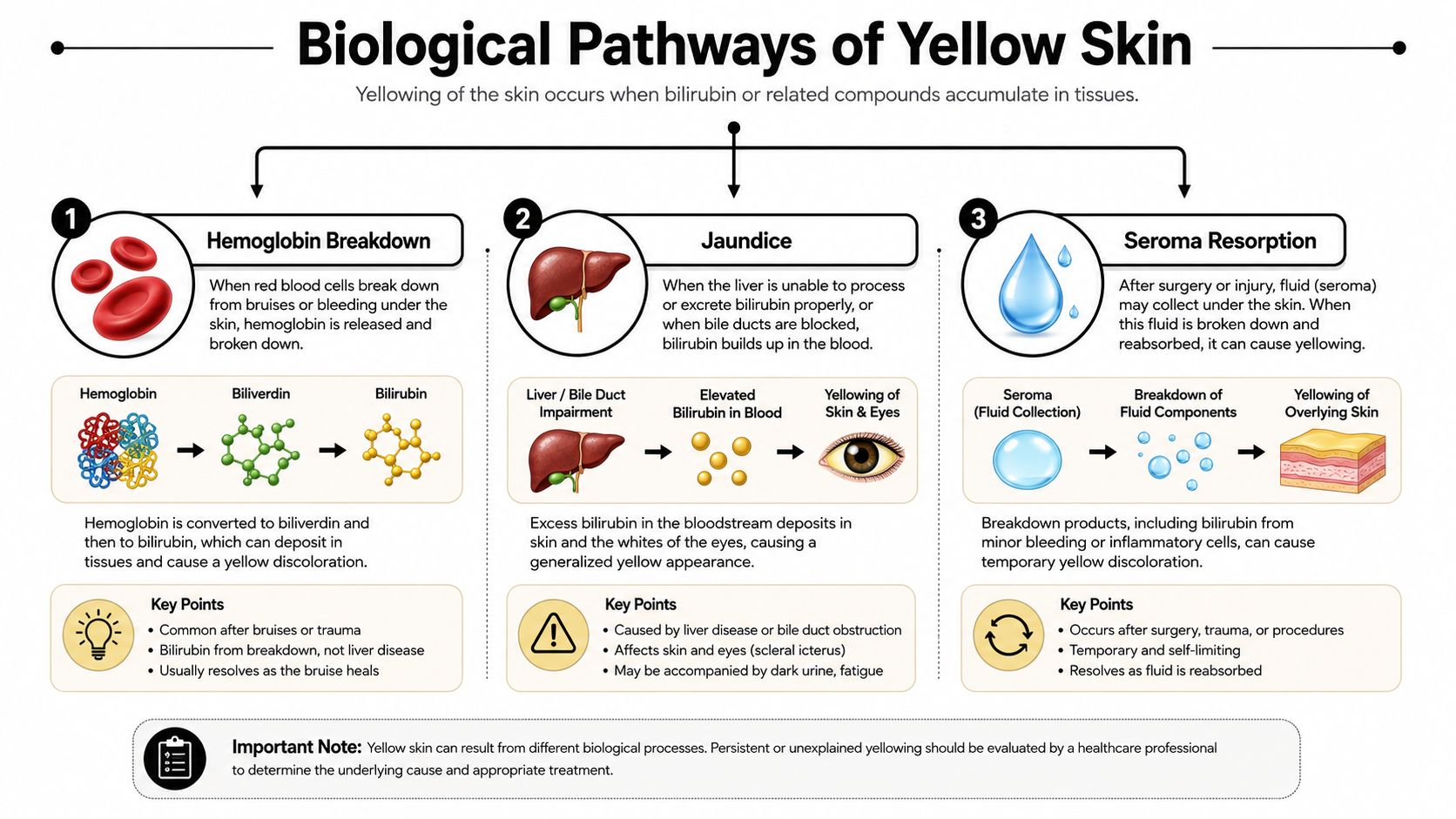
A bruise forms when blood escapes from small vessels into nearby tissue. Red blood cells eventually break down, and their hemoglobin is converted into pigments including biliverdin and bilirubin. Those pigments produce the familiar green, yellow, or yellow-brown shades that appear as a bruise resolves.
The pigment remains concentrated in the injured tissues. It can therefore follow the outline of the bruise rather than tinting the entire body. A hematoma, which is a larger collection of blood, may take longer to clear and may create a wider area of changing color.
Fluid collections can add another visual complication. As a seroma or other postoperative fluid collection is reabsorbed, the fluid and surrounding tissue may look pale yellow. That appearance doesn't automatically mean the blood bilirubin is high, but swelling, increasing pain, warmth, redness, or drainage should still be reported.
True jaundice occurs when bilirubin rises enough to color tissues throughout the body. Clinically, postoperative jaundice is generally recognized when serum bilirubin exceeds about 3 mg/dL, as described in the cardiac-surgery cohort report on postoperative hyperbilirubinemia.
The liver normally processes bilirubin and sends it into bile for elimination. If the body produces more bilirubin than the liver can handle, if liver cells can't process it effectively, or if bile can't drain, bilirubin accumulates. That accumulation explains why jaundice commonly affects the eyes as well as the skin.
Blood loss, transfusion-related hemolysis, hematoma resorption, sepsis, medication toxicity, and reduced liver perfusion can occur in overlapping ways. This is why postoperative jaundice is often multifactorial rather than caused by one isolated event.
In major cardiac surgery, the measured frequency has varied by operation and patient group. One prospective study of open-heart surgery patients reported early postoperative jaundice in 23.4% of patients, with 16.9% classified as mild and 6.5% as moderate to severe, using its stated bilirubin definitions. The findings are reported in the prospective surgical literature indexed by PubMed.
A cosmetic surgery patient usually has a different risk profile from someone undergoing prolonged cardiopulmonary bypass. Still, the mechanism matters: visible yellowing can be local pigment from bruising, or it can be a sign that bilirubin processing has been disrupted.
The most useful first question is, where is the yellow color? If it sits inside or around a known bruise, follows the surgical field, and changes gradually, bruising is more likely. If it appears in several unrelated areas or involves the eyes, think beyond the bruise.
The second question is, what else is happening? Jaundice may accompany dark urine, pale stools, fatigue, fever, abdominal pain, nausea, or a general sense that you're becoming more unwell. These symptoms don't identify the cause by themselves, but they raise the need for medical review.
| Feature | Benign Bruising | Concerning Jaundice |
|---|---|---|
| Distribution | Usually localized around the surgical site or along a bruise | May affect the face, trunk, and multiple areas |
| Eyes | Whites of the eyes remain their usual color | Sclera may become visibly yellow |
| Color pattern | Patchy yellow-green or yellow-brown areas | More diffuse yellowing |
| Urine | Usually unchanged | May become noticeably dark |
| Stools | Usually unchanged | May become unusually pale |
| Other symptoms | Often no new illness symptoms | Fatigue, fever, abdominal pain, confusion, or worsening nausea may occur |
| Course | Gradually fades as the bruise resolves | May spread, intensify, or persist without a clear bruise pattern |
A postoperative color change can also contain more than one process. For example, you may have ordinary bruising at the incision and a separate bilirubin problem related to medication, blood breakdown, infection, or reduced liver perfusion. A clinician may describe the overall pattern as mixed hyperbilirubinemia, where increased bilirubin production combines with reduced hepatic clearance. This differential includes bruising or hematoma resorption, hemolysis from bleeding or transfusion, drug-induced liver injury, ischemic liver injury, and bile duct obstruction, as discussed in this postoperative jaundice differential overview.
Use natural light and compare both sides of the body. Look at the whites of your eyes, not only the skin near the incision. Note whether the discoloration is shrinking with the bruise or appearing in areas that weren't operated on.
Don't press hard on a swollen area or attempt to drain it. Photographing the color in similar lighting can help your surgical team judge whether it's changing, but a photo can't measure bilirubin or replace an examination.
For prevention and recovery advice about localized postoperative bruising, you can review this bruising reduction guide after surgery. Be cautious with unproven “detox” approaches, especially during recovery. Information about liver cleansing olive oil science may be useful for understanding why cleansing claims shouldn't substitute for laboratory evaluation when jaundice is possible.
Yellow skin alone can be difficult to interpret. Yellow eyes, dark urine, pale stools, or worsening illness symptoms change the decision.
When the pattern doesn't clearly match a resolving bruise, your surgeon or physician may order several tests together. Each test answers a different question, and the combination helps distinguish pigment trapped in the skin from bilirubin circulating in the blood.
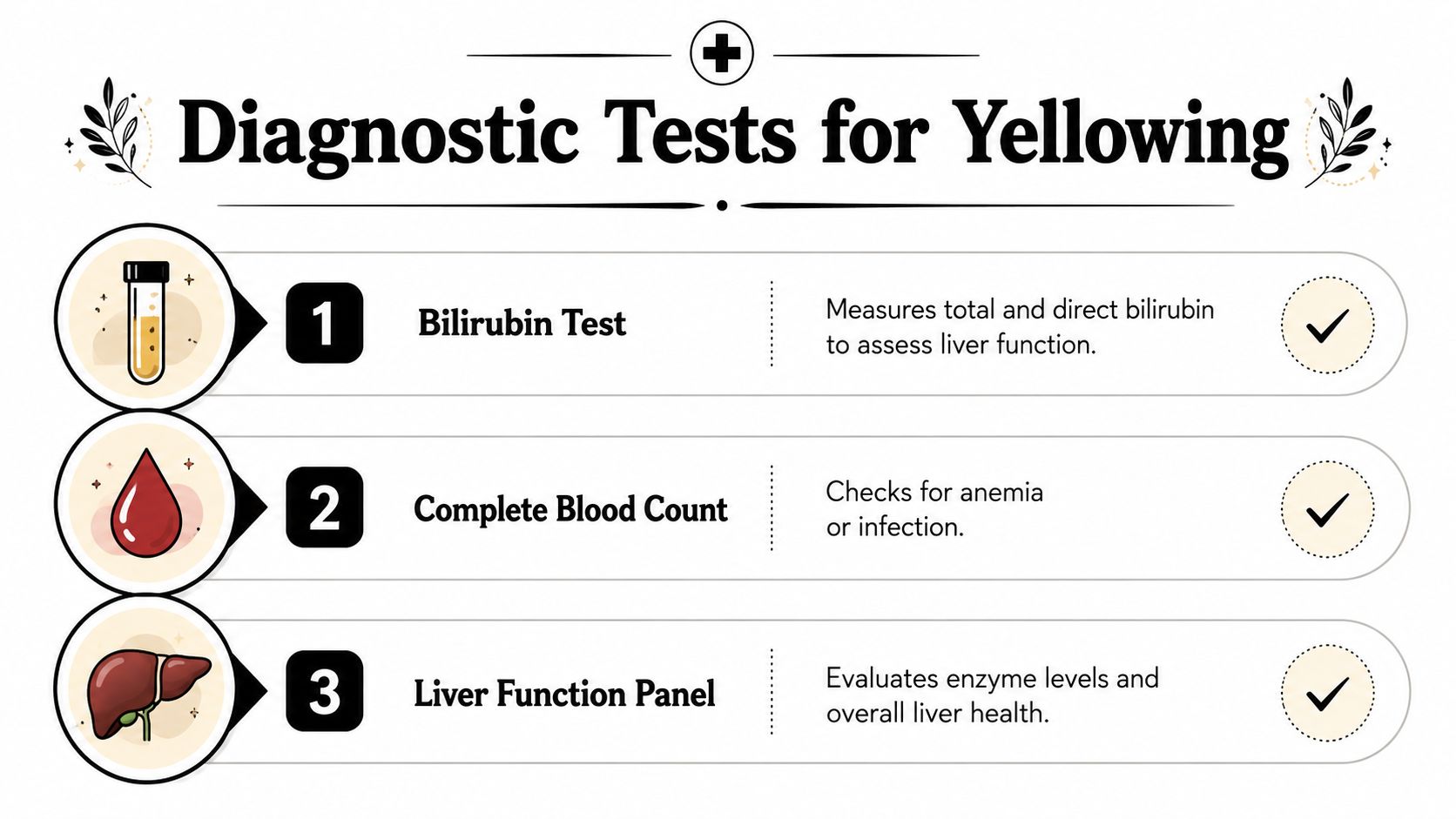
A blood test measures total bilirubin and separates it into direct and indirect components. Indirect bilirubin can rise when the body is breaking down red blood cells faster than the liver can process the pigment. Direct bilirubin may increase when liver cells have trouble excreting bilirubin or when bile drainage is impaired.
The number matters, but the pattern matters more. Your clinician interprets it alongside the timing of surgery, blood loss, transfusions, medications, symptoms, and other liver tests.
Aminotransferases help identify injury to liver cells. Alkaline phosphatase can support concern about impaired bile flow, particularly when it rises with direct bilirubin. Other tests assess the liver's synthetic work, including clotting-related function and protein production.
These results don't act like a single diagnostic switch. A medication-related injury, ischemic injury, infection, and obstruction can produce overlapping patterns, so clinicians often repeat tests to follow the direction of change.
A complete blood count can show anemia or changes that support blood loss or infection. LDH, haptoglobin, and related markers help evaluate whether red blood cells are breaking down inside the circulation.
The clinical team may also examine the incision, review drain output, check vital signs, and assess for fever or abdominal tenderness. During the first three postoperative weeks, recognized pathways include bilirubin overproduction from hemolysis or hematoma resorption, impaired liver-cell handling from drugs, sepsis or ischemia, and extrahepatic obstruction such as bile duct injury, according to this clinical reference on postoperative jaundice.
If the examination or laboratory pattern suggests a problem with bile drainage, ultrasound or other imaging may evaluate the gallbladder, bile ducts, liver, and surrounding fluid collections. The precise study depends on your operation and findings.
What to expect: The workup isn't designed to alarm you. It's designed to identify whether the color comes from skin-level healing, blood-cell breakdown, liver stress, or impaired bile flow so treatment can match the cause.
The operation changes the background risk. A large procedure with substantial tissue injury, blood loss, transfusion, prolonged anesthesia, or reduced blood flow places different demands on the body than a limited outpatient procedure. Open-heart surgery has historically shown substantial postoperative jaundice rates, and older reports connected the complication with procedure type and hemodynamic stress, as summarized in this review of postoperative hyperbilirubinemia after cardiac surgery.
Cardiopulmonary bypass, aortic cross-clamping, intra-aortic balloon pump use, inotropes, and transfusion exposure have all been associated with higher postoperative bilirubin risk in cardiac-surgery cohorts. Those factors don't translate directly to cosmetic surgery, but they explain why the same yellow color is more expected in some major operations than others.
Body contouring, breast surgery, and combined procedures can create broad bruising because tissues are separated, repositioned, or compressed during recovery. Bruises may migrate downward with gravity, making yellowing appear in a location that wasn't directly operated on.
That pattern can be unsettling, but it remains a local skin finding when the eyes, urine, stool, and general health are unchanged. A larger operative field can also make it harder to distinguish ordinary bruising from a separate problem, so patients should describe the distribution and progression rather than just reporting “yellow skin.”
Several perioperative medications can contribute to drug-induced liver injury. The relevant examples include acetaminophen, inhaled volatile anesthetic agents, amoxicillin/clavulanate, and amiodarone. Postoperative hypoperfusion or ischemia can also injure the liver, meaning mild yellowing shouldn't automatically be dismissed as a harmless healing change. These medication and physiologic factors are discussed in this overview of postoperative jaundice causes.
Don't stop a prescribed medication without speaking with your surgeon or another clinician. Instead, prepare a complete list of prescription drugs, over-the-counter pain relievers, antibiotics, supplements, and the doses you've taken. Patients who want to understand how anesthetic choices vary can review this explanation of anesthesia types for surgery, then discuss their individual exposure with the surgical team.
Your medical history also matters. Existing liver disease, heavy alcohol use, prior medication reactions, infection, dehydration, and anemia may change how clinicians interpret postoperative yellowing.
A small yellow patch that sits within a fading bruise usually belongs in a routine postoperative conversation, especially if you otherwise feel well. Send a message or call the surgeon's office if the area is spreading beyond expected bruising, becoming more painful, developing warmth or redness, or failing to improve as recovery progresses.
Contact your surgical team promptly when yellowing appears with dark urine, pale stools, yellow eyes, increasing fatigue, fever, nausea, or abdominal discomfort. Your surgeon may ask about medications, drainage, bowel movements, urine color, and whether the change is localized or widespread. Those details help determine whether you need an examination and blood tests.
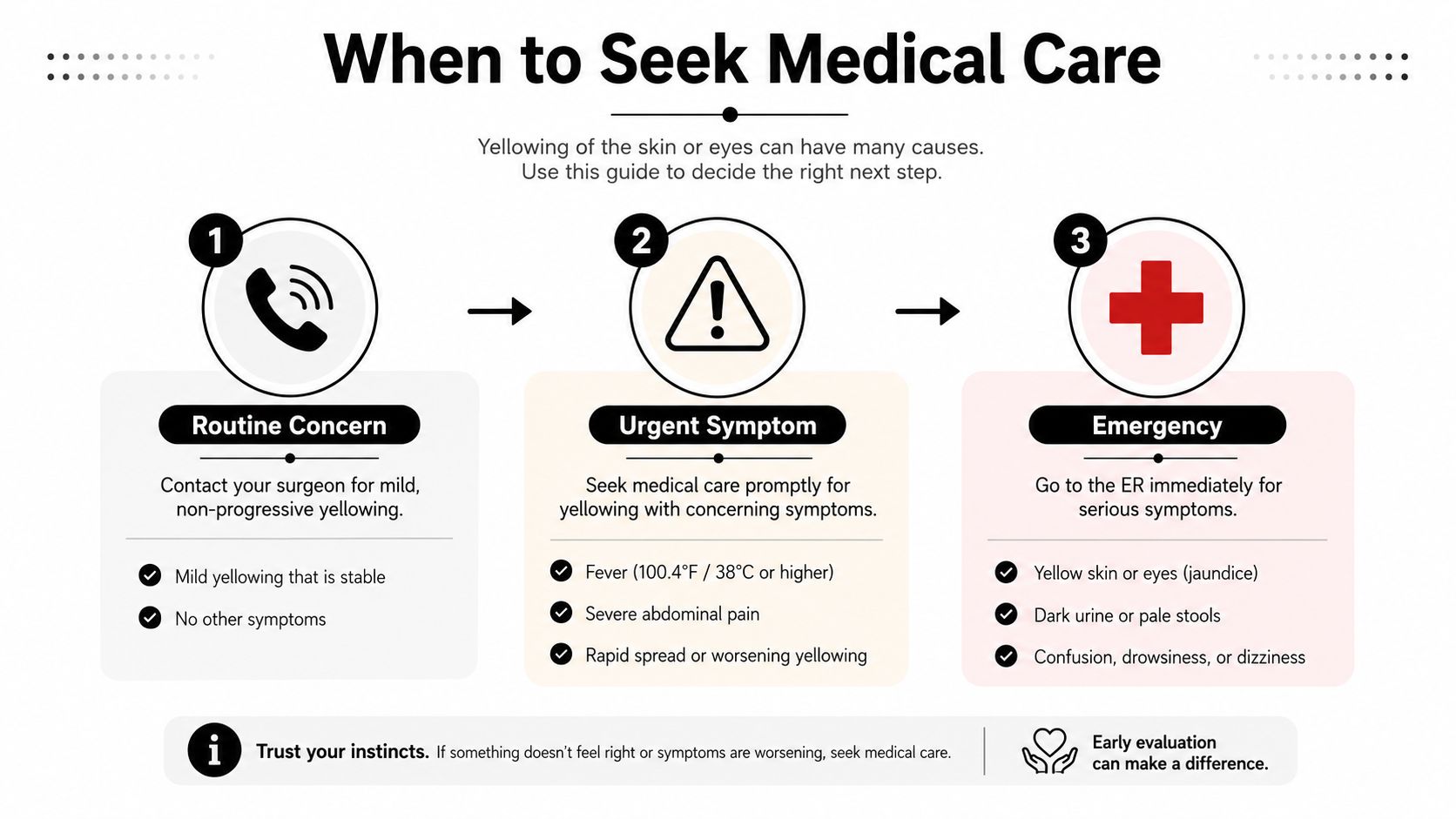
Seek urgent medical evaluation for rapidly worsening yellowing, confusion, severe abdominal pain, high fever, fainting, breathing difficulty, or a combination of yellow eyes, dark urine, and pale stools. Confusion is particularly important because it suggests a broader medical problem rather than a superficial bruise.
A surgical incision also needs attention if it develops foul-smelling drainage, increasing warmth, spreading redness, severe pain, or significant swelling. Don't apply new creams, attempt to open the incision, or take extra medication to “flush” the problem away.
Call rather than wait when the color is spreading quickly or appears with systemic symptoms. Your postoperative team would rather assess a possible concern early than have you monitor it alone.
If you can't reach your surgeon and symptoms are severe or rapidly progressing, use urgent care or an emergency department. Bring your medication list and tell staff what procedure you had, when it occurred, whether you received a transfusion, and when the yellowing began.
Bruising usually changes gradually. A deep purple or red area may become green, yellow, or brown as blood pigments are broken down, and the discoloration can extend downward from the surgical site. After more extensive surgery, faint yellow-brown color may linger for a few additional weeks while the body absorbs remaining pigment, as described in this postoperative bruising guidance.
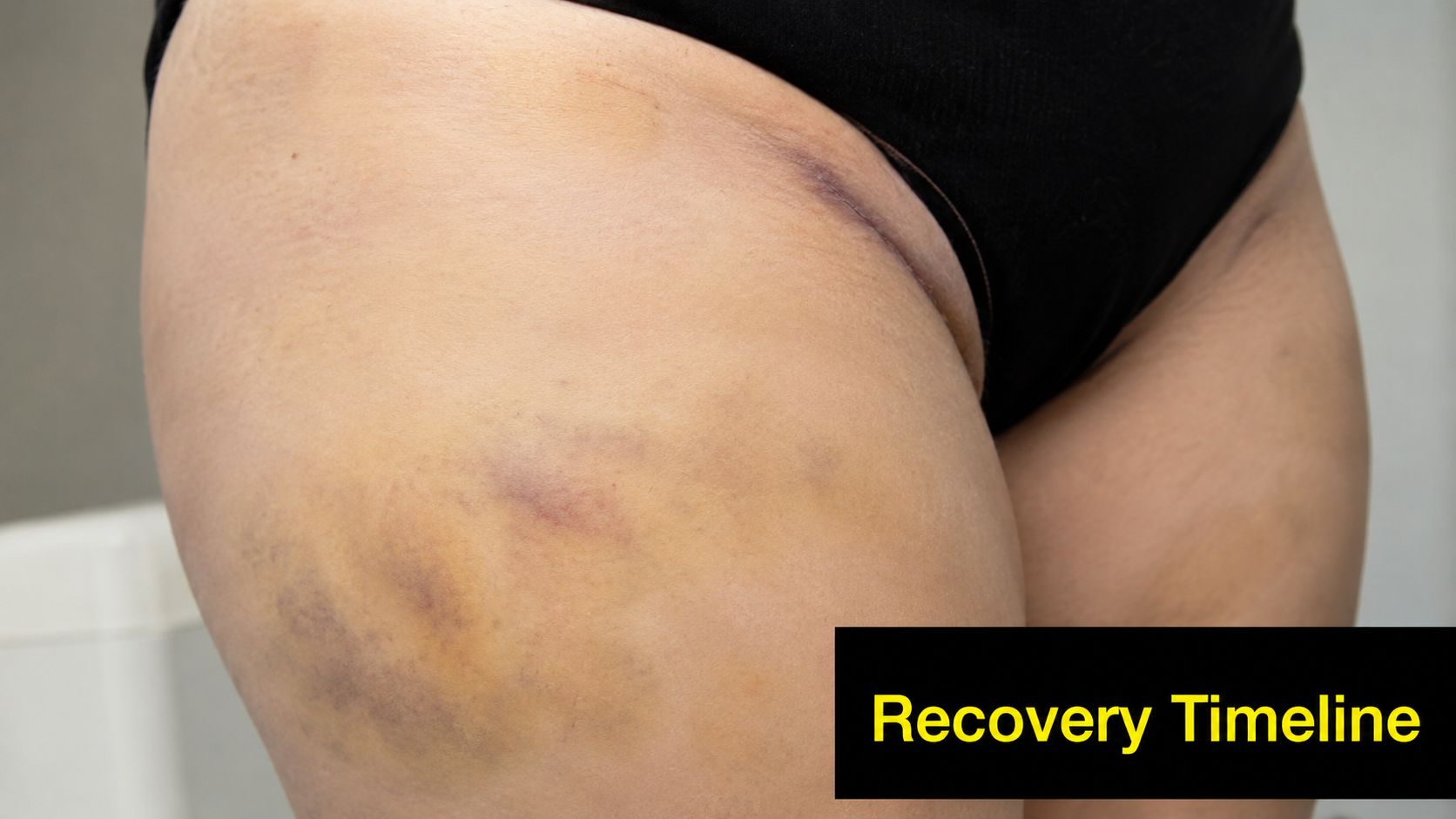
The expected course is less about a fixed calendar and more about direction. A bruise should become less intense, less tender, and smaller over time. Yellowing that becomes more diffuse, involves the eyes, or appears with dark urine and feeling unwell doesn't fit the usual local bruising pattern.
Body contouring and combined procedures may produce broader areas of bruising and swelling. Compression garments, limited mobility, and gravity can affect where discoloration becomes visible. Follow the surgeon's instructions for garment use, incision care, activity, hydration, and follow-up rather than trying to accelerate healing with unapproved supplements or massage.
Lymphatic techniques may be appropriate for selected patients, but they aren't a treatment for unexplained jaundice. Ask your surgeon whether lymphatic drainage after surgery fits your procedure and recovery stage.
If testing confirms true jaundice, treatment depends on the cause. Clinicians may review or change medications, support circulation and hydration, treat infection, investigate hemolysis, or evaluate the bile ducts. The color should be followed alongside symptoms and laboratory results, not judged by the mirror alone.
This video offers a visual discussion of postoperative bruising and recovery considerations:
If you notice yellow skin after surgery and aren't sure whether it follows a bruise or suggests jaundice, Cape Cod Plastic Surgery can review your symptoms, examine the surgical area, and guide appropriate follow-up. Visit Cape Cod Plastic Surgery to learn about postoperative support and request an appointment with the practice.
October 7, 2026
A Practical Guide to Healing After Breast Surgery

October 6, 2026
Your Safety Guide: What to Look for When Choosing a Plastic Surgeon

October 5, 2026
Why Our On-Site Accredited Facility Matters for Your Safety

Cape Cod Plastic Surgery offers expert cosmetic and reconstructive procedures in a safe, accredited setting. Led by Dr. Marc Fater, we combine advanced techniques with personalized care to help you look and feel your best.
Monday: 9:00 AM – 5:00 PM
Tuesday: 9:00 AM – 5:00 PM
Wednesday: 9:00 AM – 5:00 PM
Thursday: 9:00 AM – 5:00 PM
Friday: 9:00 AM – 5:00 PM