

September 9, 2026
How to Care for Surgical Incisions Properly
Expert Guide to Proper Surgical Incision Care
Aug 1, 2026

Are you tired of hearing, “you look tired,” even after a full night's sleep? Under-eye hollowing, shadowing, and a heavy tear trough can make a rested face look drained, and that change is often structural, not about fatigue. That's why under eye filler before after photos matter when they're honest. They show whether a treatment restored support, softened a shadow, and kept the result natural.
The best galleries do more than flatter. They reveal whether the injector understood the difference between hollowing, true under-eye bags, pigmentation, and cheek deficiency. They also show whether the result still looks like your face, just less tired. Good filler can brighten the midface and soften a tear trough. Bad filler can create puffiness, surface irregularity, or a look that draws more attention than the original concern.

Cape Cod Plastic Surgery approaches facial rejuvenation with caution and clear attention to anatomy. Led by board-certified plastic surgeon Dr. Marc Fater, the practice combines more than 30 years of experience with facial care that includes Botox and fillers, blepharoplasty, facelifts, and rhinoplasty, all matched to the patient's features and goals. The on-site AAAASF-accredited surgical suite also adds a meaningful layer of safety and convenience, especially for patients who want injectables in a setting that can also assess surgical options. Patients can review the practice's approach in its tear trough treatment page, and for a broader look at the kind of close eye-area detail that helps a result read naturally, see how to nail the viral eye zoom.
A strong under eye filler before after outcome usually starts with restraint. The under-eye area does not respond well to heavy product placement, and a surgeon who evaluates the cheeks, lid-cheek junction, and skin quality can often avoid the puffy or overfilled look patients want to avoid. Cape Cod Plastic Surgery's wider facial range matters here because not every tired under eye needs filler alone. Some patients need a small-volume correction. Others need cheek support, or a surgical solution instead of more filler.
Practical rule: The best result is the one that makes people notice your face, not your treatment.
That approach fits this area well. The practice's emphasis on collaborative planning and natural-looking, age-appropriate results is the kind of judgment patients should look for when comparing before-and-after photos. A patient whose concern is mainly hollowing may do well with a measured filler plan. A patient whose issue is puffiness, excess skin, or a true bag may do better with a different plan, since more filler can worsen the lower eyelid instead of improving it. A practice that explains that distinction clearly is more useful than a gallery full of dramatic but misleading changes.

The Spiegel Center is useful for patients who want to compare a broad range of under-eye anatomies in one place. Its tear trough gallery is easy to browse, which helps you see how filler behaves across different starting points, from mild hollowing to more complex under-eye transitions. That matters, because a strong result in one face can look wrong in another if the injector copies the same pattern without adjusting for cheek support, skin thickness, or lid shape.
The value here is visual variety. A patient can study how subtle correction can reduce shadowing without erasing every contour, and how different providers approach the same problem inside a facial plastics practice. That makes the gallery less about one “ideal” result and more about pattern recognition. You start noticing which before photos were good candidates for filler, and which ones likely needed a different plan.
The trade-off is that a large gallery can also make protocols harder to decode. You still need a consultation to understand which product, plane, or dose was used. That is normal in this category, because the same visible change can come from different techniques. For patients near Cape Cod or elsewhere in Massachusetts, the site is still a helpful benchmark for what a believable under eye filler before after result can look like when the focus stays on smooth transitions, not overcorrection. If you want a broader patient-facing overview of treatment options, this guide on how to get rid of under eye hollows shows how different approaches fit different anatomy.

Mabrie Facial Institute is one of the better places to study the correction side of under-eye filler, because it doesn't hide the fact that some patients need refinement, not just first-pass treatment. The practice's education around superficial placement, the Tyndall effect, and dissolving previous filler is especially valuable for patients trying to understand why some under-eye results age poorly. The website also offers detailed photos and videos, which makes the learning curve much easier for patients who want more than a quick gallery scroll.
Under-eye filler looks simple until it isn't. A hollow tear trough can sit next to puffiness, cheek flattening, or thin skin, and a placement that is too superficial can leave a blue-gray cast. That is where Mabrie's content is useful, because it shows not just success, but correction and refinement. Patients get a more realistic picture of how an injector handles a result that needs adjustment.
The most useful lesson here is that improvement often comes from blending, not from erasing every line. An under-eye result that looks natural usually depends on careful product selection, conservative placement, and attention to the upper cheek. That's why the practice's educational material is so strong. It helps patients understand that a good under-eye result can be subtle and still meaningful. For readers comparing under eye filler before after images, that lesson is critical. Dramatic change is not always the goal. Clean transitions and a rested look are.
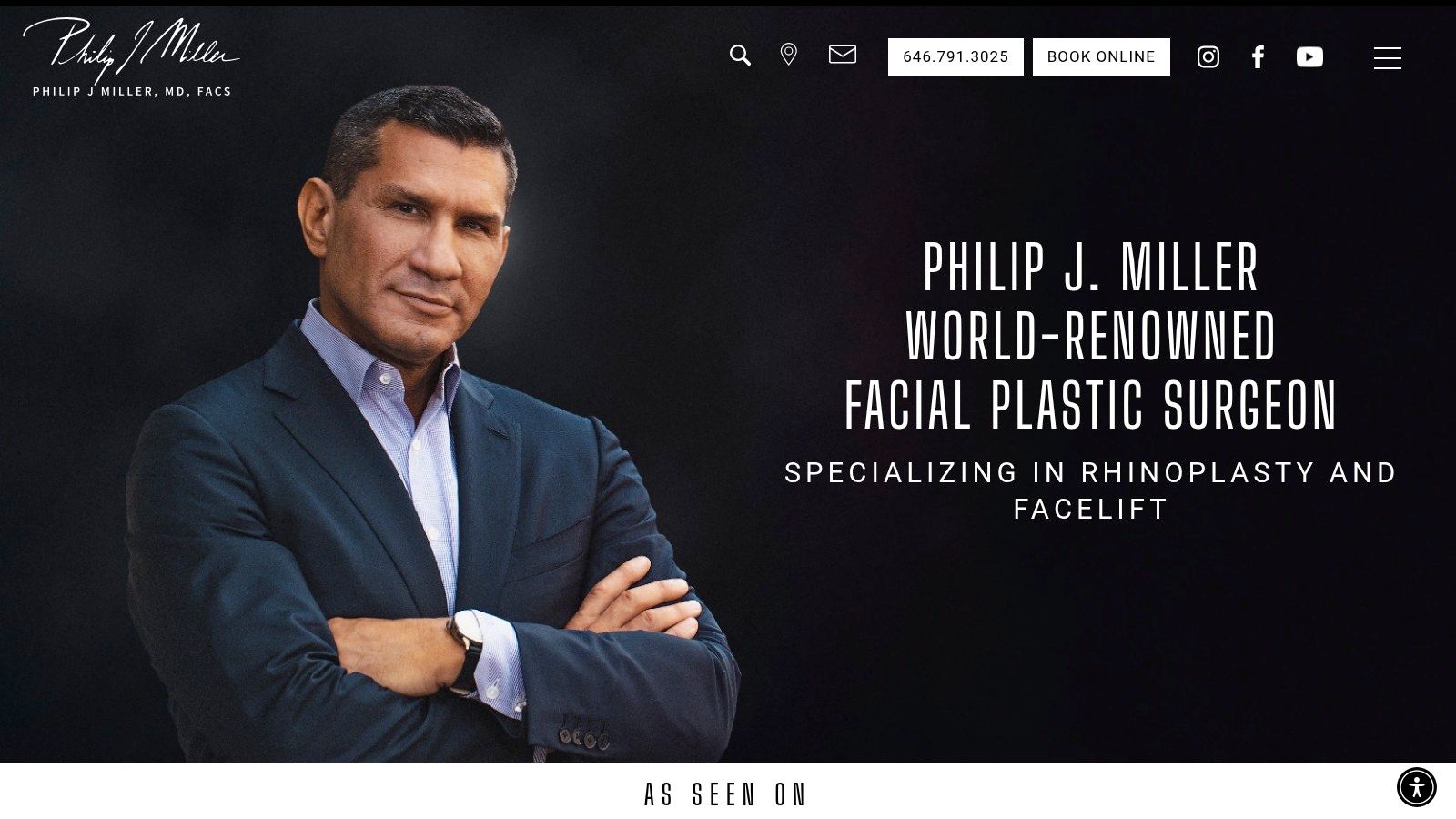
Dr. Philip J. Miller's tear trough pages are helpful because they isolate the area patients care about. Instead of forcing you to search a broad facial gallery, the site lets you compare front and oblique views in a way that makes changes in shadowing, hollow depth, and lid-cheek blending easier to judge. That's exactly what patients should want from a before-and-after set. The under-eye region changes with angle, so single frontal photos can hide both improvement and flaws.
A good under-eye result should hold up from multiple views. If the filler only looks good head-on, the result may still be too shallow, too puffed, or mismatched to the rest of the face. That's why a dedicated tear trough gallery is more useful than a generic facial one. It lets you inspect the transition zone between the lower eyelid and the cheek, which is where the success or failure of treatment usually becomes obvious.
The main limitation is that the gallery doesn't always tell you the full protocol. That's typical online, and it's one reason consultations still matter. The photos can tell you whether the outcome looks balanced and natural, but not always how the injector got there. Even so, the page does a good job of showing what a precise, anatomy-aware under-eye correction can look like when the goal is softening, not distorting. For patients comparing under eye filler before after results, that kind of specificity is far more useful than a generic beauty gallery.

Khan Eyelid & Facial Aesthetics stands out for patients who want a tear trough evaluation from an oculofacial perspective. That background matters because the eyelid area is not a routine filler site, it is a tightly balanced anatomical region where small placement errors can change the result. The procedure-focused gallery also keeps the review process narrow and practical, so patients can study under-eye outcomes without sorting through unrelated treatments.
The under-eye region often reflects more than one issue at once. Lid laxity, puffiness, and midface volume loss can all shape how tired the area looks, and a clinician who works in eyelid anatomy is more likely to recognize when filler will help and when it may add heaviness. This is the key lesson in the gallery. Good results restore missing contour and stop before the lower eyelid starts to look full in the wrong place.
A limited gallery can still teach you a lot if it stays procedure-specific. Patients should look at how the lid-cheek transition changes from different angles, then ask what the injector saw before treatment. A useful consultation answer goes beyond saying there was a hollow. It should explain whether cheek support was needed, whether skin quality might affect the result, and whether filler was being used to soften a tear trough or cover a deeper contour problem. That is also why patients comparing under eye filler before after photos should look for a provider who explains the anatomy behind the result, not just the photo itself. For practices that need help keeping those consultations organized, how Simbie AI helps eye practices is one example of a tool built around the workflow of eye care.
Carolina Facial Plastics gives patients a useful reminder that under-eye filler rarely exists in isolation. The practice's tear trough gallery sits alongside injectable options and skin-quality treatments, which reflects how many real-world results are built, not from one syringe alone, but from the right combination of services. For some patients, the under-eye area improves best when filler is paired with treatments that support the skin around it.
A hollow tear trough can cast a shadow, but shadow isn't always the whole problem. Skin texture, thinness, and nearby facial balance all affect how tired the eye area looks. That's why a practice with both injectable and adjunct treatments can be useful. It signals that the injector is thinking beyond a single line or fold.
The gallery itself helps patients see when a measured filler result looks clean and understated. That's the kind of result worth trusting. You should be able to see a smoother lid-cheek junction without losing the natural contour of the lower face. If a photo makes the under-eye look tighter, flatter, or strangely bright, that's not necessarily a win. It may just mean too much product was used, or that the patient needed another treatment entirely. Strong under eye filler before after examples teach restraint as much as they teach improvement.
Dr. Brett Kotlus stands out because the site places real weight on cannula technique and on the safety questions patients should ask before they agree to treatment. That matters under the eye, where depth, product choice, and placement can determine whether the result looks smooth or becomes visible, uneven, or risky. The gallery also gives patients a way to compare filler results with surgical alternatives, which is the right lens for a high-anatomy area like the tear trough.
A patient may notice the immediate change first, but the more useful question is whether the result still makes sense after swelling settles and the filler has had time to age. Results should be judged in context, not only at the first mirror check. If you want to understand that trade-off, it helps to ask how long does filler last and how the under-eye contour will look once the early swelling is gone.
Healthline notes that under-eye filler effects usually last about 1 year, and complications can appear up to 2 weeks later, so the first post-treatment photo should never be treated as the finished result. That timing matters because the lower eyelid can look better right away and then settle into a more natural contour, or reveal that too much product was used. Patients who study under eye filler before after galleries carefully learn to separate early swelling from a stable correction.
Technique-focused galleries are useful because they show more than improvement. They help patients ask whether the injector uses a cannula, how candidacy is assessed, and what other options exist if filler is not the right choice. A refined tear trough correction often depends on restraint, not volume. The strongest before-and-after images show a softer transition from lid to cheek, not a puffy lower eyelid.
| Service / Clinic | Implementation Complexity 🔄 | Resource Requirements ⚡ | Expected Outcomes ⭐📊 | Ideal Use Cases 💡 | Key Advantages ⭐ |
|---|---|---|---|---|---|
| Plastic Surgery - Face (Cape Cod Plastic Surgery) | Low → High (injectables to major surgery) 🔄 | High: board‑certified surgeon, AAAASF OR, periop care ⚡ | High: refined, natural, age‑appropriate results 📊⭐ | Subtle rejuvenation to reconstructive facial procedures; concierge care 💡 | 30+ yrs surgeon experience, accredited suite, personalized planning ⭐ |
| The Spiegel Center | Moderate (injectables; multi‑provider workflow) 🔄 | Moderate: multiple injectors, photo gallery, concierge/financing ⚡ | Moderate–High: varied outcomes with extensive photo references 📊⭐ | Patients wanting many before/after examples and regional access 💡 | Large, navigable tear‑trough gallery; established Boston center ⭐ |
| Mabrie Facial Institute | Low–Moderate (injection‑focused; revision workflow) 🔄 | Moderate: skilled injectors, education resources, follow‑up for corrections ⚡ | High educational clarity; emphasis on corrections and technique 📊⭐ | Non‑surgical facial balancing, correcting prior filler, informed patients 💡 | Strong educational videos and revision expertise ⭐ |
| Philip J. Miller, MD, FACS | Moderate (case‑specific planning; surgical options) 🔄 | High: experienced facial plastic surgeon; consult needed for specifics ⚡ | High: specific subtle under‑eye improvements for comparison 📊⭐ | Patients comparing nuanced tear‑trough outcomes and surgical vs non‑surgical options 💡 | Procedure‑specific case pages; long‑standing reputation ⭐ |
| Khan Eyelid & Facial Aesthetics | Moderate (oculoplastic focus; anatomy‑driven) 🔄 | Moderate–High: oculoplastic training, periocular treatment suite ⚡ | High for complex eyelid anatomy; targeted functional/aesthetic results 📊⭐ | Complex eyelid/under‑eye anatomy or medically nuanced cases 💡 | Oculoplastic subspecialty expertise; clear procedure galleries ⭐ |
| Carolina Facial Plastics | Moderate (injectables + adjunct therapies) 🔄 | Moderate: multiple filler families, lasers, multi‑location access ⚡ | High when combining volume restoration with skin‑quality treatments 📊⭐ | Patients seeking combined under‑eye volume and skin rejuvenation 💡 | Broad injectable menu, adjunct devices, surgical backup options ⭐ |
| Brett Kotlus, MD, FACS | Moderate (cannula technique emphasis; safety protocols) 🔄 | High: oculoplastic surgeon, technique‑focused resources, consult ⚡ | High safety‑focused outcomes; clear candidacy and alternatives 📊⭐ | Candidates prioritizing cannula technique/safety or exploring blepharoplasty alternatives 💡 | Cannula‑centric gallery, labeled case info, safety education ⭐ |
Seeing the power of under-eye fillers is the first step. The next is a personalized consultation to understand if you're a candidate. The key to a beautiful, natural-looking result is choosing an expert injector with a deep understanding of facial anatomy, because the tear trough rewards precision and punishes guesswork.
At Cape Cod Plastic Surgery, Dr. Marc Fater brings decades of facial experience to every treatment plan. His approach is collaborative, measured, and designed to keep results balanced, so patients look rested rather than overfilled. That matters most in the under-eye area, where the best outcome is usually the one that no one can identify as a procedure.
If you've been studying under eye filler before after photos and want to know what would work for your anatomy, a consultation can separate the flattering gallery image from the right treatment for your face. The practice's combination of injectables, facial surgery, and an on-site accredited surgical suite makes it a strong choice for patients who want both safety and flexibility in one place.
Cape Cod Plastic Surgery offers personalized facial rejuvenation for patients who want natural-looking under-eye improvement, not an overdone result. If you're considering tear trough filler and want expert guidance grounded in anatomy and experience, visit Cape Cod Plastic Surgery to explore your options and schedule a consultation in Hyannis.
September 9, 2026
Expert Guide to Proper Surgical Incision Care

Master dermal fillers aftercare with do's and don'ts, swelling tips, activity limits and warning signs to protect your results and heal smoothly.

September 8, 2026
Ensuring Safety: Why Your Surgeon's Credentials Matter Most

Cape Cod Plastic Surgery offers expert cosmetic and reconstructive procedures in a safe, accredited setting. Led by Dr. Marc Fater, we combine advanced techniques with personalized care to help you look and feel your best.
Monday: 9:00 AM – 5:00 PM
Tuesday: 9:00 AM – 5:00 PM
Wednesday: 9:00 AM – 5:00 PM
Thursday: 9:00 AM – 5:00 PM
Friday: 9:00 AM – 5:00 PM