

September 9, 2026
How to Care for Surgical Incisions Properly
Expert Guide to Proper Surgical Incision Care
Mar 19, 2026

You’ve probably noticed it—skin that looks thin, fragile, and finely wrinkled, almost like crepe paper. This texture is what we call crepey skin, and it’s a sign that the skin's underlying support system is starting to weaken.
But what’s really going on beneath the surface? It all comes down to two crucial proteins: collagen and elastin.
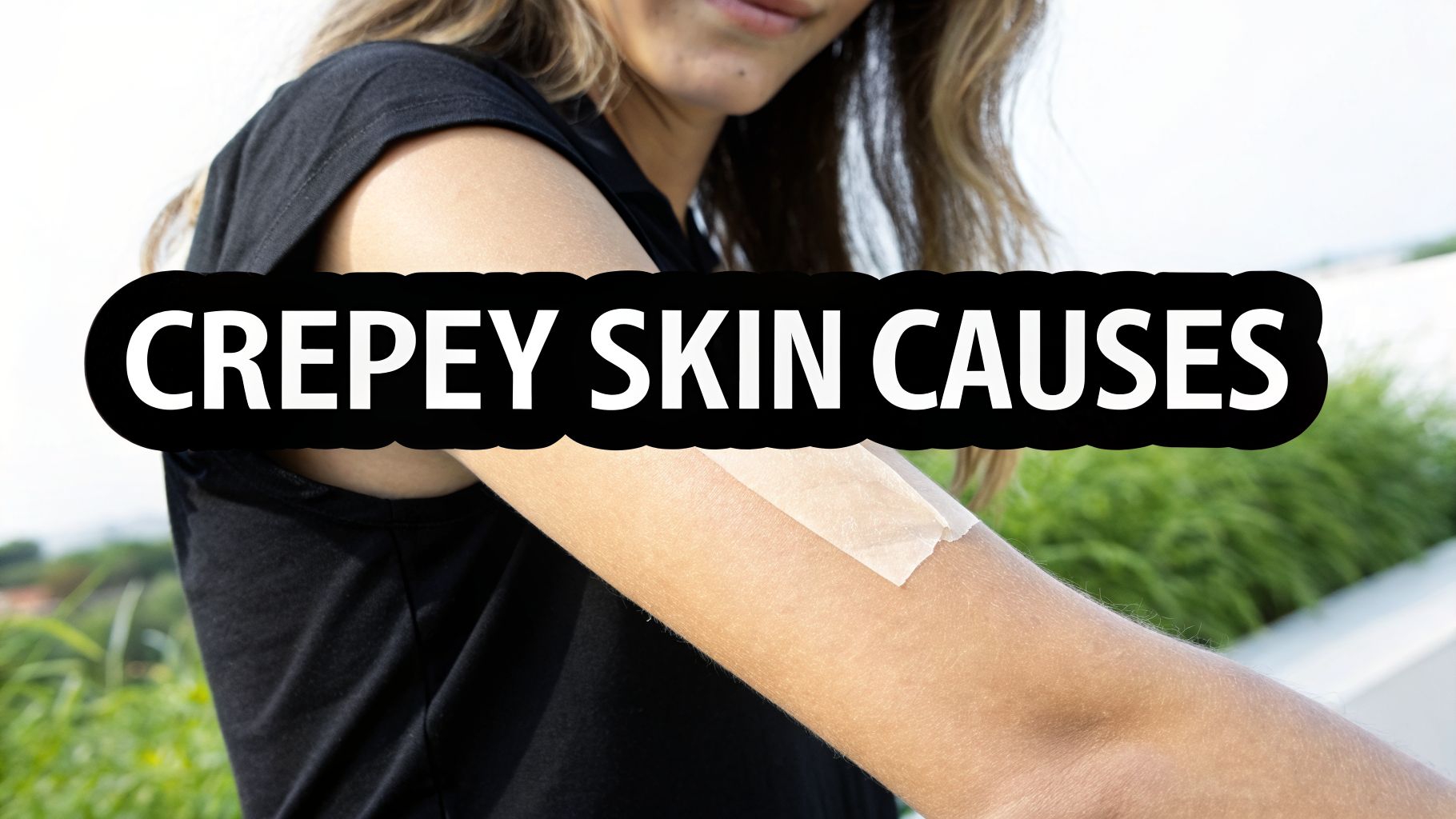
Think of your skin in its youth as a new, high-quality mattress. It’s firm, plump, and snaps right back into shape. That resilience comes from a dense, neatly organized network of collagen fibers (the supportive padding) and elastin (the springs that give it bounce). Together, they keep your skin smooth and tight.
As we get older, our body's natural "collagen factories" slow down production. At the same time, the existing fibers begin to break down. The once-strong support structure thins out, loses its organization, and can no longer spring back as effectively. The result is skin that looks and feels more fragile, developing that characteristic cluster of fine, paper-like lines.
Sun exposure and the natural aging process are the two biggest drivers behind this breakdown. UV radiation is especially destructive because it directly attacks and degrades both collagen and elastin. This is exactly why you often see crepey skin appear first on areas we expose most to the sun, like the arms, chest, and neck.
While sun and age are the primary factors, several other things can accelerate the process:
To help you see the connections, this table breaks down the main factors at play.
| Cause | Primary Effect on Skin | Key Contributing Factor |
|---|---|---|
| Aging | Slows down collagen and elastin production. | Natural biological decline. |
| Sun Exposure | Actively destroys existing collagen and elastin fibers. | Cumulative UV radiation. |
| Hormonal Changes | Reduces skin thickness, moisture, and elasticity. | Estrogen decline (menopause). |
| Weight Fluctuations | Stretches and damages elastic fibers. | Rapid gaining or losing of weight. |
| Dehydration | Makes fine lines and wrinkles more prominent. | Insufficient water intake. |
| Lifestyle | Creates oxidative stress that damages skin cells. | Smoking, poor nutrition. |
Understanding these root causes is the foundation for creating a smart strategy to prevent and treat crepey skin.
By tackling both the internal and external triggers, you can take meaningful steps to protect your skin's structure and maintain a smoother, healthier appearance for years to come.
This is especially important for delicate areas. The skin under our eyes, for instance, is incredibly thin and prone to similar issues. If you're curious, you can learn more about what causes under-eye bags in our guide on that topic. Recognizing how these issues are linked helps build a more complete and effective approach to your skin's health.
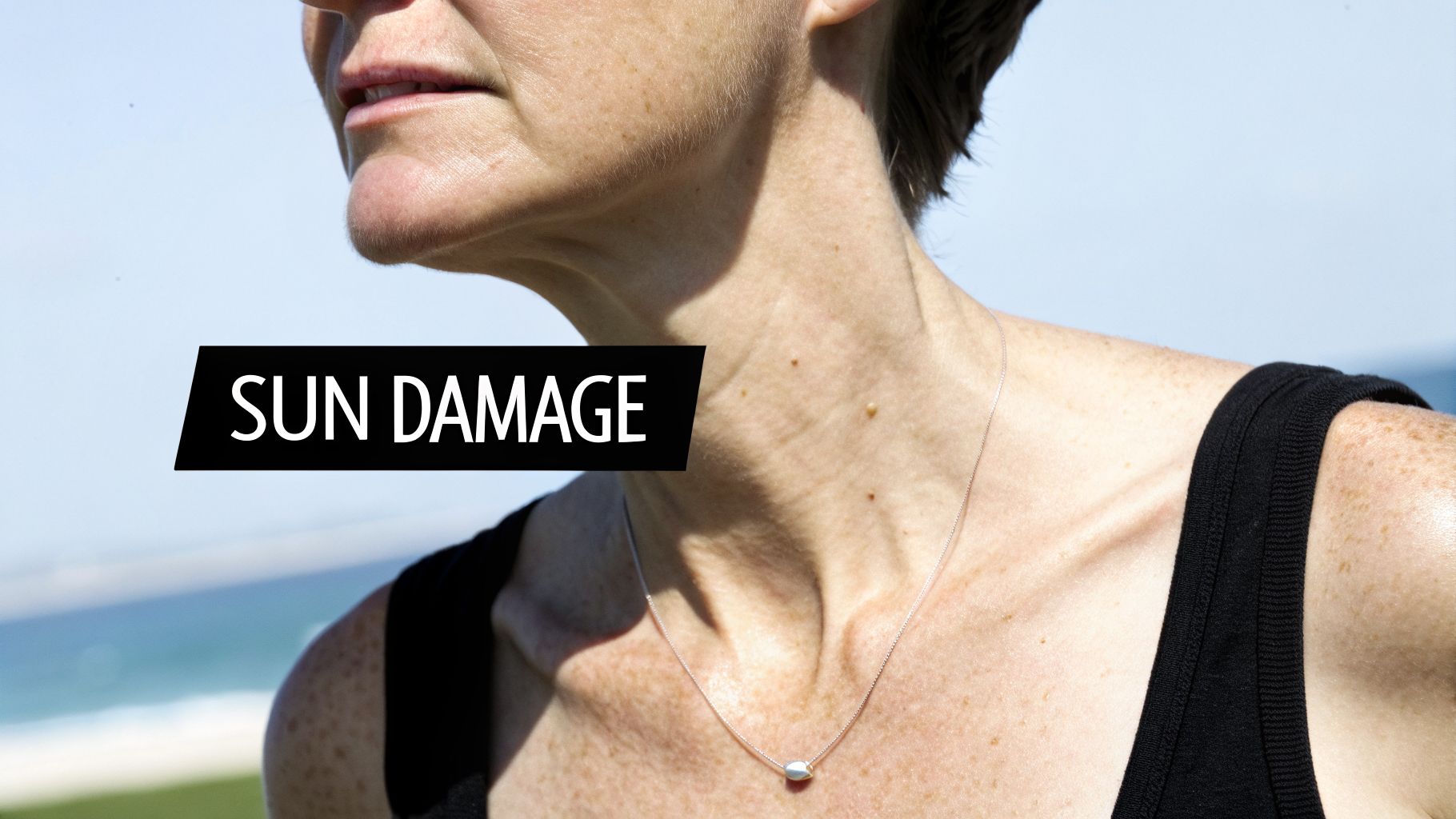
If the natural aging process slowly opens the door to crepey skin, years of sun exposure are what kick it wide open. It is, without a doubt, the single biggest factor that fast-forwards the development of that thin, tissue-paper-like texture.
Think of your skin’s structural support system—collagen and elastin—as a dense, springy mattress. These fibers give young skin its firmness, plumpness, and ability to bounce right back. UV radiation from the sun, however, acts like a relentless assault on this delicate network. It penetrates deep into the skin and begins to snip away at those fibers, making them brittle and weak.
Over time, this supportive "mattress" starts to sag and lose its spring. This process is known as elastosis, and it's the primary reason sun damage is the top answer to what causes crepey skin.
This isn’t just about getting a bad sunburn on vacation. The real culprit is the slow, steady accumulation of sun exposure over a lifetime. The sunlight that hits your arms while you're driving, the rays you catch walking to the mailbox, even the light filtering through your office window—it all adds up.
Shockingly, the sun’s ultraviolet (UV) radiation is responsible for up to 80% of the visible signs of skin aging. This includes the fragile, thin texture of crepey skin. The damage piles up, weakening the skin's foundation far more quickly than time alone ever could.
This is precisely why areas we tend to leave uncovered—the neck, chest, forearms, and face—are often the first places we notice that telltale crepey texture. They bear the brunt of daily UV exposure, often without any protection.
So, what’s happening on a microscopic level? When UV rays hit your skin, they generate unstable molecules called free radicals. These are like tiny wrecking balls that careen through your cells, causing damage in a process known as oxidative stress. Their main targets are the very proteins that keep your skin firm.
This free-radical attack has two major consequences that lead directly to crepey skin:
Here’s the good news: Preventing this damage is infinitely easier than trying to reverse it. Making broad-spectrum sunscreen with an SPF of 30 or higher a non-negotiable part of your daily routine is the single most effective thing you can do. It acts as a shield, physically blocking the UV rays that kick off this entire destructive chain reaction.
And remember, this isn’t just for beach days. UV rays are sneaky—they cut right through clouds and glass. This means your skin is at risk even on overcast days or when you're just sitting in your car. By committing to daily sunscreen, you give your skin the best possible defense against the number one external cause of crepey skin, helping it hold onto its natural strength and resilience for years to come.
While the sun is public enemy number one for our skin, what’s happening inside our bodies is just as crucial. Think of your skin's health as a balancing act. In our youth, the system is perfectly tuned for constant repair and renewal. But as we head into our late 30s and early 40s, that balance starts to tip.
The internal "factories" that produce collagen and elastin—the proteins that give skin its firmness and bounce—naturally begin to slow their production lines. This isn't a sudden shutdown, but more of a gradual winding down. The skin's underlying support structure weakens, becoming thinner and more fragile over time. Without that dense scaffolding, it also loses its ability to hold onto moisture, which is why fine lines start to creep in.
This natural aging process gets a major push from hormonal changes, especially the drop in estrogen that comes with perimenopause and menopause. Estrogen is a true workhorse for skin health, playing a huge part in stimulating collagen, keeping the skin hydrated, and maintaining a strong lipid barrier.
Once estrogen levels begin to fall, the skin changes dramatically. It becomes noticeably drier, visibly thinner, and far less resilient. This hormonal shift essentially hits the fast-forward button on aging from the inside out, making the skin much more likely to develop that classic crepey texture.
As the body navigates these big changes, skin elasticity takes a direct hit. For women going through this transition, looking into natural remedies for perimenopause symptoms can be a supportive step for overall wellness, which almost always shows in the health of your skin.
So, how does this all come together? Starting around age 40, the slowdown in collagen and elastin production becomes more apparent. The very fibers that provide thickness and bounce—the "substance" of the skin—start to degrade. This internal breakdown is a primary driver behind the fine, tissue-paper-like lines and sagging that define crepey skin.
On top of that, our skin's oil glands also become less active. This weakens the protective outer barrier, allowing precious moisture to escape and making that dry, paper-thin look even more pronounced. It’s a universal process, but a growing concern in the U.S., where the population over 65 is expected to reach an estimated 83 million by 2050.
While the sun and the calendar are the usual suspects when it comes to crepey skin, the choices we make every day have a huge impact. Think of your skin’s collagen and elastin as a brand-new piece of fabric—strong, flexible, and smooth. Certain habits act like a constant source of friction, wearing that fabric down until it becomes thin, frayed, and wrinkled long before its time.
A major offender is rapid or dramatic weight fluctuation. When you gain a significant amount of weight, your skin has to stretch to keep up. If you then lose that weight very quickly, the overstretched skin simply can’t snap back into place. The underlying support fibers have been damaged, leaving behind a looser, crepe-like texture.
What’s happening inside your body will always show up on your skin. Chronic dehydration is one of the fastest ways to make crepey skin look worse. When your skin cells are starved for water, your skin loses its natural plumpness and cushion, which makes every fine line and crinkle stand out.
What you eat matters just as much. A diet loaded with sugar and highly processed foods can kickstart a damaging internal process known as glycation.
Glycation is what happens when sugar molecules in your system attach themselves to proteins—specifically, the collagen and elastin that keep your skin firm. This process makes those vital fibers become stiff, brittle, and weak, directly speeding up the formation of wrinkles and crepey skin.
On the flip side, loading up on antioxidant-rich foods like fruits and vegetables gives your body the tools it needs to fight back against this kind of cellular breakdown.
Few things are as destructive to your skin as smoking. The thousands of chemicals in every cigarette launch a two-pronged attack. First, nicotine causes your blood vessels to tighten, choking off the supply of oxygen and crucial nutrients that your skin needs to repair itself and build new collagen.
At the same time, other toxins in the smoke actively go to work destroying the collagen and elastin you already have. This combination of starving your skin while simultaneously breaking down its foundation is a recipe for premature crepey skin, especially around the delicate mouth and eye areas.
The good news is that you have a lot of control over these factors. For those looking for more ways to improve their skin's resilience through daily habits, our guide on how to tighten facial skin naturally is a great place to start. Choosing to stay hydrated, eat a balanced diet, maintain a stable weight, and quit smoking are some of the most powerful moves you can make for smoother, firmer skin.
Now that we know what's behind crepey skin, the big question is: what can we actually do about it? The good news is you have a whole toolkit of options, ranging from powerful at-home skincare to professional procedures that deliver truly impressive results.
The key is to create a plan that addresses the skin's structural problems head-on.
Your daily skincare routine is your first and most important line of defense. Think of it as providing a construction crew with top-tier materials to rebuild a weakened foundation. The goal here is to consistently give your skin the ingredients it needs to hydrate, repair, and fortify itself.
For real, visible changes, you need to focus on topicals backed by solid science. Here are the heavy hitters:
This decision tree illustrates how lifestyle choices, like diet and hydration, directly contribute to the development of crepey skin.
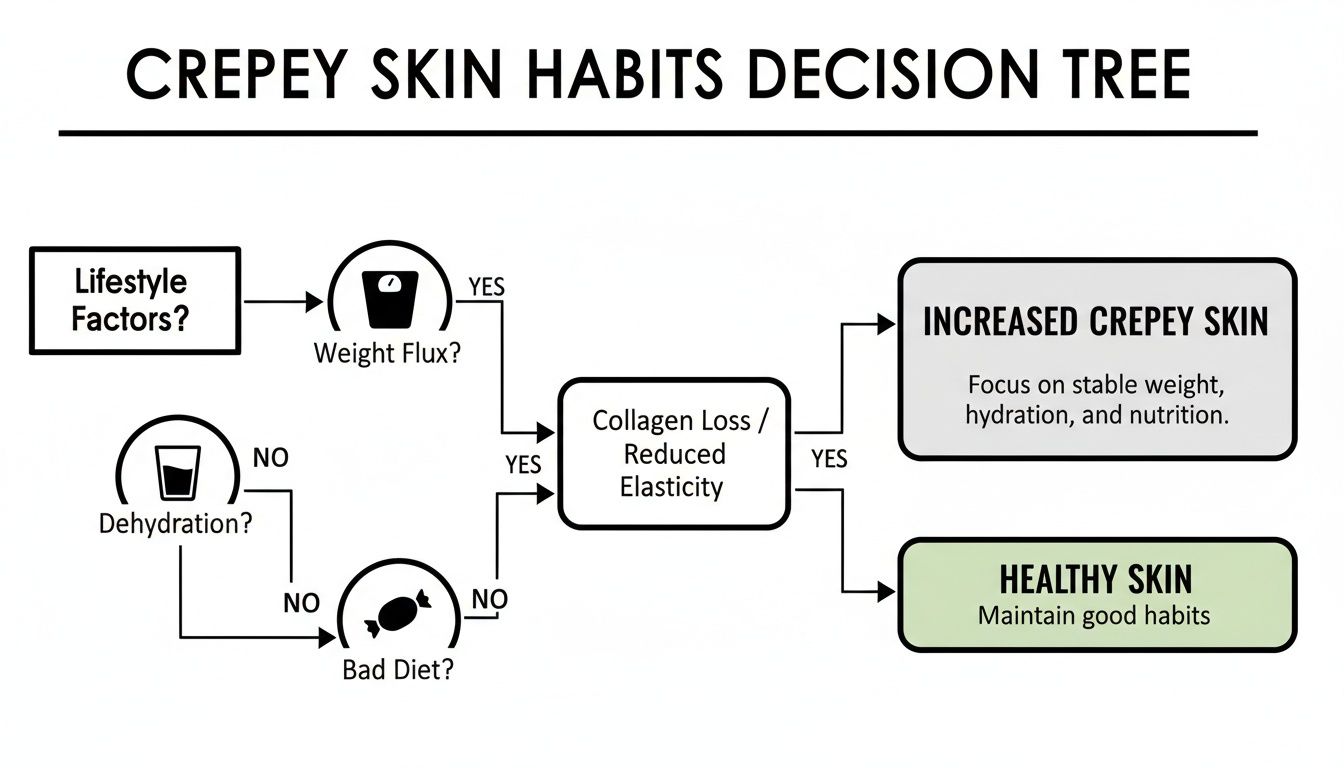
As you can see, things like rapid weight fluctuations and poor nutrition are direct pathways to skin damage. It really drives home the point that a combination of a healthy lifestyle and targeted skin treatments is the most effective approach.
While consistent at-home care is non-negotiable for maintenance, professional treatments are where you’ll see the most significant and rapid improvements. These procedures work on a fascinating principle: they create a controlled, microscopic "injury" deep within the skin, which kicks your body's natural healing response into high gear.
Key Insight: Professional treatments don't just put a band-aid on the problem. They activate your body's own biological repair system to rebuild the skin's support network from the dermis up, leading to more dramatic and longer-lasting firmness.
So, what are we talking about in the clinic? Here are some of the most effective options available today.
To help you understand the landscape of in-office procedures, the table below breaks down some of the most common and effective options. It outlines how they work, what areas they're best suited for, and what to expect in terms of recovery.
| Treatment Type | How It Works | Best For | Typical Downtime |
|---|---|---|---|
| RF Microneedling | Combines fine needles with radiofrequency heat to stimulate deep collagen and elastin production, tightening skin from within. | Face, neck, abdomen, arms, and thighs. | 1-3 days of mild redness and swelling. |
| Ultrasound Therapy | Uses focused ultrasound energy to heat the skin's deepest layers, triggering a powerful collagen-rebuilding response over time. | Brow, neck, under the chin, and décolletage. | None. You can return to daily activities immediately. |
| Laser Resurfacing | Ablative lasers remove the outer layer of skin while non-ablative lasers heat the underlying tissue to remodel collagen. | Face, neck, chest, and hands. | 3-10 days, depending on the intensity of the laser. |
This comparison highlights that there isn't a single "best" treatment—the right choice depends entirely on the severity of your skin laxity, the treatment area, and your personal tolerance for downtime.
These approaches are particularly powerful for more advanced crepey skin that doesn't respond to topicals alone. If you're curious about the technology behind these treatments, our guide to non-invasive skin tightening offers a more detailed look.
Ultimately, the best way forward is to sit down with a board-certified specialist. They can assess your skin in person and help you create a customized treatment plan that aligns perfectly with your goals.
Consulting a board-certified plastic surgeon or dermatologist takes the guesswork out of the equation. They have the training to properly diagnose the cause and severity of your crepey skin, listen to your concerns, and map out a realistic plan to get you there.
So, how do you know when it’s time to make that call? It usually comes down to frustration with the results you’re seeing—or rather, the results you aren't seeing.
Think about booking a consultation if this sounds familiar:
An expert can see past the surface. They can determine if the problem lies deeper in the skin's structural support, which requires treatments that can rebuild that foundation from within. This is where professional procedures truly shine.
A specialist can design a powerful combination strategy, pairing the right in-office procedures with a medical-grade skincare regimen to maximize your results.
They are also the only ones who can tell you if you're a candidate for surgical solutions. For severe crepey skin that comes with a lot of sagging, procedures like an arm lift (brachioplasty) or neck lift offer the most dramatic and permanent correction.
Scheduling that consultation is really about gaining clarity. You’ll walk away with a clear understanding of all your options, from non-invasive treatments to surgery, so you can make an informed decision on your path to smoother, firmer skin.
When it comes to skin concerns, it’s easy to get overwhelmed. Let's clear up a few of the most common questions we hear from patients about crepey skin.
It's a great question, as the two are often confused. Think of wrinkles as distinct, individual lines carved by repeated expressions—like frown lines between your brows or crow's feet from smiling.
Crepey skin is more about texture over a larger area. It’s that thin, fragile-feeling skin with a web of very fine, shallow lines, looking a lot like its namesake, crepe paper.
The honest answer is that there’s no magic "cure" that erases it forever. It's much more effective to think of it as a long-term management plan.
With a consistent strategy, you can absolutely make dramatic improvements and prevent it from getting worse. Sun protection, powerful skincare ingredients like retinol, and professional treatments all work together to rebuild collagen, leading to a much smoother, firmer texture that lasts.
The key is consistency. The results you achieve can be impressive and long-lasting if you stick with the right approach.
Yes, but it's important to understand its role. Drinking more water is a foundational step, but it won't single-handedly rebuild the collagen and elastin you've lost.
Proper hydration plumps up your skin cells from the inside, which can temporarily soften the look of those fine lines and makes your skin more resilient. Consider it a crucial piece of the puzzle—it makes all your other topical treatments and procedures work that much better.
At Cape Cod Plastic Surgery, Dr. Fater and our team are here to guide you toward the right solutions with care and expertise. If you're ready to explore what's possible for treating crepey skin, we invite you to schedule a consultation and start the conversation.
September 9, 2026
Expert Guide to Proper Surgical Incision Care
Master dermal fillers aftercare with do's and don'ts, swelling tips, activity limits and warning signs to protect your results and heal smoothly.

September 8, 2026
Ensuring Safety: Why Your Surgeon's Credentials Matter Most

Cape Cod Plastic Surgery offers expert cosmetic and reconstructive procedures in a safe, accredited setting. Led by Dr. Marc Fater, we combine advanced techniques with personalized care to help you look and feel your best.
Monday: 9:00 AM – 5:00 PM
Tuesday: 9:00 AM – 5:00 PM
Wednesday: 9:00 AM – 5:00 PM
Thursday: 9:00 AM – 5:00 PM
Friday: 9:00 AM – 5:00 PM