

October 7, 2026
What to Expect During Your Breast Surgery Recovery
A Practical Guide to Healing After Breast Surgery
Jun 12, 2026
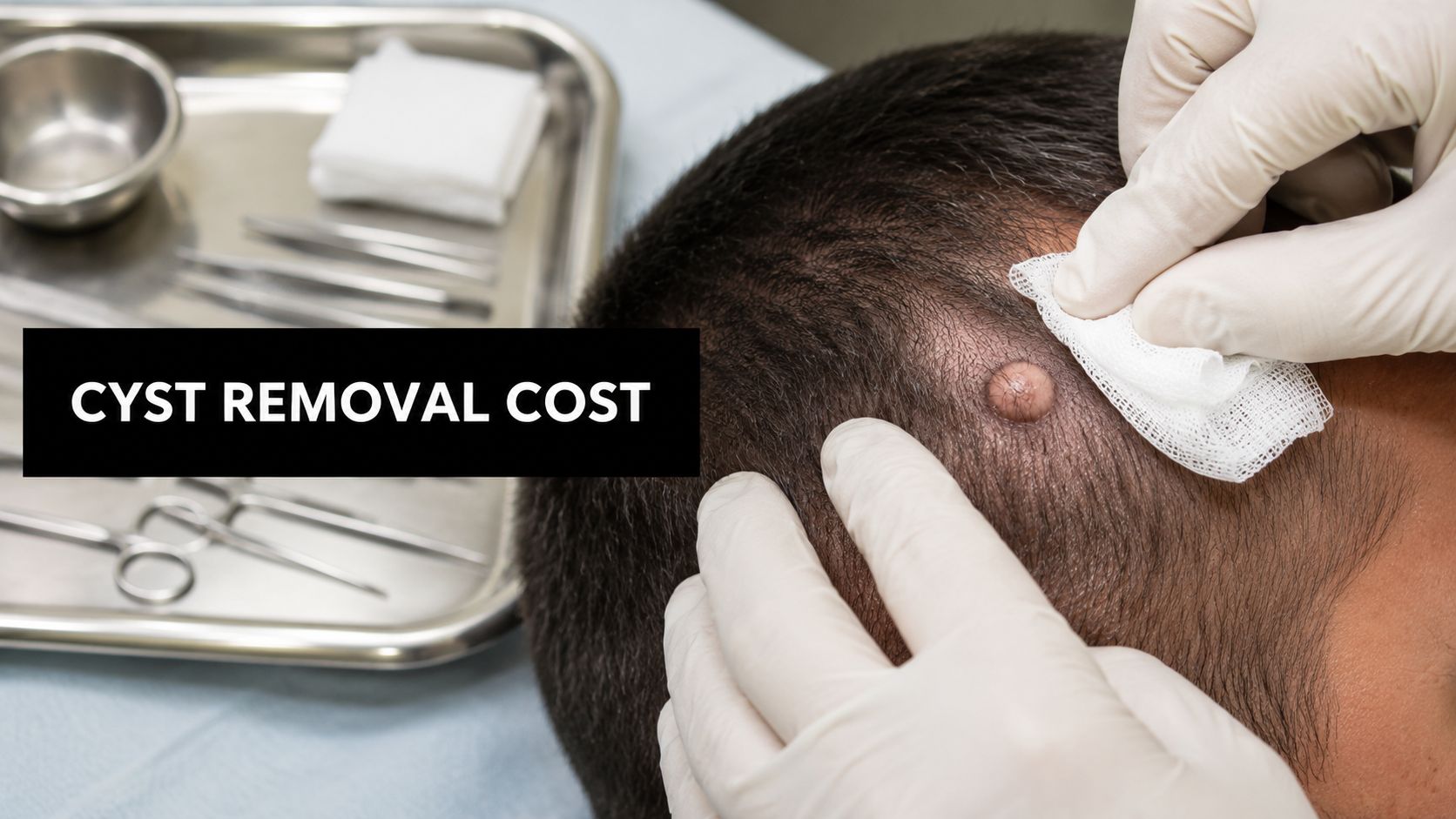
Paying out of pocket for pilar cyst removal typically incurs a total cost of $1,600 to $6,000, while insured patients may pay much less, sometimes as little as a copay if the procedure is documented as medically necessary. The final price usually depends less on the cyst itself and more on where it's removed, whether anesthesia is needed, and whether the specimen goes to pathology.
If you're reading this, there's a good chance you've found a smooth lump on your scalp, it's been there for a while, and now you're trying to answer two questions at once. First, “What is this?” Second, “What's this going to cost me?”
That's a very normal place to be. Patients often come in expecting one simple number, but pilar cyst removal cost rarely works that way. A short office procedure may be billed very differently from the same removal done in a hospital or surgery center, and that's where confusion starts.
From a surgeon's perspective, the smartest way to think about cost is all-in cost, not headline cost. That means looking at the consultation, the procedure itself, the setting, possible anesthesia, and pathology. It also means weighing price against something patients care about just as much: a neat closure, a low chance of recurrence, and a result that heals well in a visible area like the scalp or hairline.
A pilar cyst is a benign lump that usually forms from a hair follicle, most often on the scalp. I often describe it to patients as a small balloon under the skin. It has a wall, or capsule, and material inside it. That “balloon” explanation matters because it helps explain why some cysts come back if they're only drained and not fully removed.
These cysts are usually smooth, round, and slow growing. Many people notice them when brushing their hair, washing their scalp, or getting a haircut. They're often mistaken for any generic “sebaceous cyst,” but in practice, what matters most to you is whether the lump is benign, whether it bothers you, and whether removal makes sense.
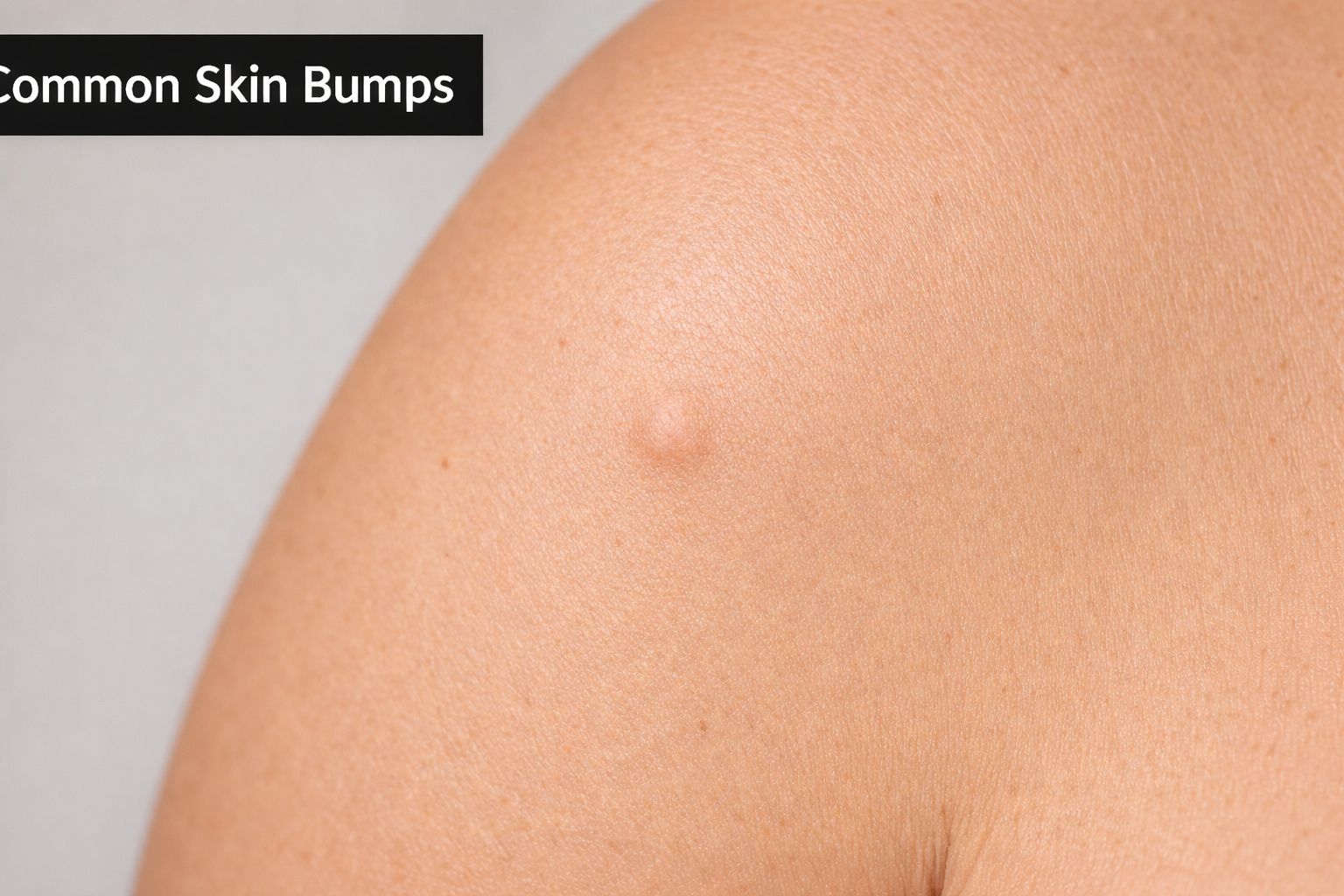
Some people remove a pilar cyst because it's symptomatic. Others remove it because it's annoying or noticeable. Both reasons are valid, but they affect coverage very differently.
A clinical cost guide notes that pilar cysts are often less expensive to remove because they're not very complicated, and many removals take 15 to 30 minutes in an outpatient setting. The same source also notes that insurance is more likely to cover cases that are painful, infected, or functionally impairing, as explained in this clinical overview of cyst removal pricing and coverage factors.
Many readers find this distinction confusing. A cyst can be benign and still deserve treatment. But insurance usually asks a narrower question: Is removal medically necessary?
Practical rule: If your main reason is “I don't like how it looks,” expect cosmetic billing. If your chart documents pain, infection, bleeding, inflammation, or impaired function, coverage becomes much more likely.
That distinction doesn't tell you whether you should remove it. It tells you how the procedure is likely to be billed.
A patient often calls after hearing a simple number online, then feels blindsided when the final quote includes several separate charges. Pilar cyst removal rarely works like buying a single service off a menu. The total cost usually reflects the entire episode of care, from the first evaluation to the final pathology report.
That is why two people with what sounds like the same scalp cyst can receive very different estimates.
The all-in price works like a bundled travel itinerary. The flight is only one part. Baggage, seat selection, and airport fees change the final total. Pilar cyst removal is similar. The procedure itself matters, but so do the setting, the anesthesia plan, and whether the tissue is sent to pathology.
| Cost Component | Typical Price Range |
|---|---|
| Consultation and evaluation | Varies by practice |
| Surgeon's fee | Varies by complexity, location, and expertise |
| Facility fee | Often the biggest driver of price |
| Anesthesia fee | May be minimal with local anesthesia, higher if deeper sedation or general anesthesia is needed |
| Pathology fee | May be billed separately |
| Follow-up care | Sometimes included, sometimes separate |
Some practices package several of these items into one quote. Others bill each one separately. That difference alone can make one office sound much less expensive on the phone, even when the final out-of-pocket cost ends up being similar.
For many pilar cysts, the biggest swing in price is not the cyst. It is the room where the procedure happens.
A neutral pricing comparison notes that cyst and skin tissue removal costs can vary substantially by facility type, and a UK surgical provider lists lab fees separately from the procedure itself in this comparison of cyst removal pricing by facility and added fees. In practical terms, an office procedure room is often less expensive than a surgery center, and a hospital usually carries the highest overhead.
That matters because many scalp pilar cysts can be removed under local anesthesia in a procedure room. When that is appropriate, patients may avoid the larger facility and anesthesia charges that come with a more formal operating setting.
Patients usually focus on the surgeon's fee first. I understand that. It is the most visible part of the quote. But several less obvious charges can affect the actual price:
A low advertised price can lose its appeal once these items are added.
With a pilar cyst, you are not only paying for removal. You are paying for judgment. The surgeon has to decide how to place the incision, how much skin to disturb, how to remove the cyst wall intact when possible, and how to close the scalp in a way that heals neatly. Specialist experience becomes critical at this stage.
That is one reason the cheapest quote is not always the best value. A clean excision by a plastic surgeon may improve the scar, lower the chance of leaving capsule behind, and reduce the odds of needing a second procedure later. For many patients, especially when the cyst is visible or has been inflamed before, that long-term value matters more than a bargain headline number.
If you want a broader framework for comparing procedure quotes, this guide on how cosmetic surgery costs are structured gives patients a practical way to compare line items instead of just comparing totals.
When you call an office, ask for the all-in estimate, not just the removal fee.
Ask these questions in plain language:
One more point causes confusion. Even if your cyst seems straightforward, your health plan may still exclude parts of the bill. Reviewing a plain-English guide to understanding health plan exclusions can help you spot costs that insurance often leaves to the patient before you schedule.
Insurance usually doesn't care whether a pilar cyst bothers you personally. It cares whether removal meets the plan's definition of medical necessity.
Medicare guidance summarized in 2026 states that benign skin lesion removal is generally not covered for cosmetic purposes, but it may be covered when there is pain, infection, bleeding, inflammation, or functional impairment. The same summary gives a concrete example: a lesion on the face or ears larger than 4 cm may cost $3,019, with Medicare potentially covering $2,414 and leaving about $603 out of pocket, as explained in this Medicare coverage summary for benign cyst and lesion removal.
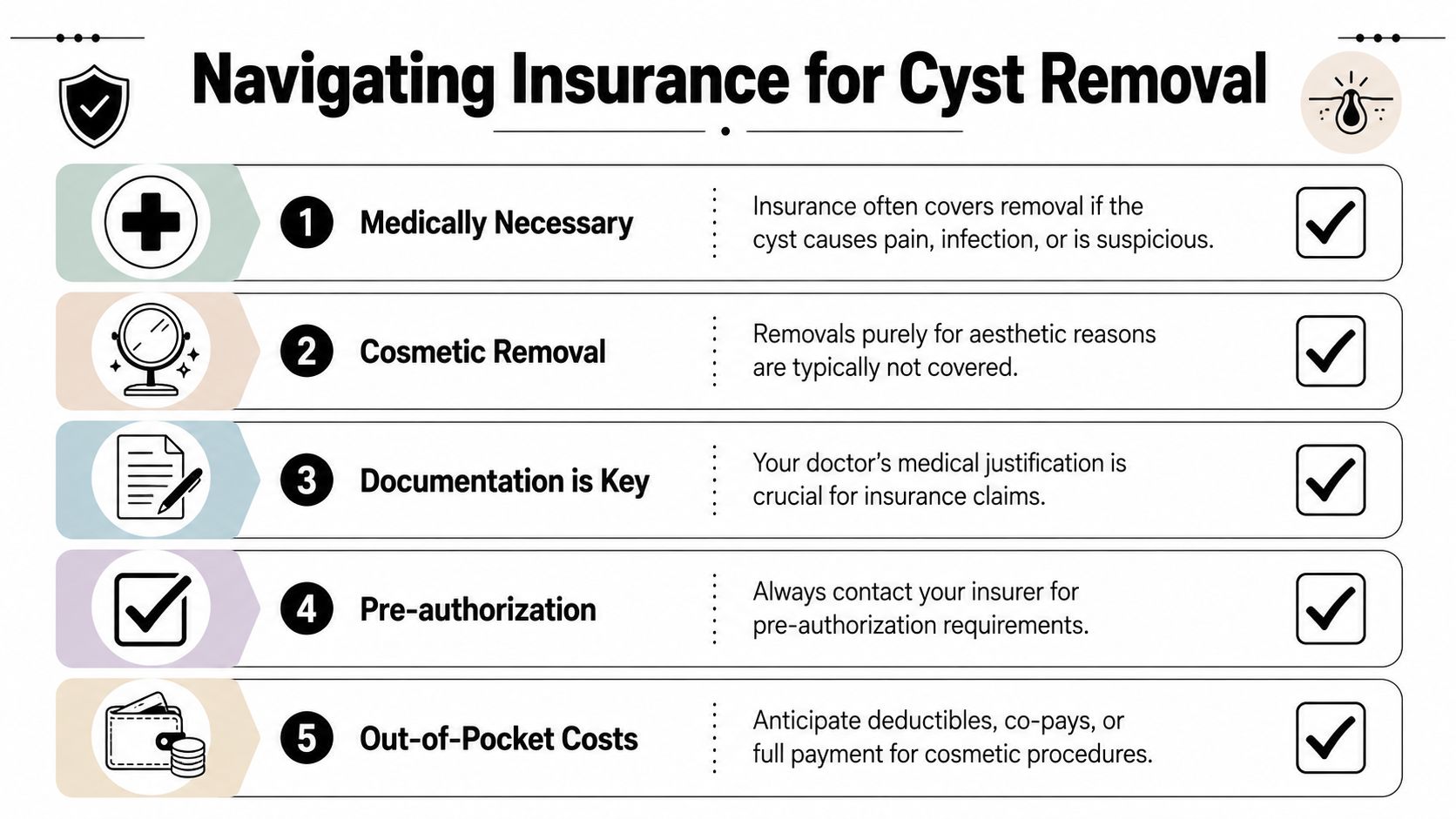
The easiest way to think about coverage is to match your symptoms to what insurers usually recognize.
If you've ever been surprised by a denied claim, it also helps to review the basics of understanding health plan exclusions. That's useful because even a covered procedure can still involve exclusions, network limits, or cost-sharing rules.
Coverage doesn't always mean free. Your out-of-pocket responsibility may include your deductible, copay, or coinsurance.
That's why two insured patients can have very different final costs. One has already met a deductible and owes little. Another hasn't met it and pays much more upfront.
Later in the decision process, many patients also find it helpful to review whether insurance covers plastic surgery in different medical and cosmetic situations.
Here's a short overview if you want a visual walk-through before calling your insurer.
Before booking, call your insurer and ask three direct questions: Is this covered if medically necessary, do I need preauthorization, and is the surgeon or facility in network?
Most pilar cyst removals are straightforward, and that's worth knowing because anxiety often comes from not knowing what will happen. In many cases, you arrive, the area is examined and marked, local anesthetic is injected, the cyst is removed, and the skin is closed. Then you go home the same day.
From the patient's perspective, the process usually feels much calmer than expected. You may feel a brief sting from the numbing medicine, then pressure or movement, but not sharp pain. On the scalp, the area may be parted or trimmed to give the surgeon a clean field.
A typical visit follows a sequence like this:
When a patient says, “I don't want this to come back,” they're asking the right question.
Mayo Clinic notes that incision and drainage may provide quick symptom relief, but cysts may recur afterward, while minor surgery that removes the entire cyst is often effective and helps prevent regrowth. The same source references a published study of punch-incision removal reporting a recurrence rate of less than 10%, with 3.6% recurrence in one chart review, 8.3% in survey follow-up, and 54.5% of recurrences occurring within the first year, as described in this Mayo Clinic review of cyst treatment and recurrence.
That finding supports what surgeons see in practice. If part of the capsule remains, the cyst has a better chance of reforming. If the wall is removed cleanly, long-term control is better.
The procedure isn't only about getting the bump out. It's about removing it in a way that lowers recurrence and leaves the scalp healing as cleanly as possible.
Specialist experience matters. On the scalp, the surgeon has to balance complete removal with tissue handling, bleeding control, closure, and scar placement in a hair-bearing area. Those details don't always show up on a price quote, but they matter to the result you live with afterward.
Recovery after pilar cyst removal is usually manageable, but patients do better when they know what's normal. The first day is mainly about protecting the area and letting the numbing medicine wear off. After that, most of the work is simple wound care and patience.
The scalp tends to heal well, but it's also a place that gets bumped, combed, washed, and rubbed. That means aftercare matters.
In the first day or two, it's common to notice mild soreness, tightness, or a small amount of swelling. A little spotting on the dressing can be normal. What you want is a clean, dry incision that gradually settles.
Keep the area protected exactly as your surgeon instructs. Don't pick at crusting, don't press on the site, and don't test the wound by moving it around with your fingers.
Most patients feel more comfortable after the first several days. If non-absorbable sutures are used, they may be removed at a follow-up visit. The scar usually looks more noticeable early on than it will later, which is normal.
Good healing comes from consistency, not over-treatment. Gentle care, avoiding trauma, and keeping follow-up appointments usually matter more than adding products too soon.
For patients who want a broader guide to wound healing basics, this post on how to care for surgical incisions is a helpful companion to your surgeon's specific instructions.
Call if you notice any of the following:
Healing isn't supposed to be dramatic. Day by day, the area should look calmer, not angrier.
A patient often comes in expecting one number and leaves realizing there are several parts to the total. The consultation is where those parts get clarified.
At Cape Cod Plastic Surgery, Dr. Marc Fater examines the cyst itself, not just the price question. He looks at its size, location, whether it has been inflamed before, and whether there are signs that it may come out cleanly in the office or would be better treated in a surgical suite. That evaluation matters because your all-in cost is usually more than the surgeon's fee alone. It can include the visit, local anesthesia, the room or facility, supplies, and pathology if the tissue is sent for confirmation.
Cape Cod Plastic Surgery, led by Dr. Marc Fater, performs procedures in an on-site AAAASF-accredited surgical suite, which gives patients another setting to discuss during consultation when facility cost is part of the decision.

A helpful way to look at cost is the same way you would look at a home repair estimate. The lowest number on paper is not always the lowest total once you add the pieces that were left out. In cyst removal, those missing pieces are often the pathology fee, the facility charge, or the cost of managing a recurrence if the cyst wall is not removed completely.
That is also where specialist training has real value. A plastic surgeon is not only removing a lump. He is planning the incision, protecting the surrounding hair-bearing scalp, closing the wound carefully, and trying to reduce the chance that you need the area reopened later. Better cosmetic planning and a lower risk of recurrence can make a higher upfront quote more reasonable over time.
Bring these questions with you:
A personalized consultation gives you something a generic online price range cannot. It gives you a plan, a realistic all-in cost, and a clear explanation of what you are paying for.
Yes, any true excision leaves a scar. The goal isn't no scar. The goal is a small, well-placed, well-closed scar that fades well over time. On the scalp, scar visibility often depends on incision placement, your hair pattern, and how the wound is handled during healing.
During removal, local anesthesia usually keeps you comfortable. You may feel pressure or movement, but you shouldn't feel sharp pain. Afterward, most patients describe the discomfort as soreness or tenderness rather than severe pain.
This depends on the dressing, the location, and how the incision was closed. Many patients can resume gentle washing after their surgeon says the area is ready, but don't assume scalp surgery follows the same rules as a simple skin scrape. Follow your own post-op instructions closely.
Often, yes. That depends on where the cysts are, whether any are inflamed, and how much closure is needed. Removing multiple cysts in one session can be practical, but it should be planned around comfort, wound care, and the amount of scalp treated at one time.
If you're considering Cape Cod Plastic Surgery for pilar cyst removal, the most useful next step is a personalized consultation. You'll get a direct examination, a realistic discussion of whether the cyst appears cosmetic or medically necessary, and a clearer all-in quote based on the procedure setting, pathology, and closure plan.
October 7, 2026
A Practical Guide to Healing After Breast Surgery

October 6, 2026
Your Safety Guide: What to Look for When Choosing a Plastic Surgeon
October 5, 2026
Why Our On-Site Accredited Facility Matters for Your Safety

Cape Cod Plastic Surgery offers expert cosmetic and reconstructive procedures in a safe, accredited setting. Led by Dr. Marc Fater, we combine advanced techniques with personalized care to help you look and feel your best.
Monday: 9:00 AM – 5:00 PM
Tuesday: 9:00 AM – 5:00 PM
Wednesday: 9:00 AM – 5:00 PM
Thursday: 9:00 AM – 5:00 PM
Friday: 9:00 AM – 5:00 PM